Collabstr
1 / 2Viral TikTok songs are reaching mainstream popularity
Until it was acquired by a Chinese tech company in 2018, TikTok operated as a lip-synching video platform called Musical.ly. But even after switching names and changing its primary function, TikTok kept the spirit of its musical roots, growing exponentially and shaping the music landscape with it.
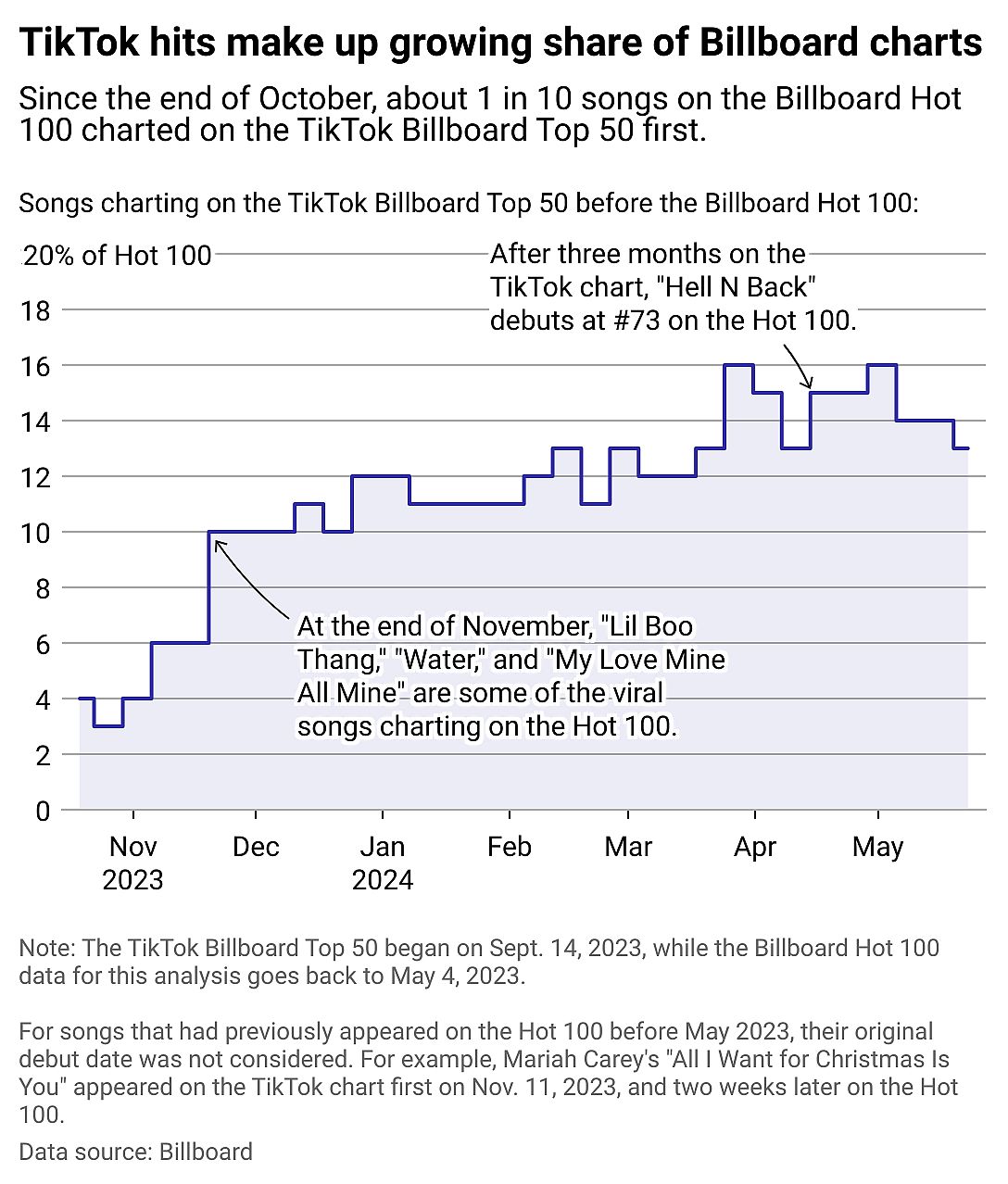
In September 2023, the social platform and Billboard announced the launch of the official TikTok Billboard Top 50, a weekly chart comprising the most popular songs on the app. It's no surprise to Gen Zers that TikTok's top-performing songs often cross over into the mainstream rankings. Since the chart's debut on Sept. 14, 2023, popular TikTok songs have quickly claimed a growing share of the Hot 100 over the last six months. By April, nearly 1 in 6 songs (including Cardi B's "Enough (Miami)," Jack Harlow's "Lovin on Me," and, more recently, Dasha's "Austin") was charting on the Hot 100 after debuting on the TikTok Top 50 first.
Artists have increasingly utilized this momentous strategy, debuting songs on TikTok in the hope that they will leak onto the main Billboard charts.
Some of these songs have risen organically through the app, but the music industry is now playing the game too. Marketers have targeted TikTok, hiring influencers to amplify songs and promote user-generated content from fans. The social platform is also working with artists and labels to keep revenue coming in, building out its own music streaming service, TikTok Music, and organizing live, in-person concerts, the first of which took place in Arizona in December 2023 and featured popular TikTok artists such as Cardi B and Charlie Puth.
What's different about TikTok music is the level of interaction from its users. In a May 2022 NPR interview, analyst Tatiana Cirisano compiled consumer behavior data and found that TikTok users were more likely to spend money on music, citing that "40% of active TikTok users pay a monthly subscription for music, compared to 25% of the general population." They're even more likely to buy an artist's merchandise. Nowadays, artists have to spend just as much time making music as they do cultivating an online presence.