The last century saw the birth of iconic inventions and innovations like radios, televisions, computers, iPhones, and the Slinky. Other products were lost over the last 100 years, like the Monopoly thimble and celery-flavored Jell-O.
To take a trip down memory lane, Stacker curated a list of products that came out the year you were born that no longer exist, scouring timelines, news articles, and trusted websites. The iconic (and at times silly) toys, technologies, and electronics have been usurped since their grand entrance, either by advances in technology or breakthroughs in common sense. See how many thing on this list trigger childhood memories—and which ones were here and gone so fast you missed them entirely.
You may also like: Top holiday toys from the year you were born
1 / 100
1918: RadiThor
William J. A. Bailey dissolved radium in water to create an energy drink he named RadiThor, which was just one piece of the American frenzy over the newly discovered element. Industrialist Eben McBurney Byers was rumored to have consumed 1,400 bottles to ease back and joint pain; eventually, his teeth began falling out and his bone tissue started to disintegrate. It took another full decade for RadiThor to fizzle out; that's when, in 1931, the Federal Trade Commission filed a cease-and-desist order against Bailey Radium Laboratories.
2 / 100
1919: Rotary phone
When Alexander Graham Bell invented the telephone in 1876, he probably didn’t imagine how far it would come over the next century and a half. In 1919, the American Bell Telephone Company launched national service for rotary dial phones, the first mass-produced phone controlled by the user. When push-button phones were installed in 1963, people reluctantly bid goodbye to their rotary phones. Even those are becoming obsolete, as more people make the switch to communicating solely by cellphone.
3 / 100
1920: Life Savers Malt-O-Milk
Life Savers rolled out Malt-O-Milk to little fanfare. The flavor neither freshened your breath nor gave you a "pick-me-up” like its fruity cousins, and was discontinued within a couple of years.
4 / 100
1921: Peace dollar
Just over 1 million Peace Dollars were minted in 1921. After silver was depleted in 1928, Peace Dollar production ceased until late 1933 when President Roosevelt issued a proclamation to mint a small number of silver dollars in 1934 and 1935.
5 / 100
1922: Yamaha hand-wound gramophone
6 / 100
1923: A.C. Gilbert Company chemistry sets
7 / 100
1924: The Moviola
The Moviola—an editing system for film—hit studios in 1924 and was used by film editors until the 1960s. Inventor Iwan Serrurier originally designed the Moviola as an at-home movie projector but adapted it to be used by film editors at the recommendation of an editor at Douglas Fairbanks Studios.
8 / 100
1925: Burma Shave
A brand of brushless shaving cream called Burma-Shave was the first of its kind to hit it big with the public. That popularity was more than likely due to a brilliant advertising campaign along American roadways. In 1963, the company was acquired by Phillip Morris, which began removing Burma Shave's famous road signs. By 1966, production was moved to New Jersey and then discontinued altogether.
9 / 100
1926: Cathode ray tube televisions
Scottish inventor John Lodgie Baird demonstrated the first working television that used cathode ray tubes to mechanically scan pictures displayed on the screen. Called CRTs, they remained wildly popular until the 21st century, when LCD and other electronic displays outpaced them. Sony shut down CRT production in 2008. Some gamers and retro enthusiasts still use CRTs, but they're increasingly difficult to find outside of thrift shops or eBay.
11 / 100
1928: Raleigh cigarette
12 / 100
1929: Wonder Stories magazine
Hugo Gernsback, “The Father of Science Fiction,” founded this magazine after bankruptcy forced him to sell his first science fiction publication, "Amazing Stories." "Wonder Stories," popular throughout the 1930s, helped to establish science fiction as an independent genre. The publication went through a number of name changes, sizes, and price points before eventually becoming a casualty of the post-WWII move away from pulp magazines. Publication ceased in 1955.
13 / 100
1930: Mickey Mouse comic strip
14 / 100
1931: Sleepy’s
Sleepy's was founded in 1931, and by 2014 had 1,000 stores across the country. The company was bought out in 2015 by Mattress Firm, which now operates exclusively online.
15 / 100
1932: Cake breaker
When Cale J. Schneider invented his multipronged cake breaker, he had no notion of its destiny as a comb for Afro‐American hair. While bakers today use pie cutters to cut their angel food cakes, in its day, this tool took the cake.
16 / 100
1933: Parker Vacumatic pen
The Parker Vacumatic fountain pen was the best-selling writing implement of its time, with features that took five years and more than $125,000 to develop. All-metal filler units, jewel and tassle rings at the ends of the barrels, a remarkably advanced filling system, and two-tone nibs delighted consumers and gave the pen an air of royalty. The Parker Vacumatic was in production until 1948.
17 / 100
1934: Betsy Wetsy doll
18 / 100
1935: Monopoly thimble
If you've ever played with an older version of Monopoly, chances are you are familiar with the thimble token. In 2017, Hasbro removed the thimble, boot, and wheelbarrow from its selection of player pieces in favor of several newer options like the Tyrannosaurus rex, rubber ducky, and penguin.
19 / 100
1936: Life magazine
Life published its first issue on Nov. 23, 1936. Founded by Time publisher Henry Luce, the magazine was a pioneer of photojournalism and famous for its vivid war coverage—particularly of World War II, Korea, and Vietnam. It ceased weekly publication in 1972 and in 2000, Time announced that it would be discontinued entirely and instead use the name for special features and books.
20 / 100
1937: Pedal cars
Children in 1937 had a new mode of transportation to enjoy with the invention of the pedal car. The cost of the extravagant toy car was $15, equivalent to about $250 today, and prominently featured in Sears catalogs every year during the Great Depression. Pedal cars were briefly discontinued after the attack on Pearl Harbor, as the metal used to make them was needed for the war effort. By the ’60s and ’70s, interest in space exploration—followed by the proliferation of cheap, plastic pedal toys—led to the permanent death of pedal cars.
21 / 100
1938: Drunkometer
Indiana University chemistry professor Rolla Harger’s Drunkometer was a predecessor of today’s breathalyzer. Ironically, this second version was created by another Indiana University professor. The earlier Drunkometer model used a rubber balloon and purple liquid to measure a person’s alcohol consumption.
22 / 100
1939: DDT pesticide
23 / 100
1940: Daring Mystery comics
24 / 100
1941: Gourmet magazine
25 / 100
1942: Hawaii overprint note
After the Japanese attack on Pearl Harbor, the U.S. government began to worry that the Japanese army might invade Hawaii and use it as a base to launch an attack on the mainland. To prevent the Japanese from obtaining U.S. currency in the case of an invasion, the federal government recalled all U.S. money on the islands and printed bills with the word "Hawaii" stamped across them. By October 1944, the U.S. government deemed the threat to have passed and took the bills out of circulation or used them in other islands in the Pacific.
26 / 100
1943: Steel pennies
Copper was critical to the American war effort during World War II. In order to ensure as much copper as possible could be used for equipment wiring, the U.S. Mint used steel and zinc to create pennies until 1944. Several silver 1944 pennies and copper 1943 pennies were made in error; some are still in circulation today, and may be worth thousands of dollars.
27 / 100
1944: Lead pipe from Clue
When Anthony Pratt invented Clue in 1944, the board game included six weapon tokens: the candlestick, knife, lead pipe, revolver, rope, and wrench. The game has been reimagined over the years with weapons being added and replaced. The lead pipe got the ax.
29 / 100
1946: Ayds diet pills
30 / 100
1947: Polaroid cameras
31 / 100
1948: Tiny-mite radio
Kids had a new toy on their Christmas lists when the Tiny-mite radio was introduced. Crystal radios gave little tykes a way to tune into a new form of fun.
32 / 100
1949: Man-from-Mars Radio Hat
Hats off to inventor Victor T. Hoeflich for creating the Man-from-Mars Radio Hat. Hoeflich—founder of novelty manufacturing corporation American Merri-Lei—was tuned in to a growing interest in having portable access to news and entertainment. The hats sold for $7.95 and came in seven stunning hues. In spite of its initial popularity, the radio hats were discontinued in 1955 to make way for a new era of audio portability: the transistor radio.
33 / 100
1950: Early remote control
Zenith was a pioneer in the creation of the TV remote. It started with the Lazy Bones, which was a motorized knob that connected to television sets with a cable. People liked the ability to control their TVs from a distance, but many complained that people tripped over the cable. Lazy Bones was quickly replaced with the Flash-Matic, the first wireless remote, and the Space Command.
34 / 100
1951: Videotape recorder
35 / 100
1952: 'Abbott and Costello Show'
The comedy duo famed for their rapid-fire comedy and “Who’s On First?” routine had long reigned supreme on radio and the big screen. But in the early ’50s, their box office muscle was slipping. They found a new life on television with their own show, which ran for two seasons. After the show ended, the two appeared together in a final film before going their separate ways.
36 / 100
1953: Rabbit ears
37 / 100
1954: Transistor radio
Teenagers were jubilant when the transistor radio debuted in 1954, offering a new way to enjoy music. When the Regency TR-1 hit stores, the radio received AM stations and sold for $50, equal to more than $400 in today's market. The technology also inspired manufacturers to create smaller devices such as cameras, alarm clocks, and calculators.
39 / 100
1956: The Ladder
The Ladder was America's first national lesbian magazine, created by the first national lesbian organization the Daughters of Bilitis. It started as a 12-page newsletter but grew to feature news stories, book reviews, poetry, short fiction, and letters from readers. The Ladder also provided positive messages for a marginalized community. The magazine folded in 1972 due to a lack of funds and a difference in opinion over the magazine’s direction.
41 / 100
1958: RCA Victor tape cartridge
The RCA Victor tape cartridge was created to offer recording quality in a convenient format for the consumer market. After four years of development, the reversible cassette was launched in sync with the introduction of the stereophonic phonograph record. The cartridge didn’t take off as planned, however: Production ceased in 1964.
42 / 100
1959: Chatty Cathy
43 / 100
1960: The Chevrolet Corvair
The Chevrolet Corvair first appeared in 1960. The model received a coveted annual design award from the Industrial Designers Institute, yet consumer advocate and politician Ralph Nader called the Corvair "one of the nastiest-handling cars ever built.”
44 / 100
1961: Somewhere perfume
45 / 100
1962: Fizzies
Fizzies were tablets that could be dropped into a cup of water to add instant (and very temporary) carbonation and fruit flavor. The Emerson Drug Company sold the sugar-free, flavored tablets to wide public appeal, and by 1968, the product was selling twice as much as Kool-Aid. Unfortunately, the sugar substitute in Fizzies included saccharin and cyclamates—the latter of which was eventually banned. That, along with the short-lived fizz and diluted flavoring, helped along Fizzies' eventual demise. The brand has been brought back a number of times since, only to flounder again.
46 / 100
1963: Mister Rogers
A beloved classic, "Mister Rogers’ Neighborhood" first graced televisions in 1963 on CBC as "Misterogers," The broadcast moved to its home on PBS in 1968. An ordained Presbyterian minister, Fred Rogers invited a generation of America’s youth to be kind and compassionate to themselves and one another. The show aired continuously until 2001, but its legacy lives on in the full episodes available for streaming online and the memories of the children who loved it.
47 / 100
1964: Celery-flavored Jell-O
Jell-O tried to fulfill fruit and veggie nutrition requirements with this garden variety. Who could resist a Jello-O infused with the flavor of celery? Maybe everyone; they were pulled off shelves a few years later.
48 / 100
1965: Goody Two Shoes doll
49 / 100
1966: Computer Weekly
50 / 100
1967: Floppy disk drive
51 / 100
1968: Flower-flavored PEZ
52 / 100
1969: Flatsy doll
53 / 100
1970: National Lampoon magazine
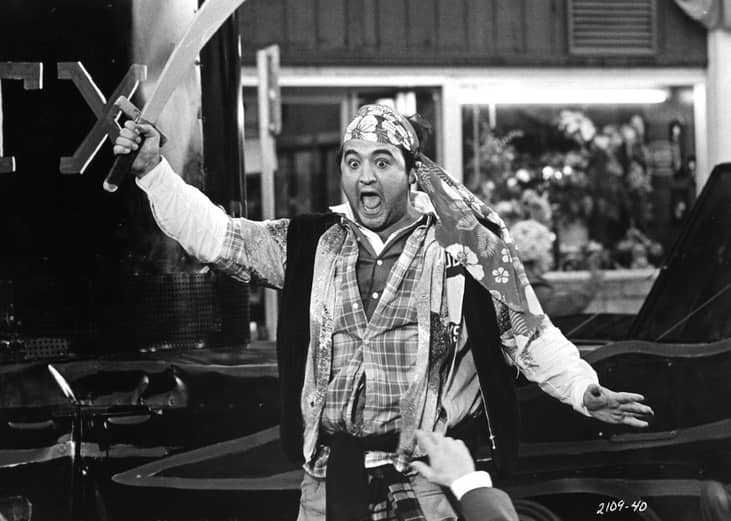
When National Lampoon magazine launched, the publication sold fewer than half of the 5,000 copies that were printed. The magazine had people rollicking for almost three decades and became a major media influence on films like "Caddyshack" and "Animal House."
54 / 100
1971: Buc Wheats cereal
55 / 100
1972: Toaster Eggs
56 / 100
1973: Playgirl
While you were certainly too young to read Playgirl magazine if you were born the year it launched, 6,000 other people bought the magazine's first copy. Circulation soared in its first decade, but the proliferation of free online erotica led to the end of print issues by 2015.
57 / 100
1974: Gerber Singles
Something very different was cooking up at Gerber in 1974 when the company created Gerber Singles—mini portions of food packaged like it was for a baby and marketed to adults. The product, considered Gerber’s single worst idea, was quickly pulled from the shelves.
59 / 100
1976: Telstar gaming console
Gaming company Coleco hit it big in the mid-1970s with its Telstar console, which offered a cheap way for families across America to get in on the Pong craze. The company released nine versions of these dedicated consoles over the next two years, but Coleco was forced to get rid of more than a million of their now-obsolete Telstar machines as the gaming market moved on to programmable, cartridge-based systems.
60 / 100
1977: Town Dump
Did you ever play Milton Bradley’s game Town Dump? The object was to bulldoze trash onto your opponent’s property. Unlike the many other quality games from Milton Bradley, this one appears to be rubbish.
61 / 100
1978: Farah Fawcett shampoo
62 / 100
1979: Sony Walkman
Long before CDs, MP3s, and streaming music, the Sony Walkman paved the way for portable personal music. Over 200 million Sony Walkman cassette players were sold before Sony retired the classic cassette tape Walkman line in 2010.
63 / 100
1980: The Face
The Face, a youth culture magazine launched by Nick Logan in May 1980, was a style bible for the 25 and under age market. By the end of the decade, it was selling 88,000 copies a month. The magazine shuttered in 2004 due to sagging numbers and print media's changing landscape.
64 / 100
1981: DeLorean DMC-12
The DeLorean became a household name thanks to the "Back to the Future" movies, but fans looking to get their own version of the famous time machine might have had a hard time. Founded in 1976 by former General Motors executive John DeLorean, DeLorean Motors filed for bankruptcy just a year after the DMC-12 was released—a full three years before it became famous. In 2016, the company announced it would produce a small number of new replica models thanks to a manufacturing bill passed by Congress.
65 / 100
1982: Knight Rider Knight 2000 Voice Car
If you were one of the cool kids of the ’80s, you probably watched "Knight Rider" religiously on Friday nights and more than likely owned the Knight Rider Knight 2000 Voice Car created by Kenner. The car was outfitted with a vintage blue California license plate and came with a Michael Knight action figure.
66 / 100
1983: Kids “R” Us
Kids "R" Us, a subsidiary of Toys "R" Us, opened in New Jersey and Brooklyn in 1983 and sold children's and teen clothing. In 2003, Kids "R" Us closed every one of its 146 stores.
67 / 100
1984: Seiko UC-2000 wrist computer
The Seiko UC-2000 wrist computer was the ’80s version of the smartwatch. Only capable of storing 2K of data, telling the time, and performing calculator functions, the device was extravagantly priced at $300—about $690 in today’s dollars.
68 / 100
1985: No Respect
Fans of Rodney Dangerfield loved playing this Milton Bradley game, which included a stack of some of his the comedian's most famous jokes. Playing for self-respect was the object of the game.
69 / 100
1985: Entertech water guns
Entertech released a line of battery-powered, realistic squirt guns that could shoot streams of water up to 30 feet. The fact that they were so realistic, however, was ultimately their downfall. After a series of deadly police shootings in which officers killed teenagers they believed were armed with real weapons, cities began banning them. Entertech tried to manufacture less realistic water guns, but the company was purchased by Acclaim Entertainment in 1990 and began phasing out toy manufacturing entirely.
70 / 100
1987: Chiquita frozen juice bars
71 / 100
1988: Nintendo Entertainment System
72 / 100
1989: Trump: The Game
As a real estate developer in 1989, former President Donald Trump released a Monopoly-inspired board game called Trump: The Game. He re-released the game in 2004 when he became a reality TV star. The original game sold less than a million copies, but today, the game is a collector’s item.
73 / 100
1990: Crayola’s dandelion crayon
74 / 100
1991: McDonald’s McLean Deluxe Burger
75 / 100
1992: Butterfingers BBs
What kid did not adore Butterfinger BB’s? The little chocolate balls of heaven tasted just like their namesake but in a spherical, fun-sized form. While they were discontinued in 2006, Butterfinger channeled its creative spirit into Butterfinger Bites in 2009.
76 / 100
1993: Apple Newton
The predecessor of the smartphone was a handheld device called the Apple Newton. The device—which earned the first use of the term "personal digital assistant," or PDA—had a shockingly high (at the time) memory of 2MB. CEO Steve Jobs pulled the line in 1997.
77 / 100
1994: Pogs
Kids could not collect enough Pogs in the '90s. The little circles of cardboard featured different designs and characters. The milk caps variant stayed popular until 1997, when the manufacturer of Pogs, Canada Games, went under.
78 / 100
1995: Josta
Pepsi gets credit as the first American soft drink company to create an energy drink before the market for them took off in the U.S. Josta's fruity flavor, derived from guarana, didn’t click with consumers and the drink was pulled from the shelves in 1999. It still lives on in the hearts and minds of the ’90s kids who loved it—and who've started multiple campaigns to get it back on the shelves.
80 / 100
1997: Orbitz drink
Orbitz appeared on the beverage scene in 1997 with a non-carbonated, fruit-flavored drink that looked more like a lava lamp than a bottled beverage. The balls of gelatin and the medicinal taste did not appeal to many taste buds; Orbitz was off the shelves in the same year it arrived.
81 / 100
1998: Teen People
82 / 100
1999: MSN Messenger
Microsoft’s MSN Messenger was launched in 1999 to rival AOL’s AIM service. If you were one of the cool kids using MSN Messenger, you carefully selected your font style and color and used emoticons in your name and status. Despite the decade and a half of memories, it was shut down in 2013. Its rival didn’t last much longer, either: AIM discontinued service four years later.
83 / 100
2000: Heinz EZ Squirt colored ketchup
Heinz execs thought its iconic condiment—ketchup—could use a makeover, and went ahead to launch Heinz EZ Squirt in a rainbow of hues and a kid-friendly bottle. First on the shelves was the spinach-colored "Blastin’ Green,” followed by orange, purple, teal, blue, and pink. Around 25 million bottles were sold before Heinz pulled the gimmicky product in 2006.
84 / 100
2001: Sony Ericsson phone
The Sony Ericsson t68 was one of the most forward-thinking cell phones of its era. The gadget was one of the first phones with a color display and had an add-on camera accessory option. Constant upgrades and advances in phone technology phased this particular model out almost immediately. While the T68 was released in time for holiday shopping, its revamped version—the t68i—was released in 2002.
85 / 100
2002: Funky Fries
In 2002, Ore-Ida Funky Fries were launched in a variety of flavors including cocoa, cinnamon, and kool blue. Ore-Ida thought this spin on their spuds would be a perfect companion for kids to pair with Heinz’s "kiddie” colored condiments.
86 / 100
2003: Coca-Cola Swerve
Coca-Cola tried to get to the head of the class with its introduction of Swerve in 2003. The milk-based drink product bearing the "Heart Smart” seal from the American Heart Association was really not that smart for your heart but was available in school cafeterias.
87 / 100
2004: Microsoft SPOT watch
Before the Apple Watch took the world by storm, Microsoft tried its hand at creating wearable smart technology with the SPOT (Smart Personal Object Technology). Gadget-lovers thought the technology—which used radio signals to receive messages, news headlines, and weather forecasts—was revolutionary. The development of cellular broadband quickly left the SPOT Watch in the dust and in 2008, Microsoft stopped supporting it. All that was left was a digital, battery-powered watch.
88 / 100
2005: Bald Guyz Head Wipes
Bald guys were given a chance to not shine with the introduction of Bald Guyz Head Wipes. The individually wrapped towelettes cleaned the scalp and kept it from reflecting the light.
89 / 100
2006: Hallmark magazine
Big-hearted fans of Hallmark cards and movies were elated when Hallmark launched its bimonthly magazine. Although circulation was still on the rise in 2008, Hallmark elected to shelf the magazine due to the spiraling trend in magazine publishing.
90 / 100
2007: Original iPhone
When the iPhone was launched in 2007, it was priced at $499 for 4 GB and $599 for 8 GB, and sold exclusively by AT&T. In its first year, the iPhone sold more than 1.9 million phones.
91 / 100
2008: Blackberry Storm
The attempt by software developer company RIM (Research In Motion) to launch an iPhone rival did not take the market by storm—in fact, the Blackberry Storm is remembered a major smartphone disaster. The failure was written about in a book entitled "Losing the Signal: The Untold Story Behind the Extraordinary Rise and Spectacular Fall of BlackBerry.”
92 / 100
2009: Fruitless Tropicana packaging
When brand guru Peter Arnell advised Tropicana to lose its signature packaging featuring a ripe orange, the company lost more than just the fruit on its cartons. It lost $30 million dollars in sales.
93 / 100
2010: KFC Double Down
KFC's Double Down doubled the fun as a sandwich featuring two pieces of fried chicken as burger buns with bacon, cheese, and sauce in the middle. It disappeared from the menu, but made a triumphant return in 2021.
94 / 100
2011: Dubble Bubble Painterz Mouth Coloring Bubble Gum
Halloween 2011 had a special treat with the launch of Dubble Bubble Painterz Mouth Coloring Bubble Gum. The gum came in five different flavors and colors and painted your mouth the color of the gum you were chewing.
95 / 100
2012: Original Google Glass
96 / 100
2013: Facebook Home
Facebook had high hopes of becoming the home screen for your phone. Not even a month after its release, the company dropped the cost of a two-year subscription for such a privilege from $99 to 99 cents.
97 / 100
2014: Amazon’s Fire Phone
98 / 100
2015: Keurig Kold
Although sales for Keurig’s coffee machines continue to percolate, its attempt to cross over into the soda market fizzled out. The Keurig Kold machine, priced at $370 and capable of making Coke-branded products from signature Keurig pods, was discontinued in 2016.
99 / 100
2016: Samsung's Galaxy Note 7
If you were born in 2016, your parents might have been texting or phoning relatives and friends with the news on a Samsung Galaxy Note 7. The phone had just a few small issues, like catching fire and exploding, which led to it being banned by several airlines.
100 / 100
2017: Mercedes home battery pack
The thinking behind the launch of the Mercedes-Benz battery was to store the energy solar panels produced with what was, essentially, a Mercedes-Benz car battery. The car company's attempt to compete with Tesla's Powerwall flopped; by April of 2018, the company announced no more home battery packs would be produced.