Casino Bonus CA
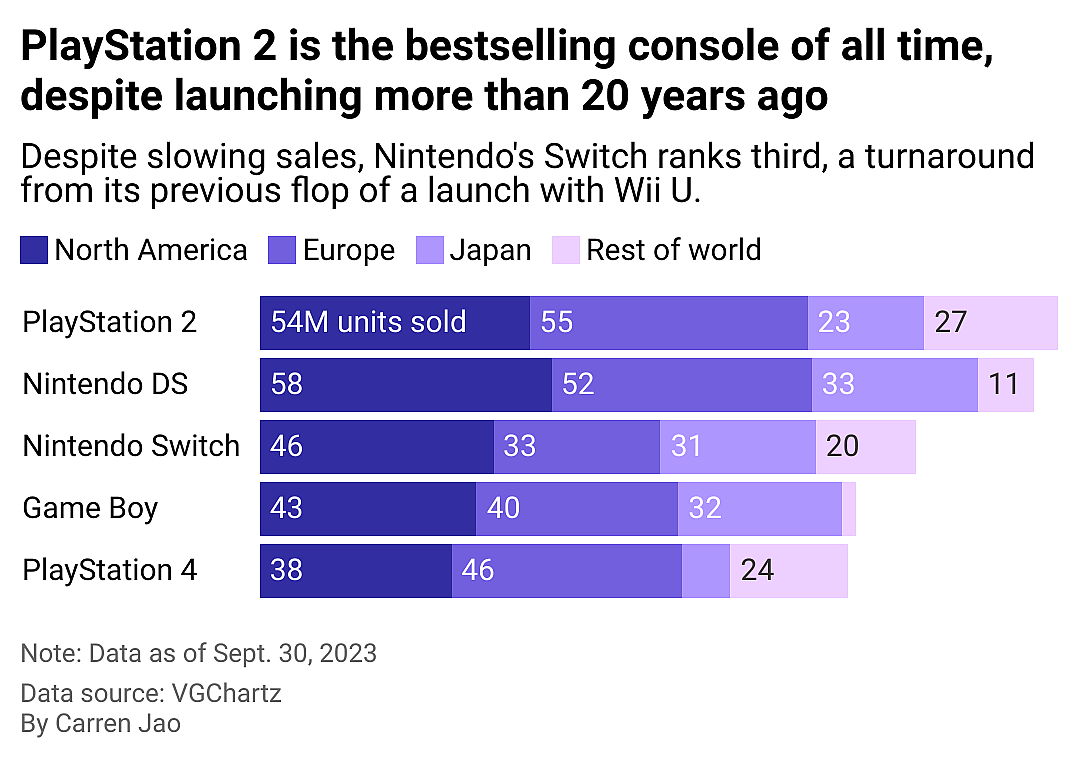
1 / 4Sony's PlayStation 2 leads the list, but Nintendo represents the bulk of the top 5 bestsellers
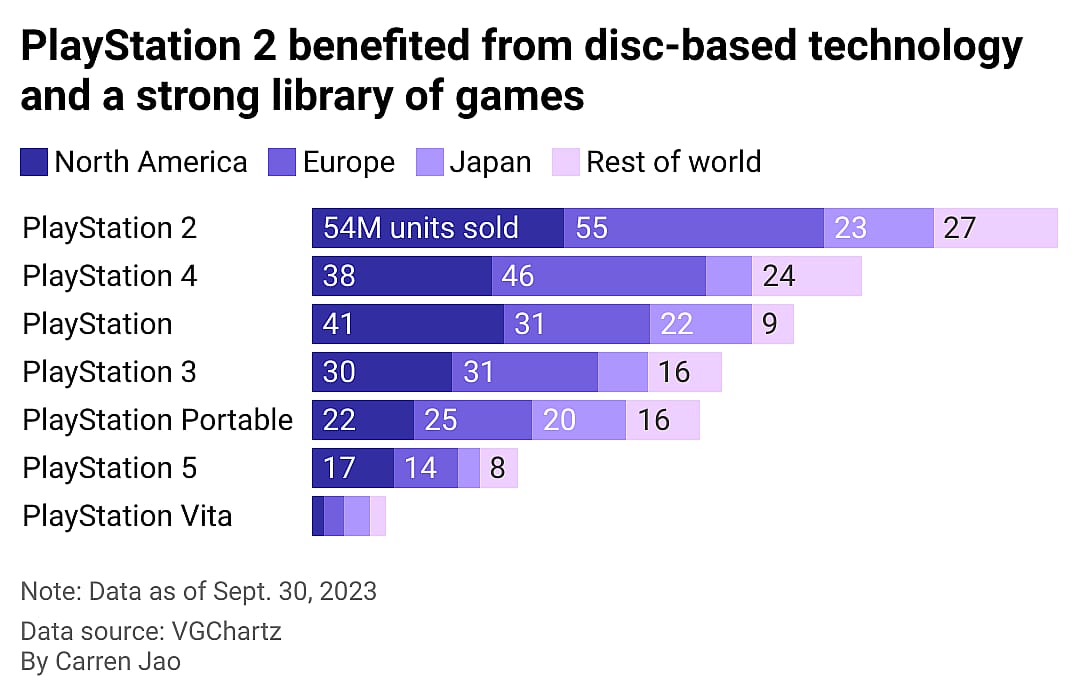
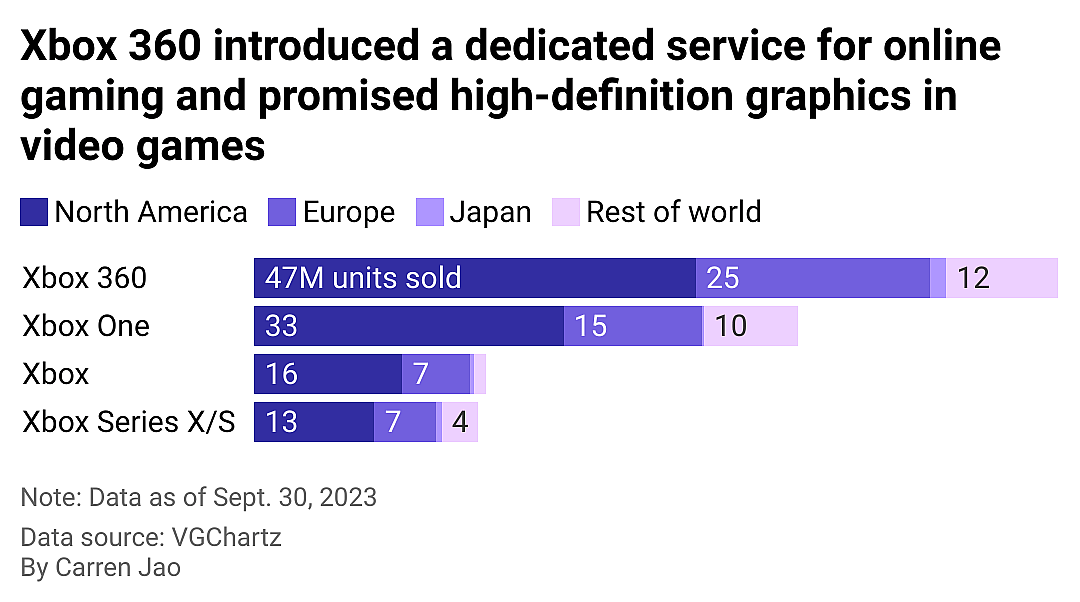
Hitting the market in 2000, the PlayStation 2 was and still remains the bestselling video game console of all time. With almost 160 million units sold in its lifetime, the PS2 far surpassed its contemporaries, the Nintendo GameCube (which now occupies the #22 spot on the list of bestselling consoles) and Microsoft's Xbox (#20 on the list). The PS2 remains a model example of how a video game console can succeed against the competition, with numerous strengths that led to its staying power.
One of the key factors in PS2's success was time. The PS2 launched more than a year ahead of Xbox and GameCube in all territories. The latter two launched toward the end of 2001. By the time PS2 was released, the first PlayStation console had already established a strong brand for Sony's video gaming venture, even defeating the Nintendo 64 in sales. Sony was the market leader at the time, and the second PlayStation console only continued the brand's momentum.
Despite having twice the memory and processing power of PS2, the Xbox still failed to convince consumers. Third-party game publishers supported the PS2 en masse, knowing that their games would reach wider audiences. Companies such as Square Enix, Konami, and Rockstar would launch games exclusively on the platform, including Final Fantasy X, Metal Gear Solid 2, and Grand Theft Auto: San Andreas, which all went on to become bestsellers.
DVD technology would be another factor in favor of the PS2. By 2000, the DVD was the standard format for movie home releases, and having a relatively cheap DVD player in the PS2 was a selling point for consumers who didn't even play games.
The PS2's success led to a long life. The model stayed in production for 12 years. It was only in 2013—long after the PlayStation 3 was released in 2006—that Sony ceased manufacturing the model.
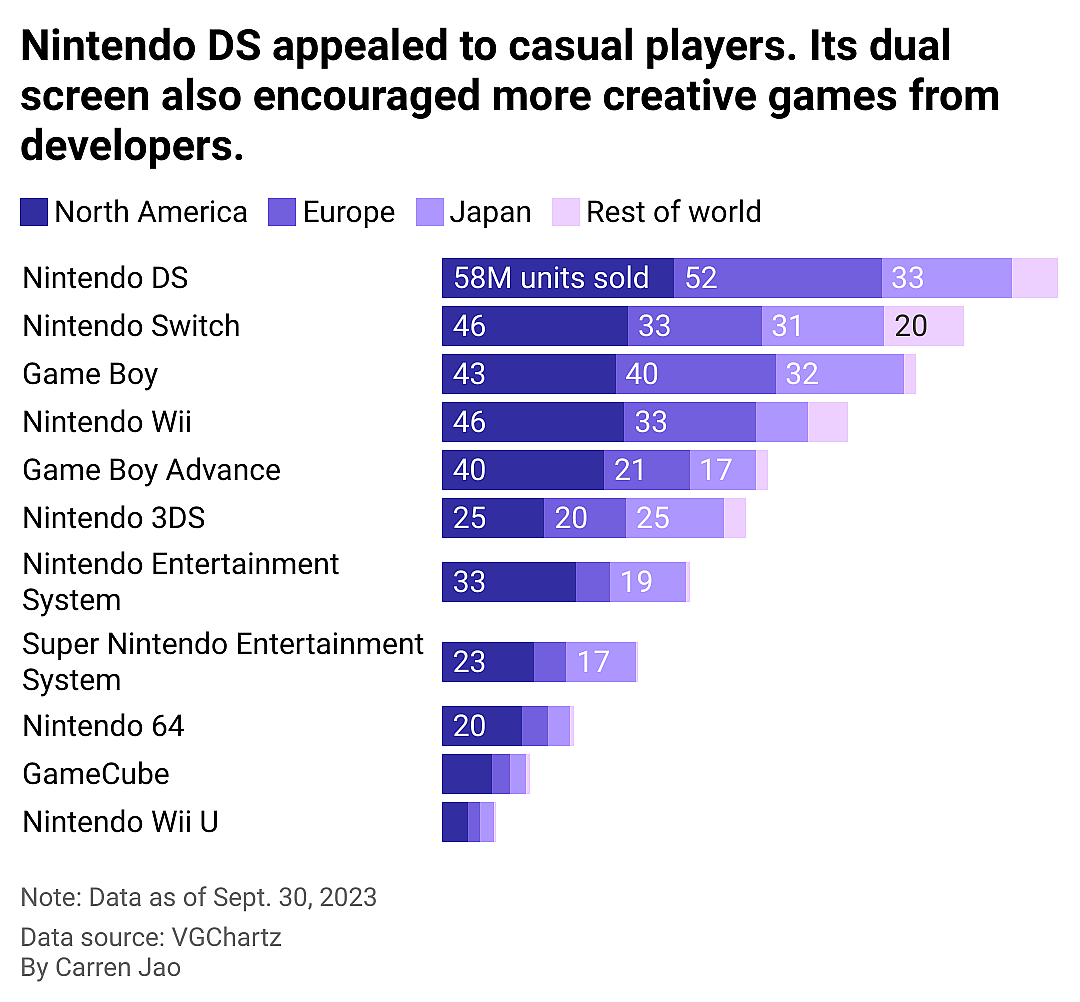
Meanwhile, right behind the PS2 with at least 154 million units sold is the Nintendo DS, a foldable dual-screen handheld released in 2004. A successor to the massively successful Game Boy and Game Boy Advance line, the only major competition was Sony's PlayStation Portable, which came out in 2005 in most territories. While the PSP was a more powerful device with a larger screen, the dual-screen nature of the DS was attractive to game developers, who created unique games that consumers took an interest in.
Games like Brain Age took advantage of the DS stylus and touch screen, inviting casual players and promoting quick game sessions. Nintendogs allowed players to interact with puppies with controls, and Animal Crossing: Wild World gave players something to do every day. Essentially, the DS became a part of owners' routines. Meanwhile, the PSP struggled with its higher price and lack of appealing games.
The most recent console to hit the top five bestsellers is the Nintendo Switch, which debuted in 2017. As a "hybrid" platform, the Switch is playable both on the television and as a handheld device. With a massive library of games and a remarkable concept that is easy to sell, the Switch has already become the third bestselling console of all time, with about 130 million units sold, and counting.
The writing is on the wall for the Nintendo Switch, however. Reports point to a next-generation successor that could release as early as 2024. Could the Switch overtake DS in sales as its time on the market dwindles? The Switch is significantly more expensive than the DS was in its lifetime, so the record set by the DS could remain a pie in the sky for Nintendo.