General Photographic Agency // Getty Images
1 / 10Luxe and more in the 1920s
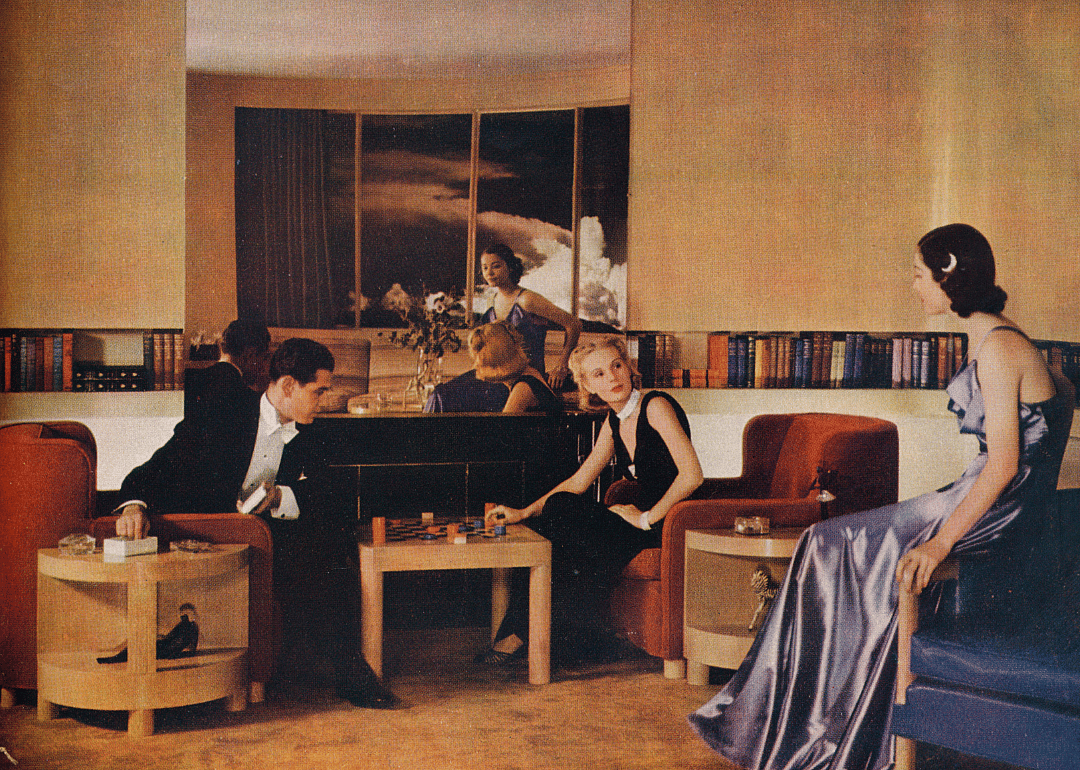
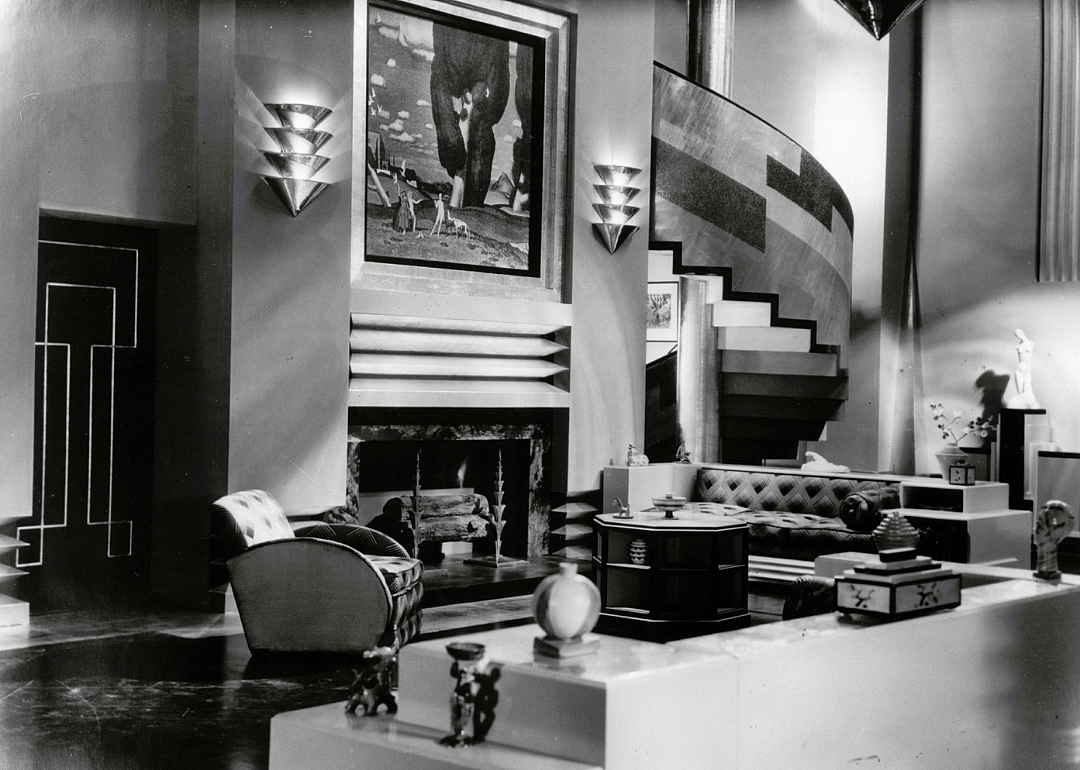
There was much to celebrate during the Roaring '20s: a booming economy, women's right to vote, steamship and air travel. There was a feeling that anything was possible following the victory of the Allied powers in World War I, and art deco embodied this.
Introduced at the 1925 Exposition Internationale des Arts Décoratifs et Industriels Modernes in Paris, designers expressed art deco through luxurious upholstery and heavily ornamented decor. Glamour was key. Bold patterns and stylized interpretations of natural wonders like sun rays and geometric ones like chevrons abound in everything from wood inlays to chandeliers and doors. But not everyone embraced or could afford such extravagance.
Enter German Bauhaus design, which was more accessible with mass-produced furniture. It saw beauty in simplicity, stripping furniture down to its essence in form and shape. Marcel Breuer's revolutionary Wassily Chair, designed in 1925, exemplified this: no cushioning, heavy upholstery, or wood base—just strips of leather stretched tight across a tubular steel frame.