Peter Yeung for Reasons to be Cheerful
1 / 2Museums as social actors
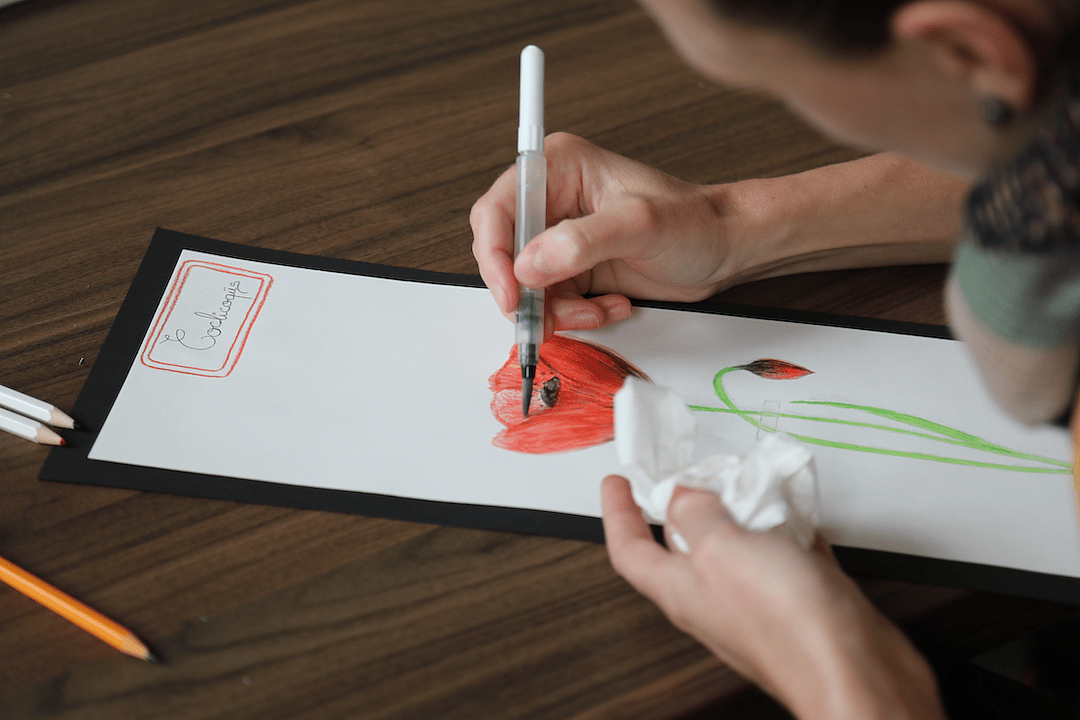
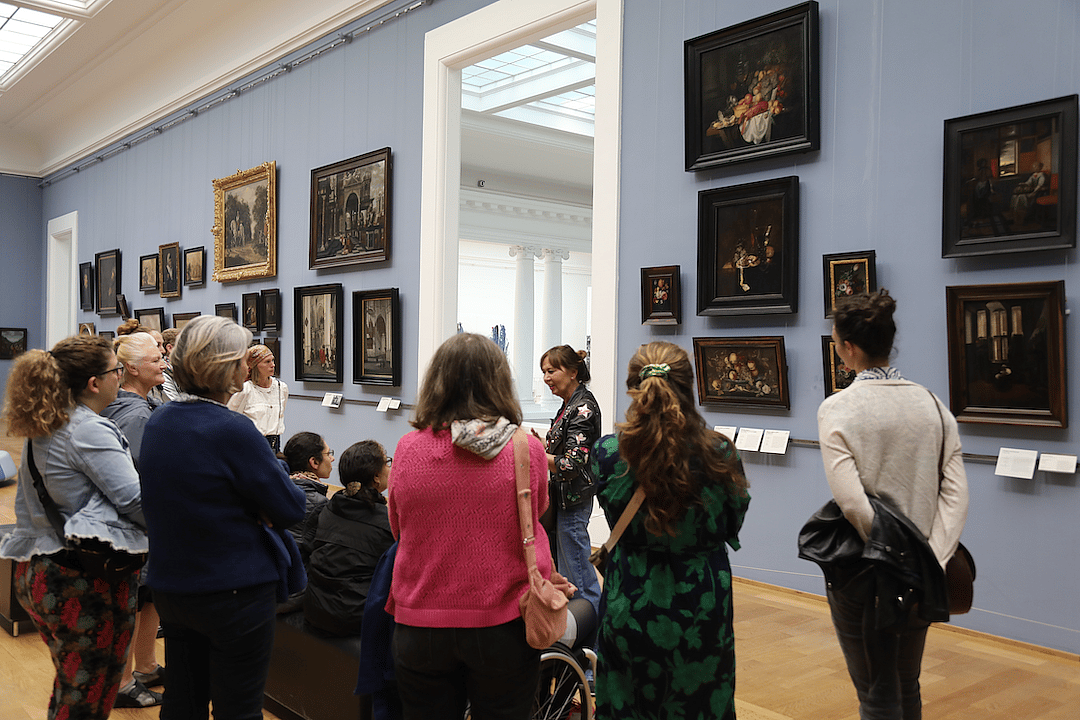
Bonnave, leading the group above, begins each two-hour session with a brief tour of the museum's collection to inspire participants. For this class, she picked a few Realist paintings of flowers and fruits, otherwise known as nature morte, in the museum's Dutch section.
"I know the power of art," says Bonnave. "This place is a gold mine of inspiration."
Then, participants move to another part of the museum to do an art therapy session.
The efforts, which began a decade ago with sessions for autistic children, were in part triggered by the museum's need to involve the public in the arts as part of a French obligation for cultural institutions known as the PSC, according to Marie Vidal de la Blache, the Palais's public development manager and lead for art-health projects.
"The role of museums isn't just to present art works," says De la Blache. "As a museum, we have to be a social actor. We can't just serve the same people."
The development of the program began with many meetings between city officials and museum figures as well as doctors and hospital representatives in Lille, and it took years to build the awareness, appreciation and demand for the approach.
"It took a while to spread," adds De la Blache. But now sessions are fully booked.
Lille's museum prescriptions program held its first session in November and is around half way through its year-long course. Questionnaires are being given to participants before and after sessions, which will later be studied to assess the impact of the project.
Nonetheless, according to Julia Hotz, a journalist and author of The Connection Cure, a book exploring the impact of social prescribing projects in 30 countries across the world, there is already an "extremely wide" evidence base for the practice.
"There's a lot of evidence to show that social prescribing improves health outcomes," says Hotz. "And there is more and more every year."
For example, a longitudinal study of 23,660 individuals in the UK participating in choirs, book clubs, amateur theater and other cultural groups between 2010 and 2015 found that people who were frequently engaged in arts "had lower levels of mental distress and higher levels of mental functioning and life satisfaction."
Similarly, research spanning more than 90,000 elderly people over 16 countries in 2023 found those with hobbies had fewer depressive symptoms and higher levels of health and life satisfaction. A 25-year study of adults in Copenhagen found those involved in sports groups had life expectancies up to 10 years higher. Meanwhile, a study of 11,000 adolescents in the US found extracurricular arts activities reduced loneliness and boosted peer support — a lack of which can lead to antisocial or criminal behavior.
Hotz says there are a broad number of applications for social prescribing, such as treating diabetes and health issues, often with sports and physical activity-oriented clubs, as well as tackling loneliness, anxiety and attention disorders, with cultural initiatives like Lille's museum prescriptions.
"Museums take us out of our own head," she says. "We get lost in the beauty of something else. It removes us from our anxiety."
That claim is hard to disagree with while within the airy surroundings of the Palais des Beaux-Arts, whose highlights include Édouard Manet's intimate modernist portraits and Peter Paul Rubens' grand 17th-century masterpieces.