Gamesville
1 / 2Americans gravitating toward gaming
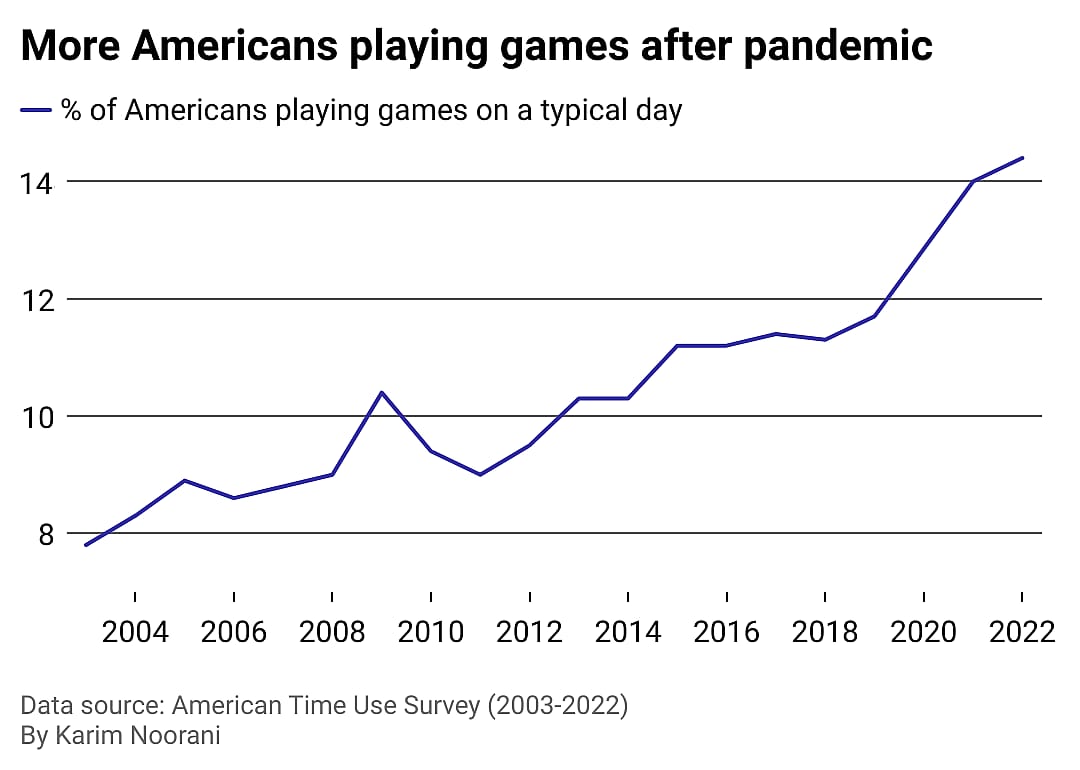
The number of people who play games has steadily increased since the beginning of the 21st century. According to the ATUS, there was a spike in gaming activity in 2009, with more than 10% of U.S. residents regularly playing games—from board games to video games.
At this point in time in the video games industry, Nintendo's Wii dominates the console market, even appealing to nongamers, thanks to titles like Wii Sports. Meanwhile, the Xbox 360 and PlayStation 3 are pushing bestselling franchises like Halo and Grand Theft Auto, taking the gaming industry to new heights in revenue.
More significant is the advent of smartphone devices, with Apple's iPhone and Google's Android operating system launching before 2009, along with their respective app stores. As smartphones became commonplace, the barrier to entry for quick and casual forms of gaming was minimal. Unlike typical console and PC video games, which were $50 to $60 then, most mobile games like Temple Run, Doodle Jump, Angry Birds, and Words with Friends were free to download.
Gaming hit another peak starting in 2020, undoubtedly due to the COVID-19 pandemic and ensuing lockdowns. The ATUS found that at least 1 in 10 people in the U.S. were playing games (13%), with the percentage rising to over 14% by 2022. As movie theaters shut down nationwide and people were isolated in their own homes, newly released social video games like Animal Crossing: New Horizons on Nintendo Switch provided both core and casual gamers with entertainment from home, while others organized virtual board game and tabletop game sessions through programs like Zoom and Discord. Although the production and development of games struggled due to the shift in work-from-home environments, consumers had more time and opportunity to play games during the pinnacle of the pandemic.
According to a 2020 report from market research company The NPD Group, 35% of video gamers found their playtime had increased compared to before the pandemic. Based on a 2022 Entertainment Software Association study, 7 in 10 gamers play on smartphones, and 3 in 5 gamers play on multiple devices, including consoles, phones, and PCs.
According to International Market Analysis Research and Consulting Group research, board games have also grown more popular and are projected to reach $29.7 billion by 2028. Apart from the pandemic, The Washington Post also credits the rise of platforms like Kickstarter, which helps unknown designers release their games, and YouTube channels like Watch It Played with piquing growing interest in these community-building games. The publication declared it a "golden age of board games."