National Health Ratings
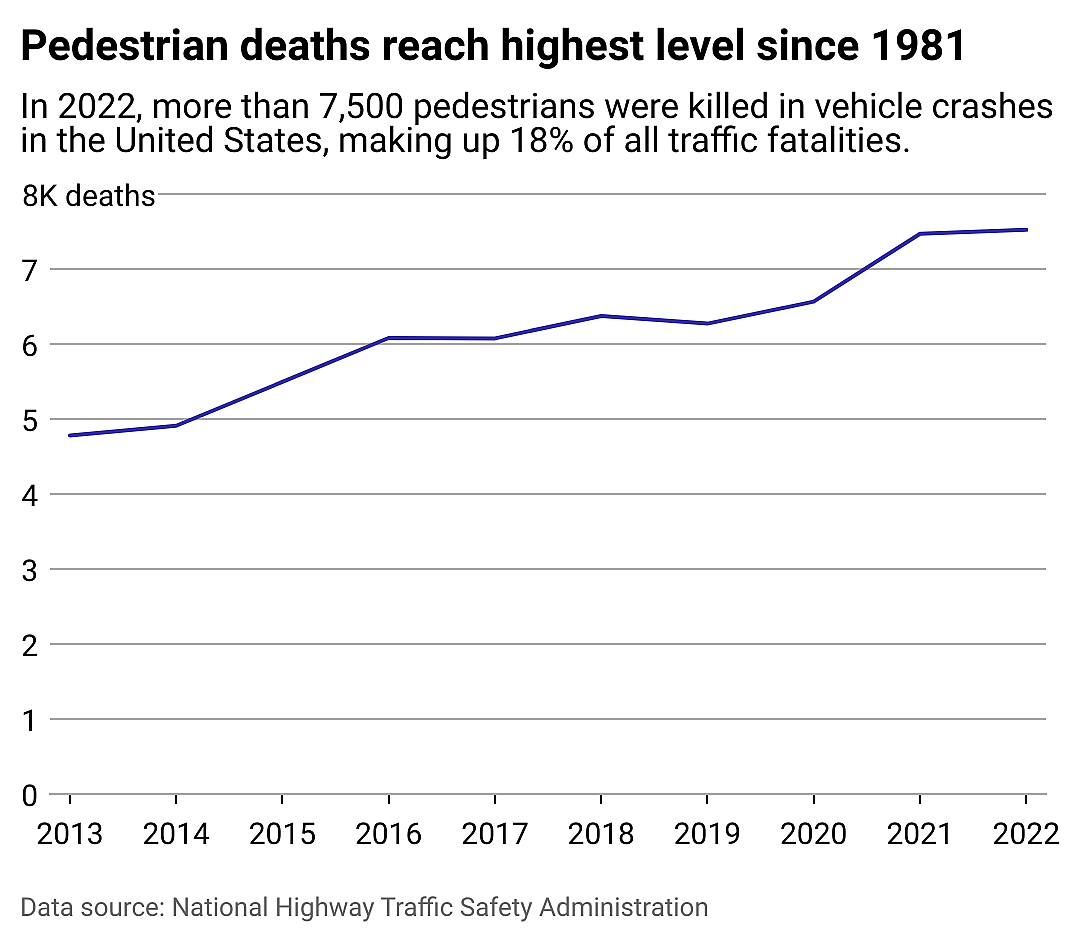
1 / 2Pedestrian deaths on the rise
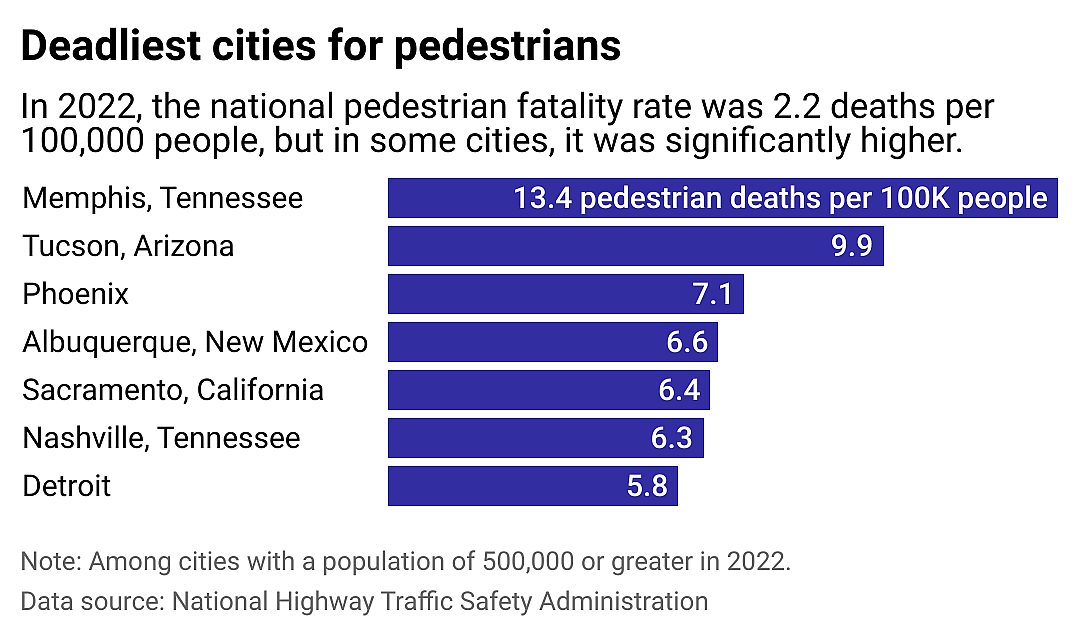
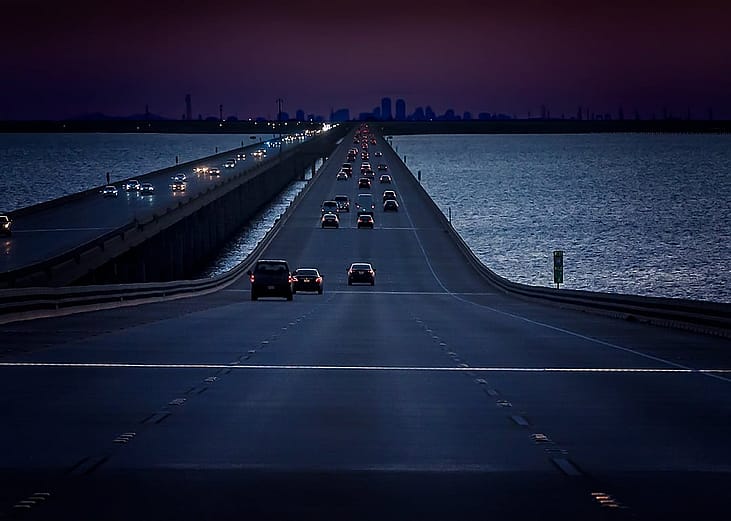
Most pedestrian fatalities occur in urban areas, apart from intersections, and typically at night when it's harder to see people walking along the road. A 2023 study in the Journal of Transport and Land Use found that pedestrian fatality hot spots often shared common characteristics, like multilane roadways with five or more lanes to cross, 30 mph or higher speed limits, and traffic volumes surpassing 25,000 vehicles daily.
Dangerous road infrastructure is one of the most significant contributors to pedestrian deaths across America, and many cities are grappling with how structural racism has shaped street designs in disinvested neighborhoods.
The highway boom of the 1950s and 1960s saw many interstates routed through Black neighborhoods, which often deliberately destroyed or isolated these communities. A 2017 Department of Transportation report determined the U.S. interstate system displaced over a million people and businesses in less than two decades.
In North Nashville, Tennessee, for example, the construction of Interstate 40 and I-65 split its Black communities into three and nearly destroyed its then-thriving Jefferson Street corridor. In 1967, Black residents protested the construction, even suing the state in federal court. However, Tennessee highway planners forged ahead with the plan, which displaced nearly 80% of Nashville's Black businesses and over 1,000 residents. But it also became difficult to safely walk between the two neighborhoods, which were now divided by highways and converging traffic.
Dividing Black communities with highways resulted in higher volumes of traffic running through them, creating more dangerous, less walkable neighborhoods that continue today. A 2023 UNC Chapel Hill study found that neighborhoods that the federal government redlined—a now-illegal policy that encouraged banks to deny mortgages to Black households and segregate them from white households—also became targets for building new arterial roads and highways, leading to higher rates of pedestrian traffic deaths decades later. It's a cycle that's hard to break, leaving many roads deadly by design.