Oliver Berg/picture alliance // Getty Images
1 / 3AI is changing many aspects of the worker experience
From recruitment and onboarding to daily tasks like meetings and emails, AI technologies are helping companies become more productive and efficient while offering greater accessibility to people with disabilities.
In hiring, tools like Workable and hireEZ claim AI technologies help source candidates by analyzing profiles and matching them to job descriptions, saving time and improving accuracy. Others, like Pymetrics, a startup founded by a neuroscientist, are experimenting with AI-driven games designed to reduce unconscious bias and assess a candidate's skills objectively. (The startup has since been acquired by recruitment company Harver.) If successful, these advancements could potentially offer fairer hiring processes.
However, it's important to note that the technology's imperfections require continual human oversight in hiring processes. According to ADA's guidance released in May 2022, employers using AI-powered hiring technology without adequate human review could risk screening out qualified candidates, including those with disabilities.
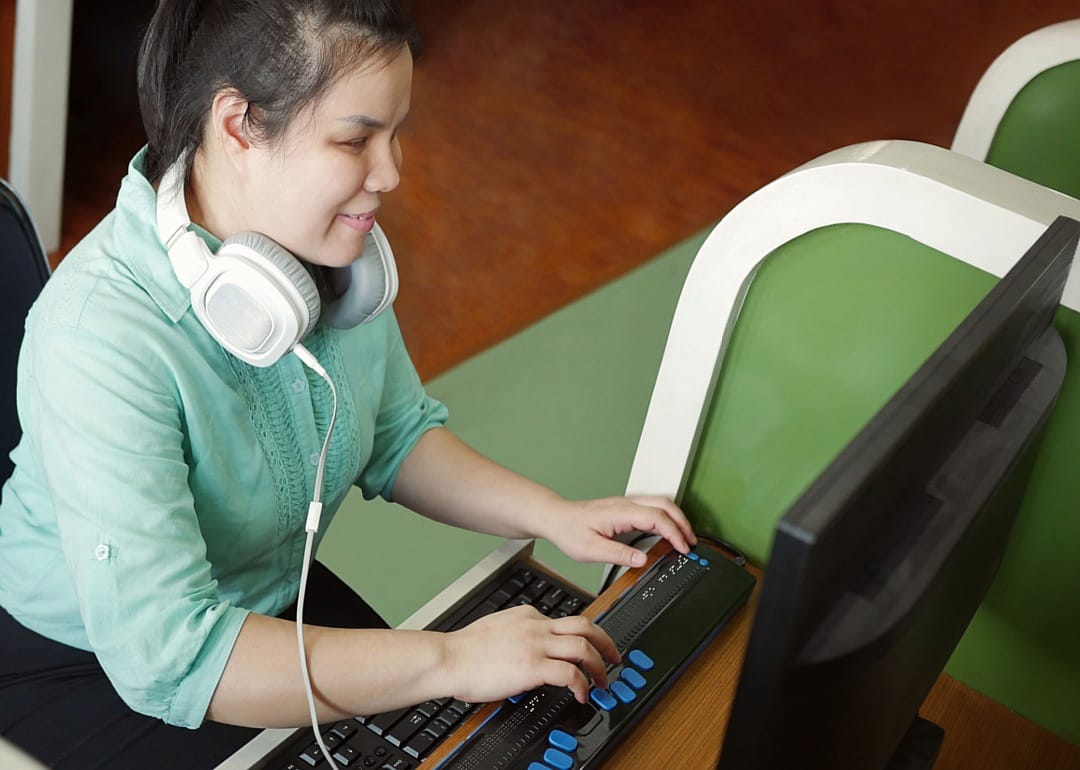
Companies are also providing a broader set of accessibility products for workers with disabilities individually. For employees with vision impairments, apps like Microsoft's Seeing AI and Be My Eyes provide audio descriptions to help workers listen to text, identify objects, and recognize faces. Employees who are hard of hearing can use tools such as Google's Live Transcribe app and audio word processor Descript, which provides transcription of spoken conversations. Tools like NaturalReader convert written documents into audio formats, making information more accessible.
Many of these tools fall into the category of universal design, which is a way of creating spaces that anyone can use. "Universal design is the design and composition of an environment so that it can be accessed, understood and used to the greatest extent possible by all people regardless of their age, size, ability or disability," according to the Centre for Excellence in Universal Design. "This is not a special requirement for the benefit of only a minority of the population. It is a fundamental condition of good design."