Drata
1 / 2Email scams, ransomware, and phishing all lead to cybercrimes
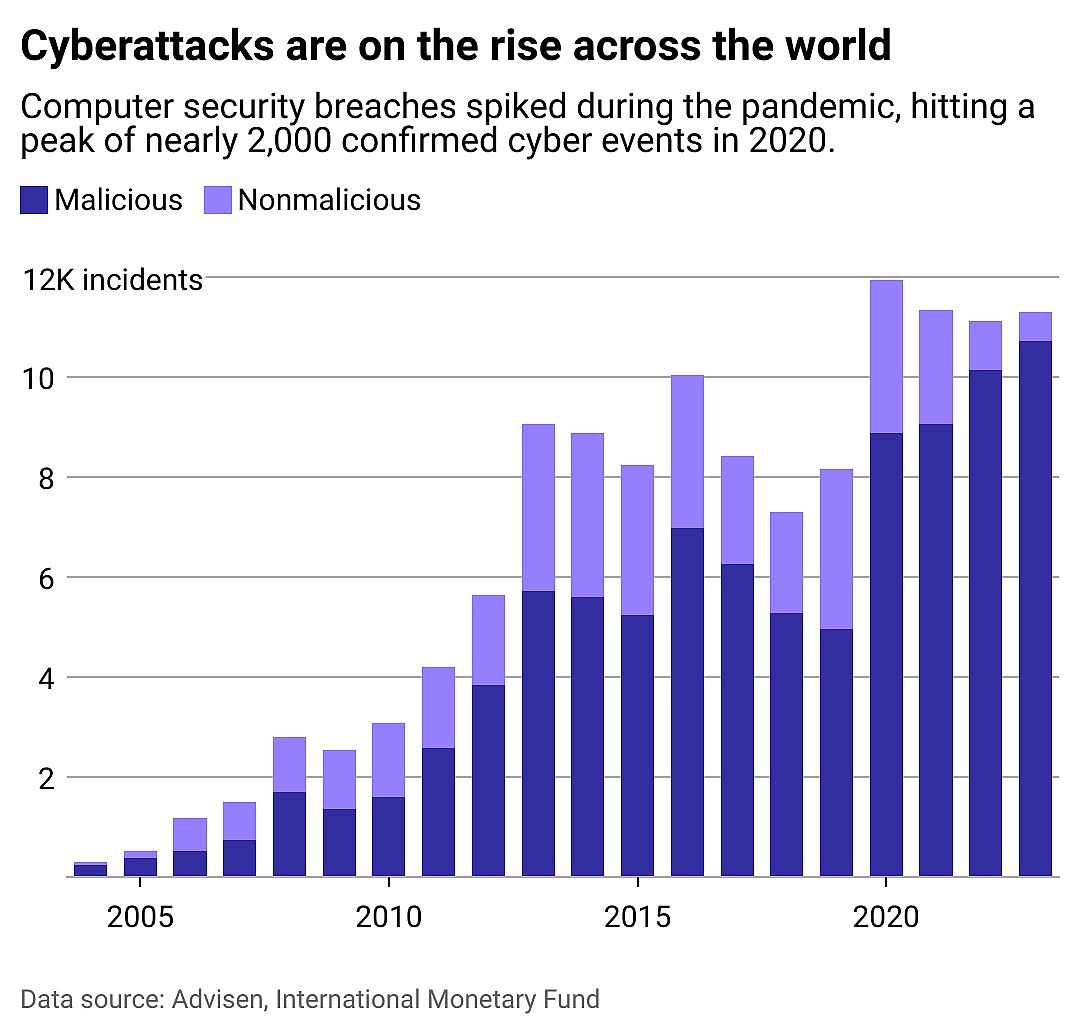
Hackers exploit cybersecurity vulnerabilities using various types of attacks including phishing, ransomware, and data breaches.
Business email compromises alone accounted for nearly $3 billion in losses in 2023, with the vast majority, 94%, of organizations reporting some type of email incident. These types of scams target legitimate business email accounts, often using fake vendor accounts, requests for cash for gift cards, or custodial accounts to conduct unauthorized funds transfers, according to the FBI's 2023 Internet Crime Report.
Data breaches, or the loss of an organization's sensitive information, reportedly cost $4.9 million on average in 2024 globally, an increase of 10% over the previous year. Large organizations are not the only groups to fall victim to malicious online behavior, however. Attackers now look for much smaller targets, with companies with fewer than 100 employees three times likelier than large companies to be targeted by cybercriminals, according to a 2022 report from IT security company Barracuda Networks.
Because many smaller businesses lack sufficient resources to cover the financial fallout, roughly 2 in 3 small to midsized businesses go out of business within six months of a cyberattack, according to a 2023 report from the United States Agency for International Development.
Though larger institutions may have more resources, cybercrimes still cause severe reputational damage in addition to the loss of funds and intellectual property. A data breach or hack at a financial institution, transportation service, or even a government agency could have a lasting impact on stakeholders ranging from national governments to individuals. The Treasury Department reported a loss of $1.2 billion to U.S. financial institutions in 2021.
Cybercrimes can also have broad economic consequences, including the costly disruption of critical business operations and increased cybersecurity across industries. Ransomware attacks on several major oil terminals in Germany, Belgium, and the Netherlands in early 2022 exposed the risks of supply chain disruptions, highlighting the impact of cybercrimes on the global economy. The resulting rising inflation and unemployment revealed how attacks can bring industries to their knees, potentially triggering a ripple effect throughout major economies and local communities.