Shopdog
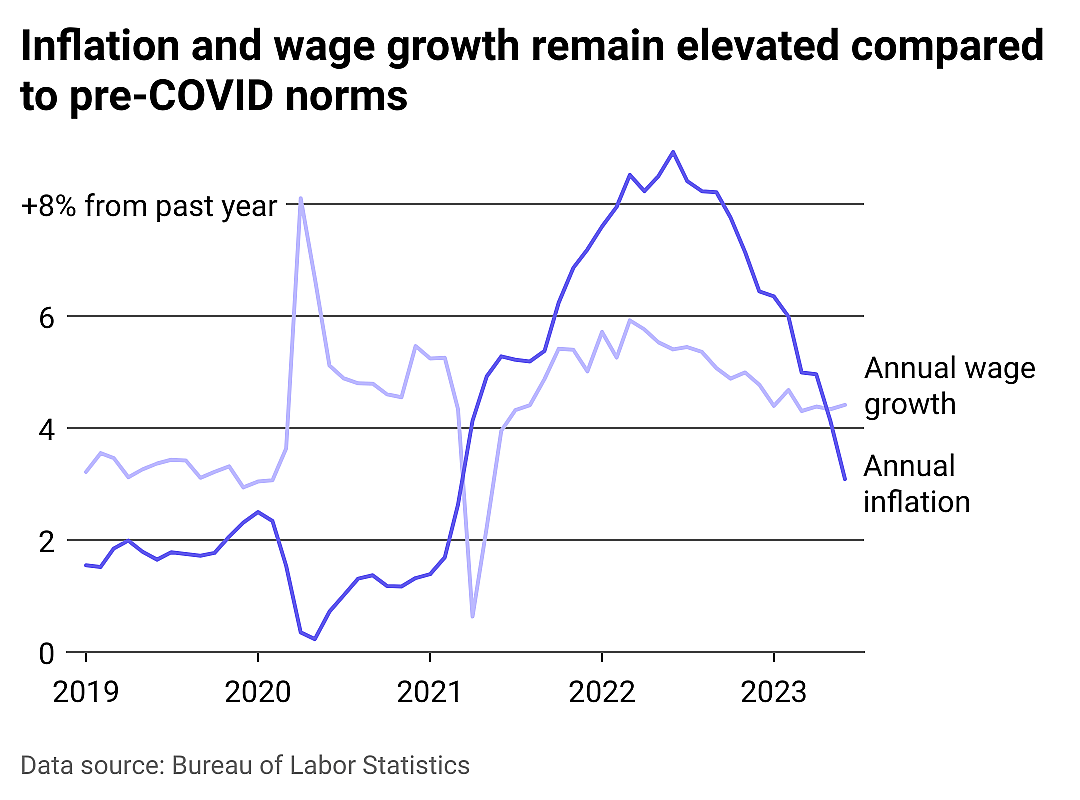
1 / 2Wages rose to keep up with inflation, which is now nearing more typical levels
Not all prices change as quickly as others during a recession or inflation. One such price group is wages, or the cost of labor. Theoretically, wages should rise and fall due to market forces. However, several factors contribute to salaries growing slower than inflation—a phenomenon known as "sticky wages." For one, salaries are often set through agreements with trade unions or employment contracts, which tend to limit wages' susceptibility to drastic changes.
Should there be deflationary pressure on wages, the stickiness benefits employees because while the value of money increases, having the same nominal wage as before means the purchasing power of their salaries increases. The converse can hurt employees during inflationary pressures on prices because until salaries are renegotiated or voluntarily raised, the value of the wages disbursed decreases as money loses its value.
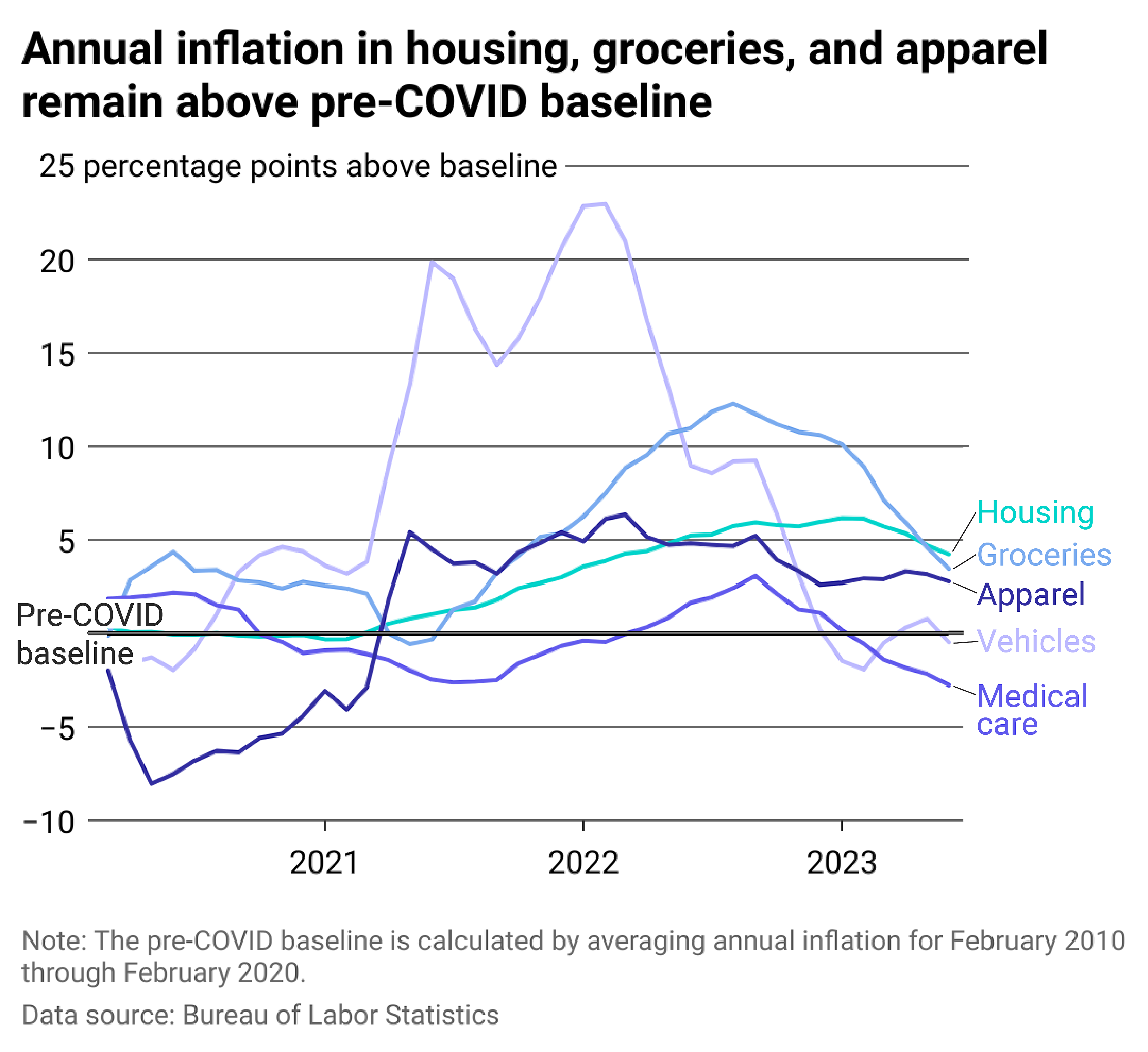
During the early half of 2021, inflation overtook the wage growth rate steeply, coinciding with high temporary layoffs that persisted around February 2021, following a spike in early 2020 when lockdowns began.
On the other hand, demand continued to rise as many consumers saw they had more spendable funds due to increased savings during the pandemic's early half, as well as pandemic bailout checks, as the McKinsey Global Institute noted. Due to supply chain disruptions, prices rose with a limited supply of demanded goods and services.
The disparity between annual wage growth and annual inflation continued to expand until the Federal Reserve began its inflation rate hikes in early 2022, after which the disparity reached its peak and started decreasing, influenced by other factors aside from the rate hikes, such as the reopening of the economy, end of lockdowns, and gradual restoration of supply chains.
In early July, the government reported that inflation reached its lowest level since the first half of 2021 at 3%, 1 percentage point above the Federal Reserve's goal of 2%. The annual wage growth rate also appears to be greater than annual inflation.