MoneyTransfers.com
1 / 6Africa
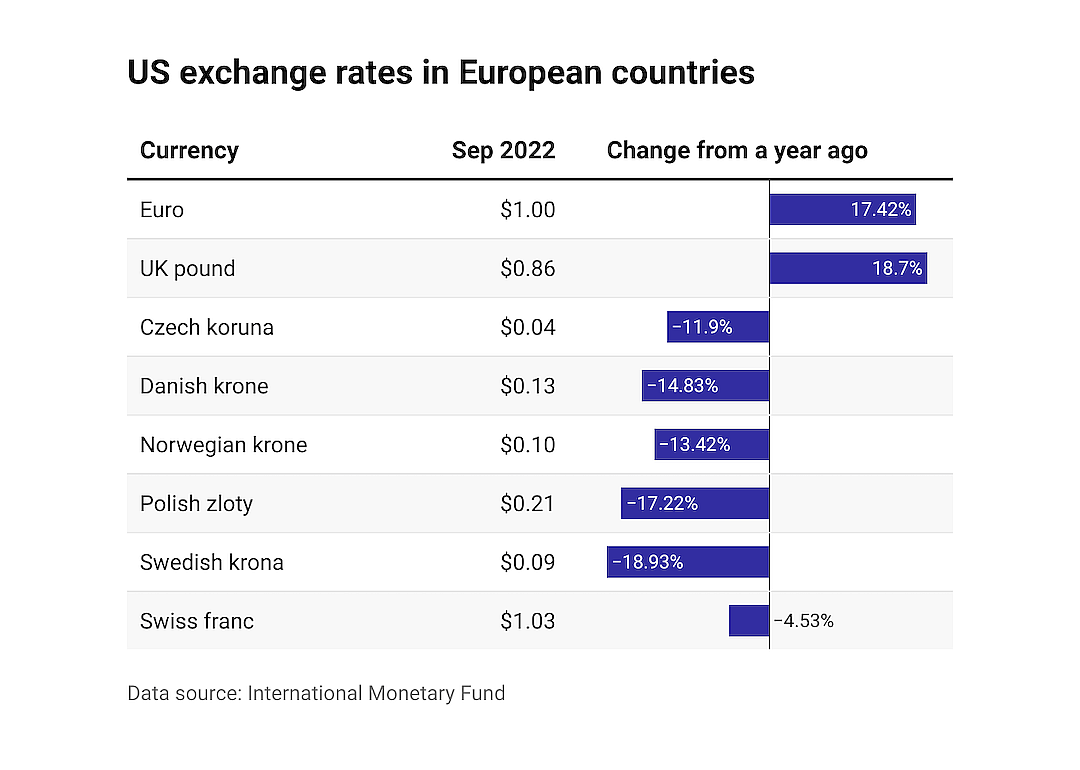
Due to half of international trade being invoiced in U.S. dollars, a stronger dollar hurts consumers worldwide who pay for imports using dollars, including importers in Africa. This rise in the dollar is due to the Fed's aggressive hikes in interest rates and investors seeing the dollar as a safe haven asset. Additionally, the currencies of 14 African countries are pegged at a fixed rate to the euro, so their currencies are directly affected by euro depreciation.
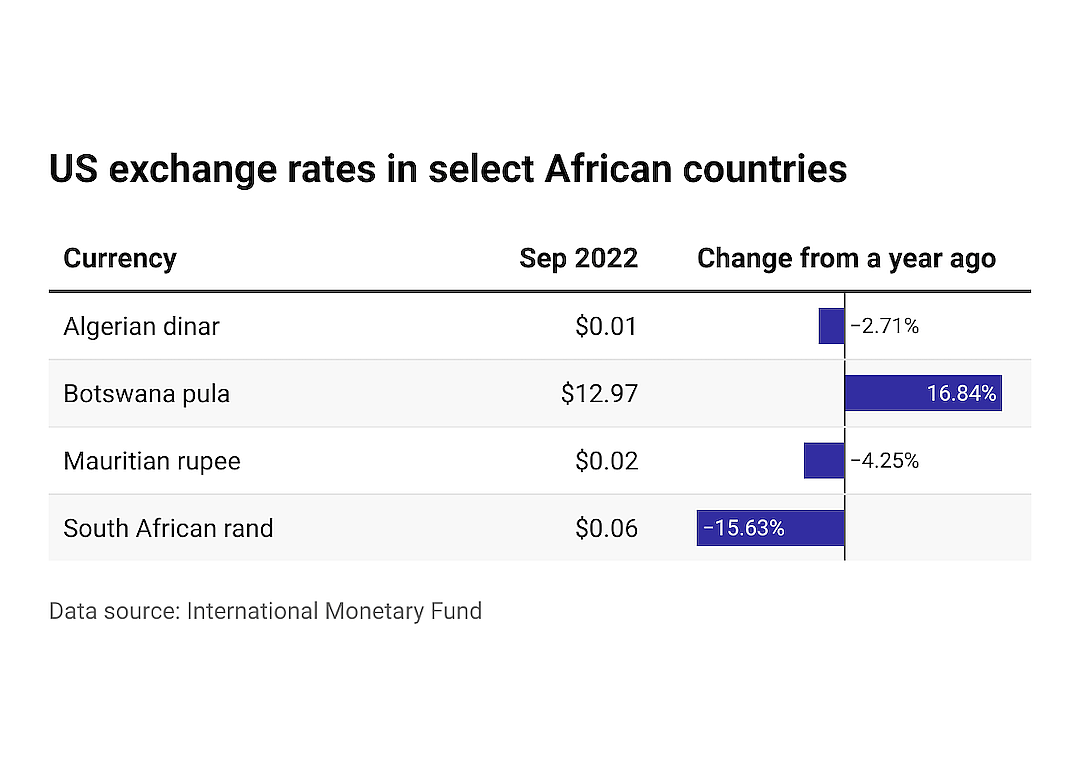
The Botswana pula has gone down because the country is aiming to increase its export competitiveness. The pandemic has reduced the South Africa-bordering country's diamond exports—an essential part of its economy—to such an extent that its president called on Botswana leaders to diversify commodity exports.
In September, the South African rand weakened as the value of the U.S. dollar stayed high due to expectations that the Fed would continue hiking interest rates. The South African currency dropped significantly earlier this year due to catastrophic floods. Additionally, South Africa has faced uncertainty over the country's general elections, continued concerns regarding the funding needs of state-owned enterprises, and global factors, such as stagnant gold prices. South Africa is the 10th largest gold exporter in the world. As a member of the BRICS coalition (which stands for Brazil, Russia, India, China, and South Africa), South Africa has sought to reduce the dollar's share in its trade with China and other countries.
The COVID-19 pandemic potentially resurging in South African cities also hurts the rand's prospects as wide-scale disruptions could stall economic recovery and growth, as does the Fed's hawkish policy shifting investment inflows from commodities, including gold, to Treasuries. In response to the raising of interest rates by the U.S. Federal Reserve, South Africa lifted interest rates to 6.25% in September.