Passport
1 / 1How Will the April 2025 Tariffs Impact E-commerce Brands?
For merchants, the implications of these new tariffs and the end of de minimis will depend heavily on sourcing, fulfillment models, and shipping strategy. Understanding how these policy updates affect different business types is key to identifying the right operational adjustments.
1. Brands Shipping China-Made Products Directly to the U.S.
What to Expect:
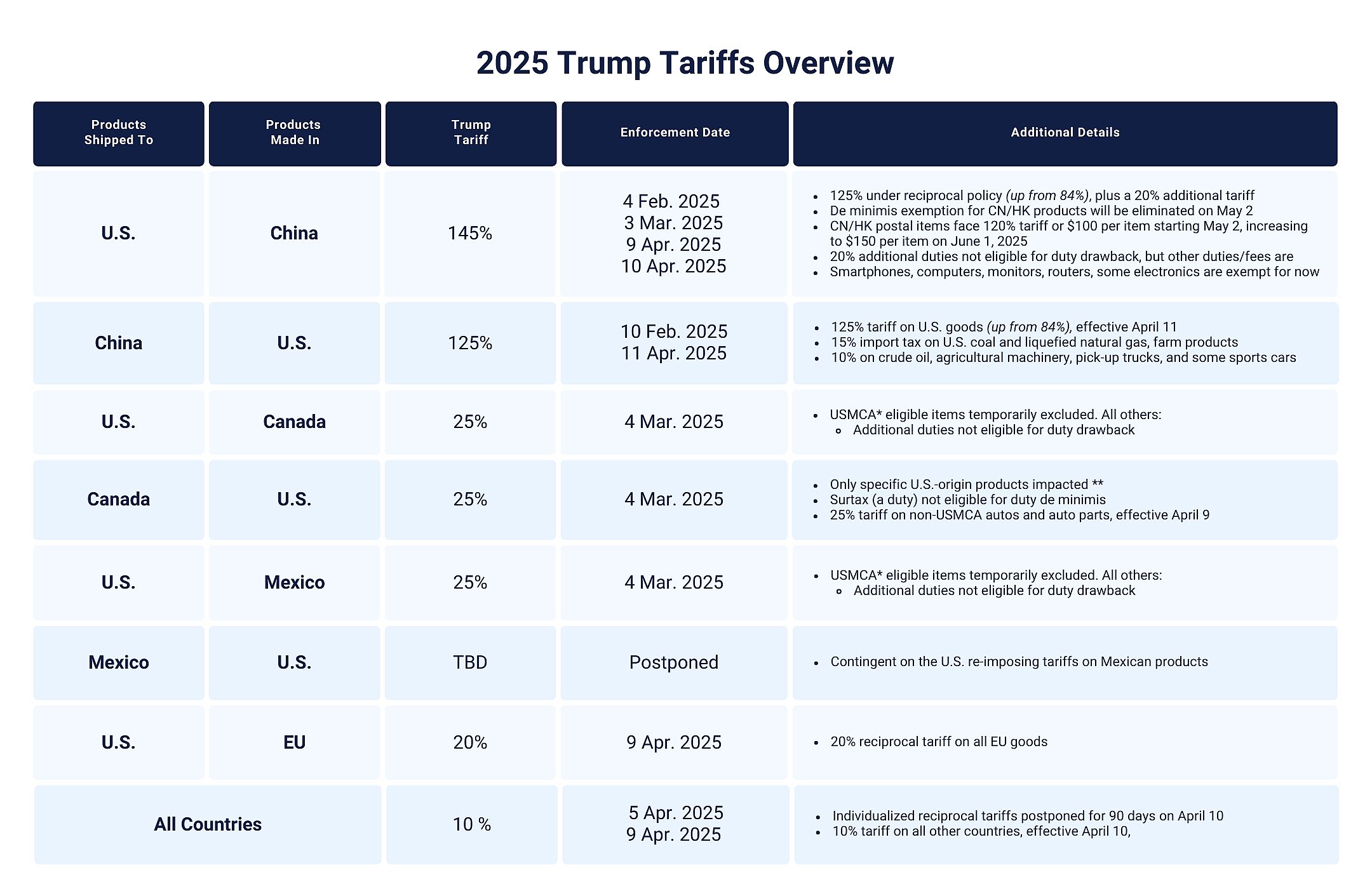
- A 125% reciprocal tariff effective April 10—on top of the 20% in additional tariffs introduced earlier this year, as well as any previously existing duties that may still apply
- The end of de minimis on May 2, removing duty-free entry for low-value shipments
- Postal shipments from China will be subject to duties beginning May 2, with a rate of 120% or $100 per item—increasing to $150 per item on June 1
Biggest Challenges:
- Rising landed costs on low-value, high-volume shipments
- Increased customs complexity and longer clearance times
- Pressure to increase prices or change fulfillment strategies
2. Brands Shipping China-Made Products but Fulfilling From the U.S.
What to Expect:
- Higher import costs when bringing inventory into the U.S. from China
- Fluctuating freight costs as carriers respond to shifting demand—including early spikes as brands rush to reposition inventory, followed by potential drop-offs
Biggest Challenges:
- Balancing higher U.S. duties with continued cross-border shipping costs
- Need for more agile fulfillment options across North America
- Maintaining predictable landed costs to support consistent pricing strategies
3. U.S.-Made Products Shipped to Canada and Mexico
What to Expect:
- Canada's 25% retaliatory surtax on select U.S.-origin goods is now in effect, as of March 4
- Mexico may impose similar tariffs depending on future U.S. policy moves
Biggest Challenges:
- Uncertainty around tariff timing and enforcement
- Potential impact on price competitiveness in North American markets
4. Brands Sourcing Outside of China (e.g., Vietnam, India)
What to Expect:
- Continued access to the U.S. $800 de minimis—for now (though bulk imports are subject to reciprocal tariffs, including 10% for Vietnam and India)
- A planned global phaseout of the de minimis exemption once systems are in place
Biggest Challenges:
- Uncertainty around how long de minimis benefits will last
- Need for long-term contingency plans around sourcing and shipping models
What to Do Next: Smart Moves for E-commerce Brands
Whether importing from China, fulfilling regionally, or managing multiple international markets, there are steps every e-commerce brand can take now to stay ahead of these changes.
1. Adjust Pricing and Duty Calculations
Make sure your storefront reflects new tariffs and duties clearly—either built into product pricing or broken out at checkout.
2. Consolidate Shipments Where Possible
Reduce brokerage fees and customs processing costs for orders that are not eligible for de minimis exemption by bundling orders into formal entries instead of multiple low-value shipments—especially as de minimis thresholds disappear.
3. Review Your Import Strategy
Evaluate whether a "first sale" valuationfor U.S. imports (where duties are based on the price paid to the original manufacturer) could help lower your duty liability. This method requires careful compliance with documentation, export designation, and proof of bona fide sales.
4. Shift to In-Country Fulfillment
Reduce tariff exposure and delivery delays by warehousing inventory within your key markets. In-country fulfillment can improve customer experience and shield your brand from ongoing cross-border disruptions.
5. Optimize Country of Origin and Harmonized Tariff Schedule Classifications
Review your sourcing countries and product design to minimize duties and take advantage of preferential trade agreements where applicable. Accurate Harmonized System (HS) codes and country of origin documentation are essential for compliance and long-term cost savings.
6. File for Duty Drawback on Exports
If you're re-exporting goods that were taxed at import, you may be eligible to recover duties paid. Duty drawback allows merchants to recover 99% of duties and fees paid on goods that are imported and then subsequently exported in the same condition. This can also apply to raw materials and packaging that are imported into the U.S. and used to manufacture a finished product.
Navigating an Evolving Era of E-commerce
The April tariff changes mark a turning point for cross-border e-commerce. As tariffs rise and de minimis benefits disappear, brands must rethink their global strategies to protect profitability. Success in this new environment will depend on operational flexibility, smarter fulfillment models, and a clear understanding of international trade dynamics.
To keep up with these changes, TrumpTradeTracker.com provides real-time updates on policy announcements, tariff shifts, and expert insights into what they mean for global commerce. It's a practical resource for following developments as they unfold—and for understanding how they could shape the future of international selling.
In a more complex and regulated trade environment, long-term success will belong to brands that stay informed, adapt early, and plan ahead.
Methodology
This article includes findings from an online survey conducted by Drive Research in partnership with Passport. The study surveyed 100 U.S.-based e-commerce decision-makers between Feb. 13 and March 7, 2025, to assess global expansion plans, regulatory concerns, and operational challenges. The results carry a margin of error of ±10% at a 95% confidence level.