TeacherCertification.com
1 / 3More parents deciding to homeschool
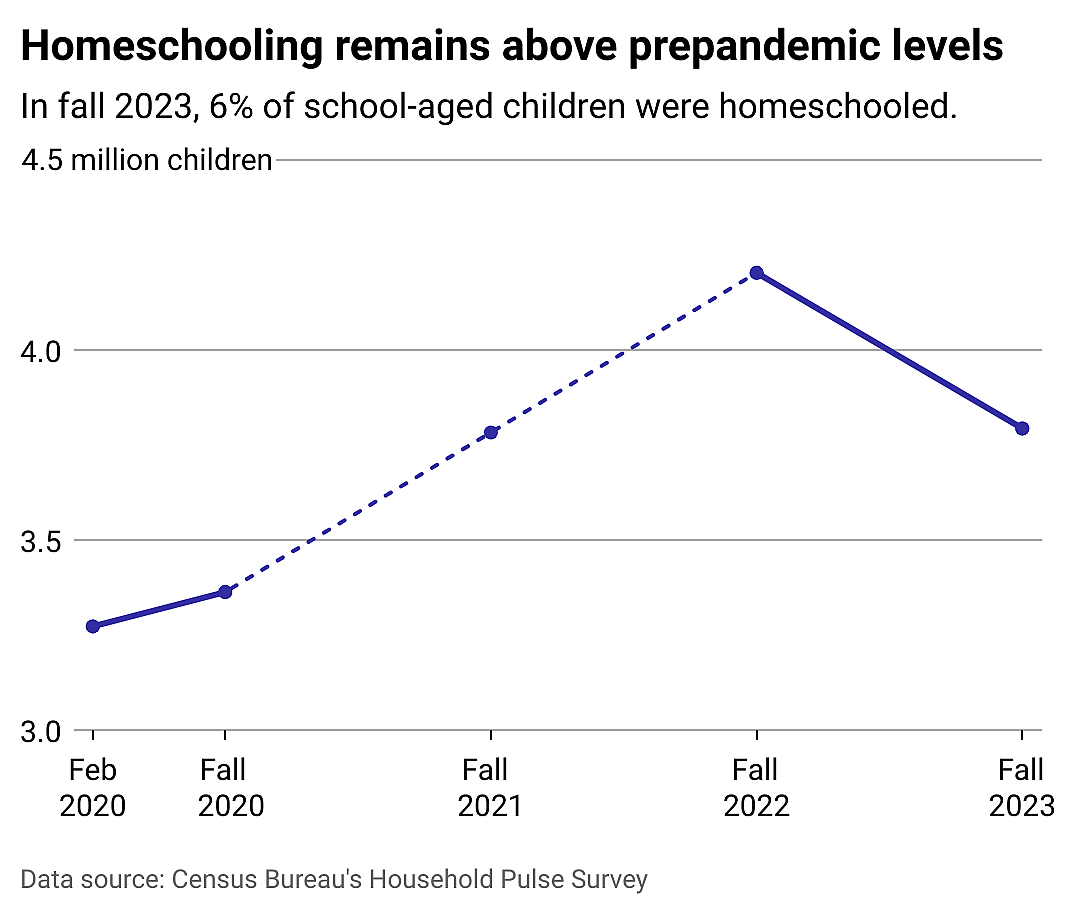
According to the Institute of Education Sciences' 2019 Homeschooling and Full-Time Virtual Education Rates report, just 1 in 50 school-age children were homeschooled in 1999. The homeschool population grew between 2% and 8% annually for several years—until a sharp increase between 2019 and 2021 during the pandemic. By fall 2021, about 1 in 10 households with school-aged children reported homeschooling their children, nearly double the rate of U.S households that were homeschooling at the beginning of the 2020-21 school year.
According to a survey conducted by the IES between 2018 and 2019, commonly cited reasons for homeschooling included concerns about the school environment, the need to provide moral instruction, the desire to emphasize family life together, dissatisfaction with schools' academic instruction, and the desire to provide religious instruction.
Homeschooling rates, however, were not uniform across all demographics. The highest increases were seen among Black Americans, with the proportion of Black children being homeschooled increasing fivefold between the beginning and end of the 2019-2020 academic year.
Black families left traditional schooling at high rates to escape the institutional racism in school systems. According to a 2023 article in the Guardian, cited reasons include being "fed up" with Black children being disproportionately punished and the lack of representation in literature and history books.
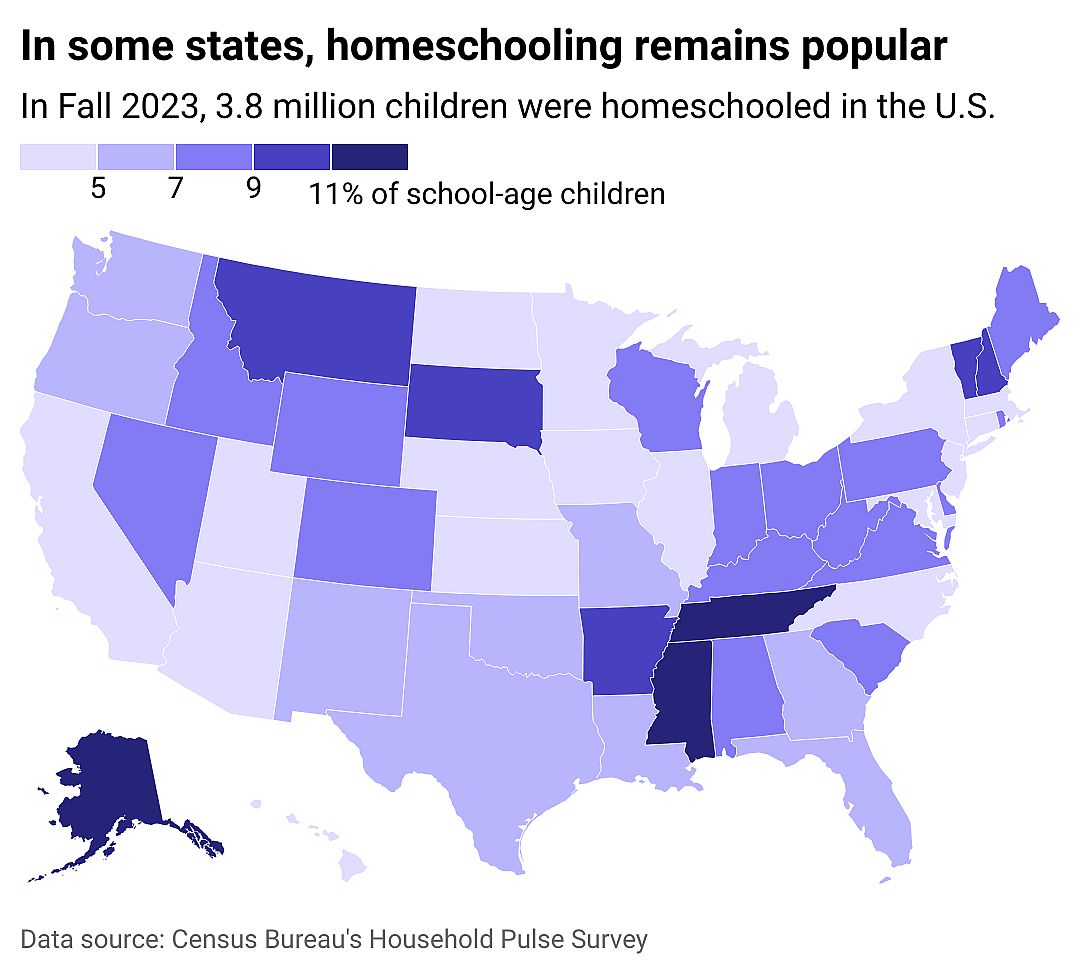
Homeschooling rates differed by state too. Alaska, Florida, Massachusetts, Nevada, New York, and West Virginia saw at least a 9% increase in homeschooling, while other states experienced no significant change. These differences may be explained by local variations in school policy and COVID-19 infection rates.