Collabstr
1 / 25 categories account for more than 1,500 NIL deals
What does it mean to profit from your own NIL? Most of the time, student-athletes sign sponsorships with corporate brands and organizations, create their own brand merchandise, and charge money for photos, personalized videos, and autographs. With many marketing opportunities at their disposal, specific kinds of companies have begun to aggressively sign high-profile college kids as their paid ambassadors.
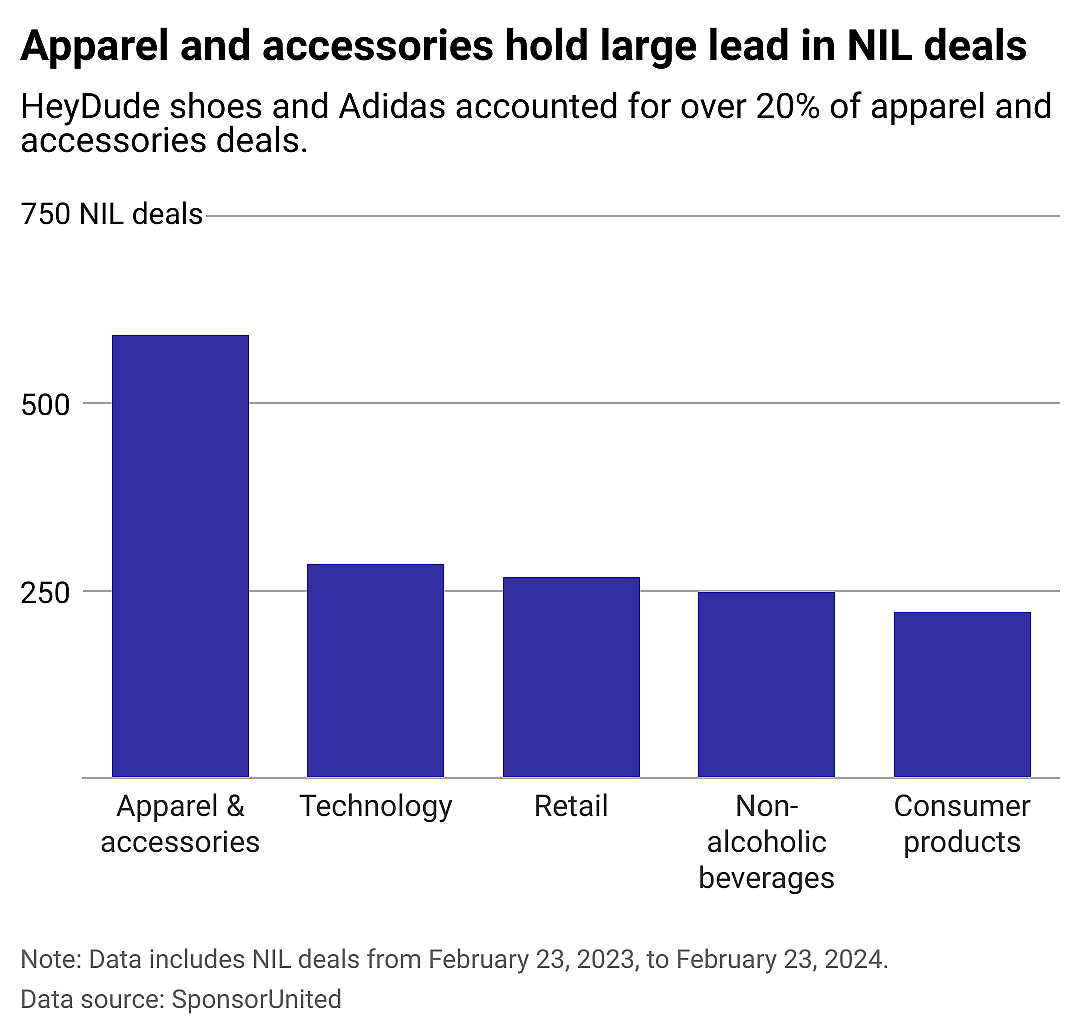
Across the NIL landscape, apparel and accessories (a natural fit for athletes) is the most active category with 591 total deals. Within that grouping, HeyDude shoes boasts the highest volume of deals, with 78, most of which are tied to athletes who play baseball, women's basketball, track and field, and gymnastics. Some other most active brands include EA Sports, Powerade, CVS Pharmacy, and Urban Outfitters, representing marketing deals in popular categories such as technology, retail, and nonalcoholic beverages.
There are a few reasons that 35% of brands invest exclusively in college sports, according to the Harvard Business Review. Working with college athletes can often be an entry for brands to reach younger, more engaged, and passionate audiences.
Dreamfield, an NIL-marketing platform, estimates that student-athletes can boast engagement rates up to 30%, while brands that team up with social media influencers only hover between 1% and 3%. An Instagram post by Louisiana State University basketball star Angel Reese, for example, might garner more than a million engagements, making her a great fit to partner with Mercedes-Benz, among other popular brands. And finally, budgets. Inking sponsorship deals with college athletes also comes at a lower cost than tapping professionals.
Much like Adidas, the apparel company Rhoback is a good example of how companies began blitzing collegiate football players with sponsorship deals in 2022. Rhoback was adamant about finding players from well-known, established programs in markets that fostered community, pumping their products out to some of the most loyal fan bases in the country (Alabama, Notre Dame, Texas, and Georgia). Though the legal limitations of NIL deals prevent players from wearing their school's logos, most star players in these dedicated college football and basketball pockets are celebrities in their own right—fans know who they are even without their school affiliations, making it easier for brands to target customers geographically.