Study.com
1 / 2Do more prestigious schools mean higher pay?
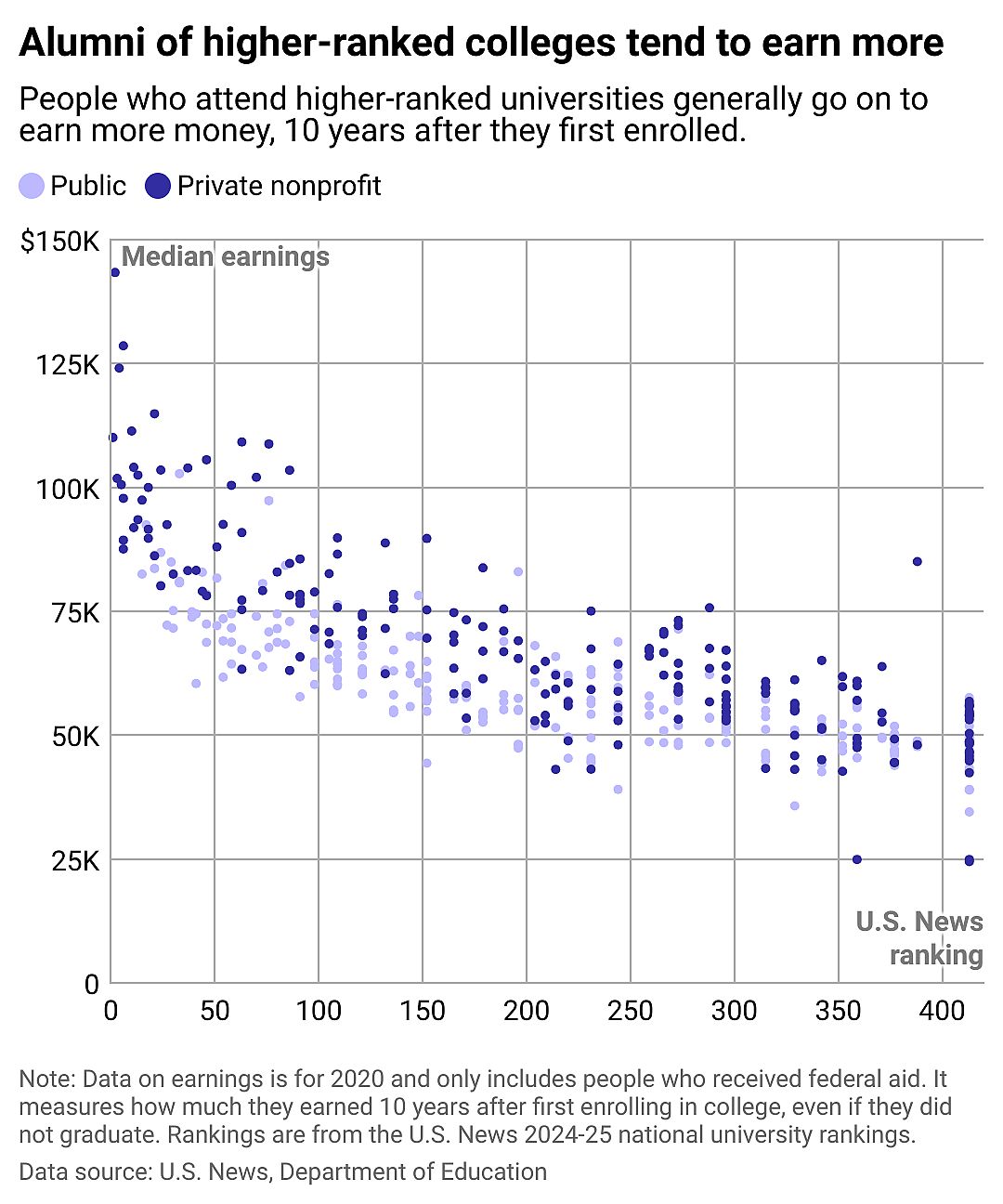
In general, people who attend higher-ranked colleges tend to go on to have higher earnings than those who go to less prestigious schools. Stacker's analysis revealed that attendees of the top 10 universities in the nation, determined by U.S. News' 2024-25 national rankings, make an average of over $100,000 a year, 10 years after first enrolling in college. In contrast, people who attended universities that were ranked between 100 and 200 only made around $65,000. This relationship holds true for both public and private nonprofit institutions, but with a notable private school premium when it comes to rankings and earnings.
Notably, earnings data from the Department of Education does have some limitations. The department only tracks the earnings of people who received federal grants, which means people from wealthier households who did not receive these grants may be excluded. This could make the earnings estimates of people who attended certain colleges unreliable, especially at institutions that have larger shares of wealthy students.
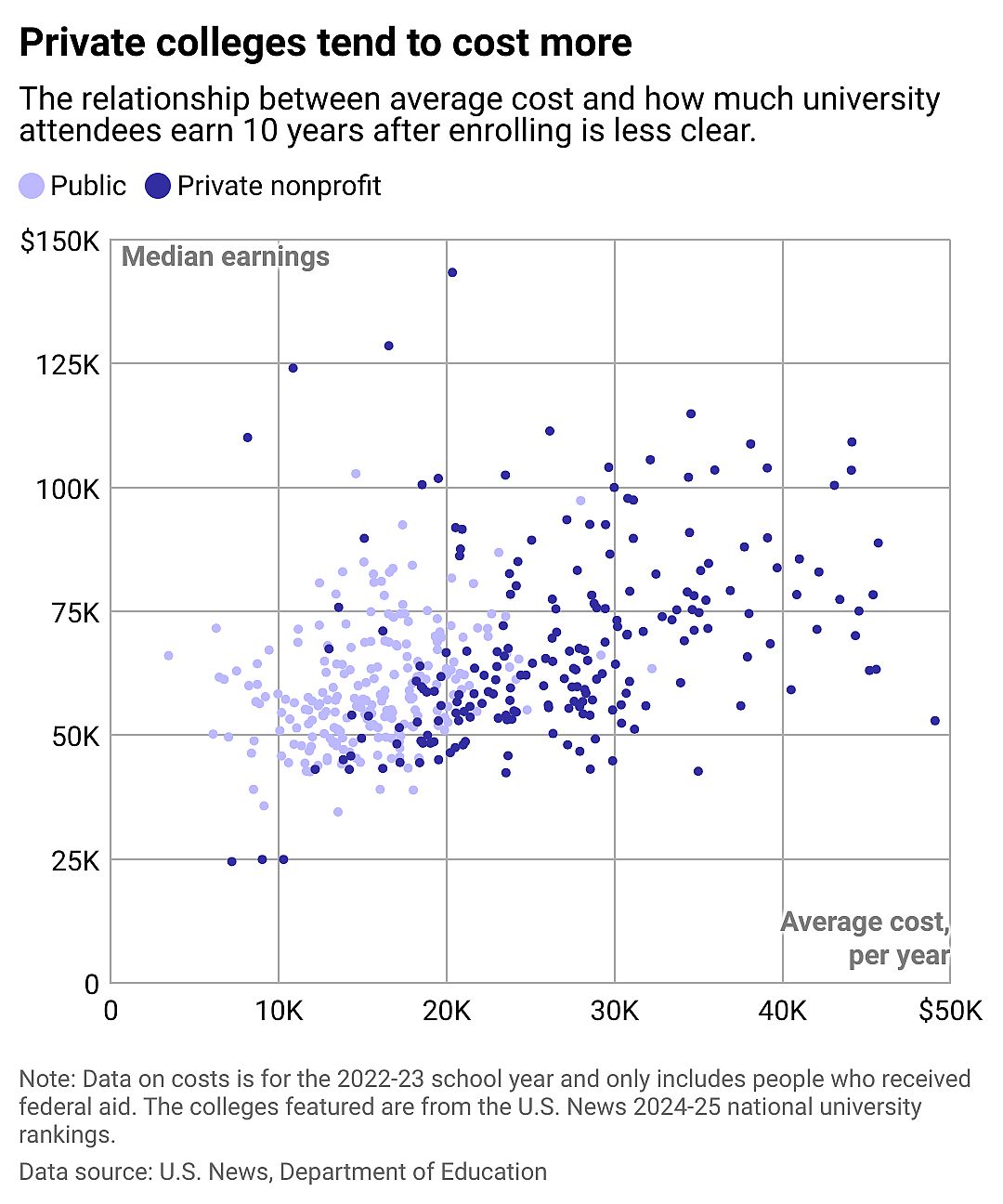
What's more, the data on college costs only considers what's in the database, which is the amount paid by the average student who received a federal grant. In reality, the amount each student pays for college will depend heavily on their family income. Because the numbers account for everyone who attended a given college—but did not necessarily graduate—some institutions could be taking credit for their dropouts' success.
Choice of career, location, gender, and years on the job, among other factors, can affect how much graduates earn. For instance, data from the Census Bureau shows that Americans aged 25 to 64 with bachelor's degrees earned an average of around $74,000 a year. However, graduates with the most lucrative major—electrical engineering—earned about $122,000 a year, more than twice what graduates with degrees in family and consumer sciences earned.