Fueled by teacher shortages, 'Zoom-in-a-room' makes a comeback
Fueled by teacher shortages, 'Zoom-in-a-room' makes a comeback
Last fall, Arkeria Wright wanted to check up on her son's progress in math after a particularly difficult seventh grade year. So she contacted the person she thought was his teacher.
The response shocked her.
The staff member in the room at Bear Creek Middle School in Fulton County, Georgia, was a substitute, there to monitor behavior and ensure students completed their work. His actual teacher was hundreds of miles away, delivering instruction virtually for an Austin, Texas-based company called Proximity Learning.
"We didn't know our kids had virtual teachers," Wright said. "Parents need to be aware that that is the type of learning [students] are getting."
Using exclusive data, The 74 looks into the much-derided practice of in-class, virtual instruction and the multi-million dollar industry it has spawned.
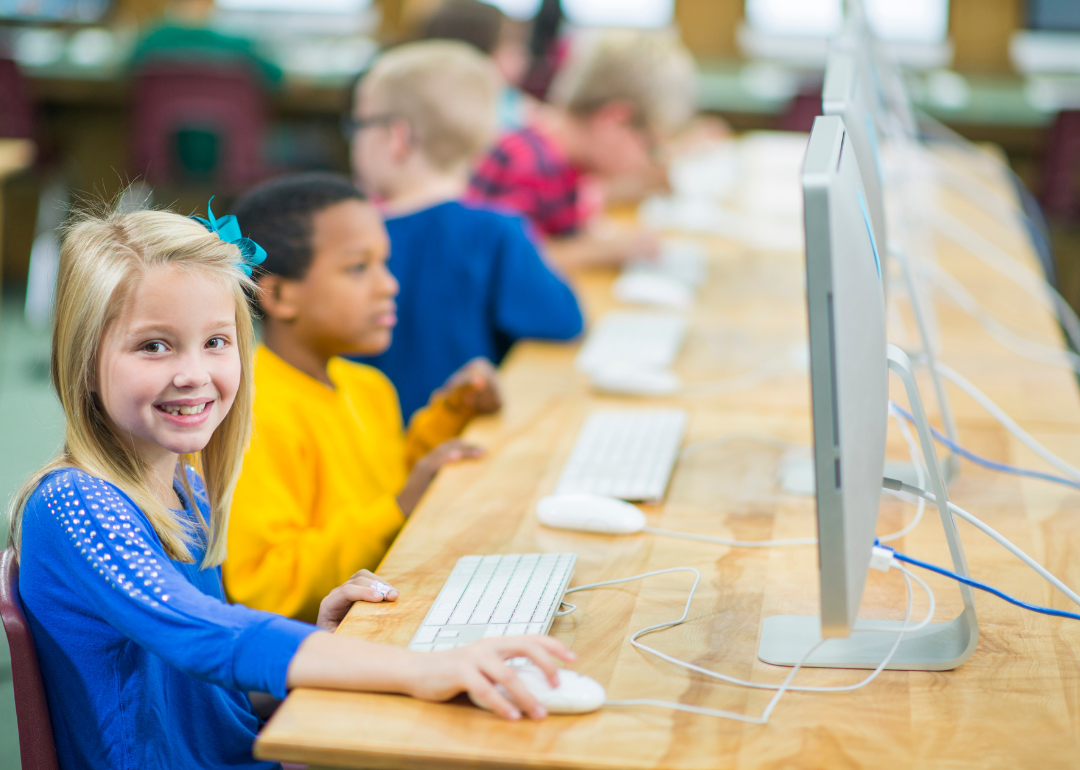
Live, online instruction in school has long linked students to subjects they couldn't otherwise take, like A.P. Calculus or Latin. But as districts struggle to fill teaching vacancies, they are increasingly turning to companies like Proximity to teach core subjects. Districts are spending thousands, sometimes millions, of dollars on virtual teachers, according to The 74's review of purchase orders in GovSpend, a data service. The practice — derided at the height of the pandemic as "Zoom-in-a-room"— is raising eyebrows as students return to school and continue to grapple with the lingering effects of remote learning.
"This is happening all over," said Jennifer Carolan, co-founder and partner at Reach Capital, a firm that invests in education companies. She estimated that roughly a dozen companies offering virtual teaching have reached "meaningful scale."
But she balked at investing herself after a member of her team visited a high school English class at a school near San Jose, California, taught virtually by a teacher from Coursemojo, another provider. "Ultimately, I could not stomach funding this because I would never send my kid to a school where they're in call-center cubicles," she said. "It doesn't align with how I see education evolving."
Given shortages, however, district leaders insist a virtual teacher is better than none at all.
"At the end of the day, you've got to find a way to get instruction in front of those children," said Andy Pruitt, spokesman for the Charleston County schools in South Carolina.
Charleston paid over $450,000 for Proximity teachers in math, language arts, and social studies for 22 classes across seven schools last year — and sent an email to parents informing them of the practice prior to the start of school, Pruit said. But the district, which is using federal relief funds to give each of its almost 3,600 teachers a $5,000 bonus this year, doesn't expect to need Proximity again this fall.
The picture looks different in Colleton County, about an hour to the west. The 4,900-student district will once again fill positions with teachers from New York-based Fullmind. Last year, students had virtual teachers for required courses in algebra, biology, English, and history.
The practice sparked some disarray, including students wandering out of class during lessons. Such concerns led the school board earlier this year to approve $18,000 for high-tech cameras that allow virtual teachers to see the entire classroom.
During a June board meeting, Wilsey Hamilton, the district's human resources director, told members that with more than 60 open positions, her team is trying to lure back retired teachers and is advertising job openings on social media and digital billboards. But she couldn't rule out using Fullmind for another year.
"We don't see any other option but to continue that partnership to help fill some of our vacancies," she said.
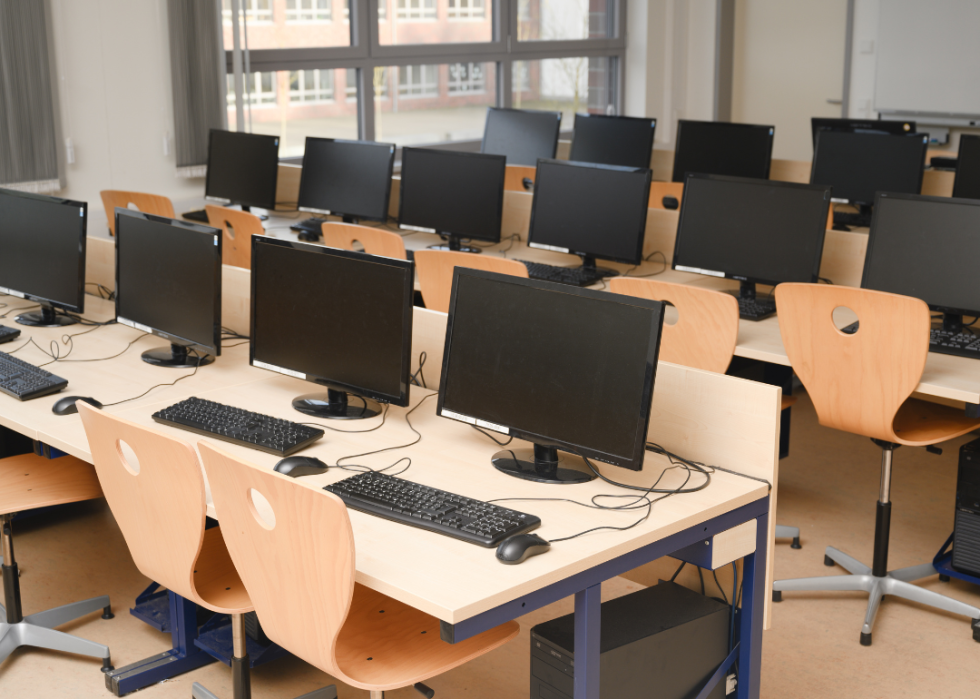
Teacher vacancies and an overarching difficulty in filling those roles is a crucial factor for districts that use remote in-class teaching
More than 40% of the nation's schools reported teacher vacancies last year, according to the most recent data from the National Center for Education Statistics, with the worst shortages at high-poverty and high-minority schools. Heading into the new school year, many large districts, including Los Angeles and St. Paul, are scrambling to fill positions.
Like Charleston, at least 13 other South Carolina districts have used Proximity over the past two school years to fill gaps. Representatives from Education Solution Services, which owns Proximity, did not return calls or emails seeking comment on this article.
Catherine Schumacher, executive director of Public Education Partners, a Greenville-based nonprofit, said keeping pace with rapid enrollment growth in the state is likely one reason for the vacancies. Negative sentiment toward teachers could be another.
"It is really important that we do not shame districts for doing the absolute best they can to get qualified teachers," she said. "We have systematically underpaid … educators for years, and we have been tolerating a climate that is demonizing teachers and public schools."
GovSpend reflects the mushrooming demand for virtual teachers. Yearly spending by districts on Proximity, for example, increased from $6.3 million in 2020 to over $21 million last year. And while Reach Capital didn't fund Coursemojo, A-Street, another education sector investor, did. A third venture firm, General Catalyst, is betting on Chicago-based Elevate K-12, contributing last year to a total $40 million investment in the company.
"It seems to be developing into a behind-the-scenes boom industry," said Kerry Chisnall, principal of Hawley Middle School in Creedmoor, North Carolina, which used four Elevate K-12 teachers last year. Located on the fringes of the Research Triangle, Chisnall said his district can't pay teachers as much as larger districts, like nearby Durham. Elevate K-12, he said, is "a godsend, absolutely."
Over 100 districts or charter networks, including at least 40 in Texas alone, have paid Proximity a total of more than $31 million for virtual teachers since the fall of 2021, GovSpend shows. They include the Little Rock School District, which spent $546,000 for science and math courses, and the Jefferson Parish school system in Louisiana, which has spent $570,000 and recently signed a new contract with the company for $861,000, to be financed with federal relief funds.
The Memphis-Shelby County Schools in Tennessee is one of Proximity's best customers — spending $6.63 million since January 2022. When the district first contracted with Proximity in 2019, Keith Williams, head of the Memphis-Shelby County Education Association, dismissed it as a "quick fix" and "another fly-by-night program." But now on the school board, he voted in June of this year with the rest of the board in favor of a $7 million contract for 600 "live sessions."
Williams didn't return calls or emails seeking comment, and the district declined to respond to questions about Proximity.
Before school started last week, Interim Superintendent Toni Williams told reporters that the company is one way the district is addressing vacancies.
But virtual teaching outposts also struggle with shortages, and a contract for remote instruction doesn't guarantee a teacher will be there when students come back to class. "Proximity has challenges recruiting teachers just like brick-and-mortar schools," said Rachael Spriggs, a former teacher in the district who ran unsuccessfully for school board last year. The model, she said, is also "extremely expensive because you are funding two positions per Proximity class."
Danette Stokes, president of the United Education Association of Shelby County, another union in the district, said with classes taught by substitutes and virtual teachers throughout the year, it's often unclear who is accountable for student performance.
"The children don't care; they're in and out," she said. And she echoed concerns about transparency. "The principal is not going to introduce the Proximity teacher at a parent-teacher conference."
'This problem isn't going away'
While researchers are still examining the impact of pandemic-era remote learning on students, there's ample evidence that it set achievement back decades. Unreliable internet access, financial distress, disengagement from school, and the health effects of COVID all limited students' ability to learn while schools were closed.
But done well, virtual teaching has the potential to accommodate educators' increasing demands for flexibility and offer a better way to handle vacancies, said Shaily Baranwal, who founded Elevate K-12. "Schools were just putting kids in front of software or doing anything they could as a Band-Aid," she said. "Our pitch to school districts is that this problem isn't going away. It can't be about filling a shortage; it has to be real teaching."
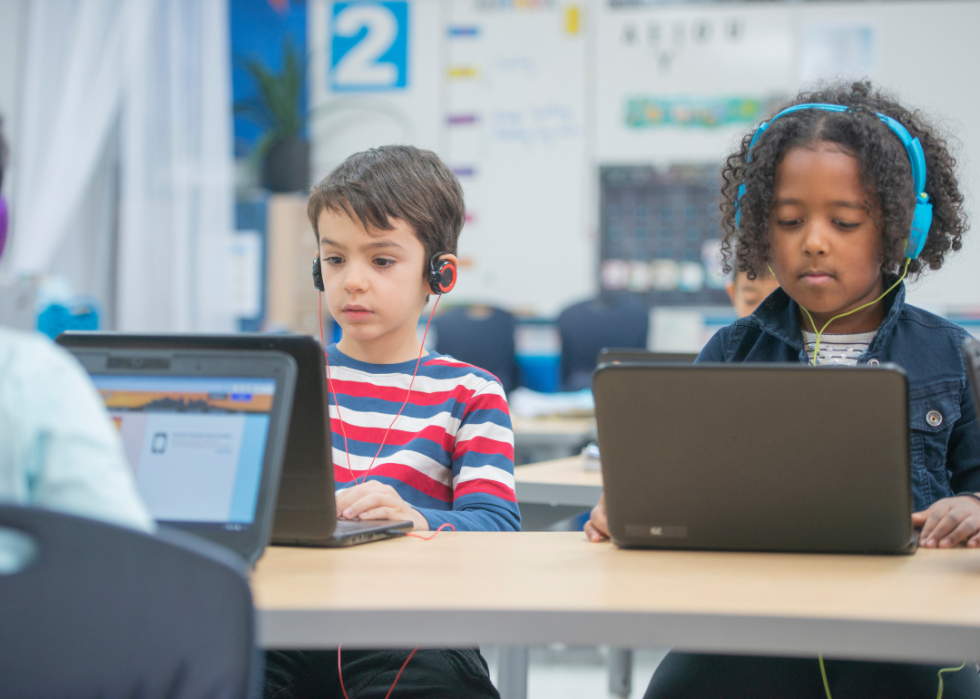
Over 260 districts across 33 states now use the program. The students don't wear headphones, allowing them to interact more easily, and Baranwal expects districts to commit to an Elevate K-12 teacher for a full school year to provide consistency.
But for Wright's son in Fulton County, the in-school, virtual learning experience was frustrating. When a substitute wasn't available, the school dispatched Proximity students to empty desks in other classrooms. From January to March, he took his remote math lessons in a regular social studies class, trying to block out distractions and listen to the Proximity teacher through headphones. The math teacher would sometimes mute the students' microphones and only let them communicate through the chat function, Wright said.
Wright, herself a fourth-grade teacher in another Atlanta-area district and head of a parent advocacy organization, isn't opposed to virtual instruction. In fact, she considered applying for a Proximity job because she enjoyed teaching remotely during the pandemic.
"I understand what it takes to have engaging instruction," she said. "When the child disappeared [from the screen], I was able to immediately text that parent."
Brian Noyes, a spokesman for Fulton schools, said the district tries to keep disruption to a minimum, but splitting up Proximity students is sometimes unavoidable when a substitute can't be found. While the district is now "99% staffed," he said, some students will still get Proximity teachers this fall.
Wright hopes her son isn't one of them.
"The environment wasn't conducive to learning," she said. "Coming out of the pandemic, it doesn't support them being able to function in the classroom."
This story was produced by The 74 and reviewed and distributed by Stacker Media.