HeyTutor
1 / 2The benefits can be wide-ranging
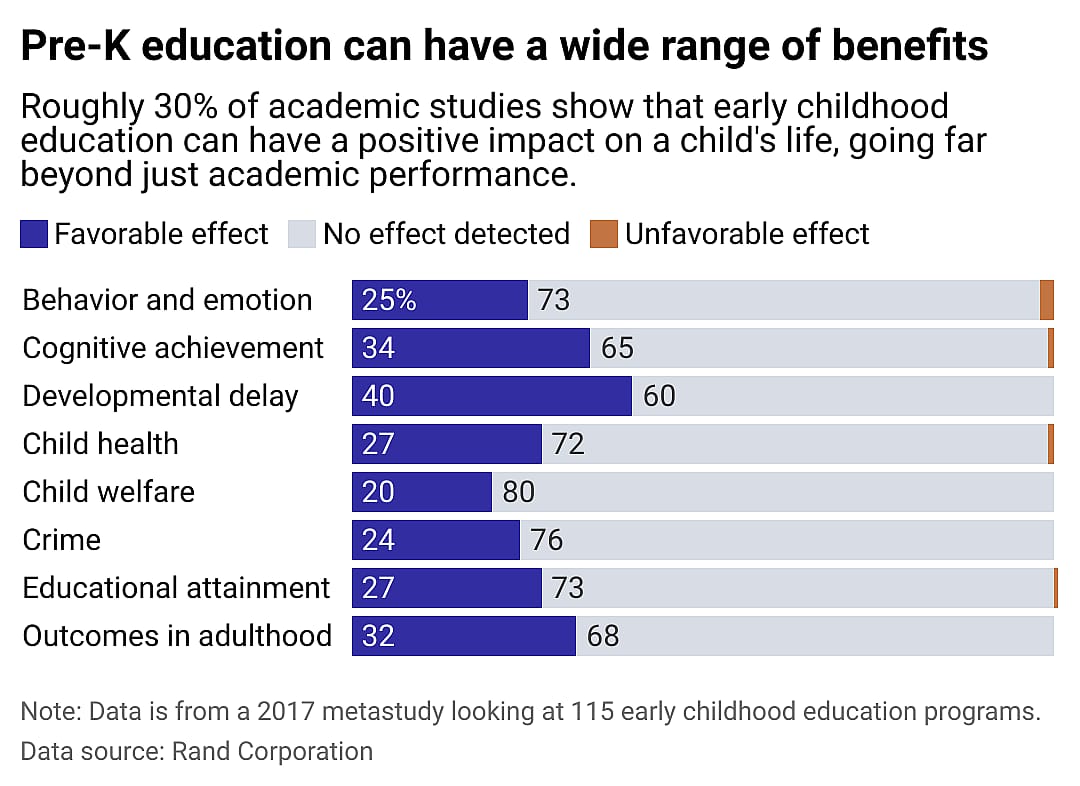
A 2017 metastudy from the RAND Corporation, a think tank in California, examined academic research about the effects of early childhood programs. Its analysis examined the impact of 115 programs covering various programs and early childhood assistance, including preschools, formal playgroups, parenting education, and even vouchers or cash to cover child care and basic necessities.
RAND's metastudy revealed that, in addition to academics, pre-K programs have positive effects on children's emotional development, health, and long-term outcomes in adulthood, such as income levels. Out of all the programs reviewed by RAND, about 9 in 10 (89%) had at least some positive impact, and only a small handful demonstrated negative effects.
The results of RAND's analysis align with one of the earliest and most influential experiments on the importance of early childhood education. The Perry Preschool Project was conducted in the 1960s in Ypsilanti, Michigan, and involved 128 Black children from low-income households. Half of them were randomly selected to attend a high-quality preschool program. Researchers then followed up with both groups of children over two decades later.
The results were striking.
At age 27, the children who attended preschool had completed an extra year of schooling on average. Moreover, study participants who went to preschool reported 50% fewer teen pregnancies.
Researchers also interviewed the Perry Preschool children when they turned 40. Once again, those selected for preschool fared much better than their peers who did not. The preschool graduates were 46% less likely to have gone to jail or prison, 26% less likely to have received welfare programs such as food stamps, and had 42% higher median monthly incomes.