TeacherCertification.com
1 / 2Federally funded Head Start programs experience even greater teacher shortages
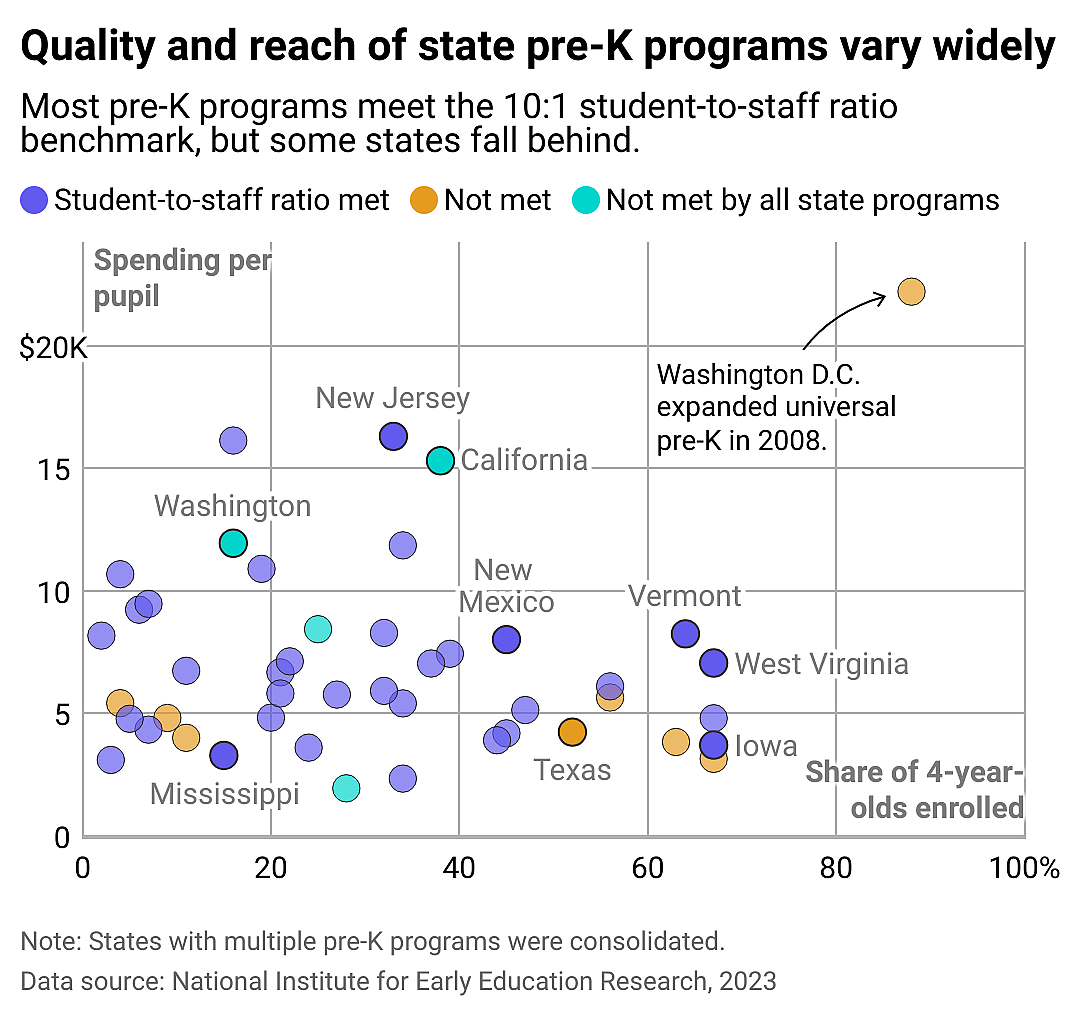
States fund early childhood education differently throughout the country, typically through general fund appropriations, block grants, and individual spending formulas. Massachusetts, for example, spends as little as $1,939 per child to fund pre-K programs, while upwards of $16,000 per child is spent in states like Oregon and New Jersey. Washington D.C., the nation's top spender on pre-K, allocates $22,207 per child.
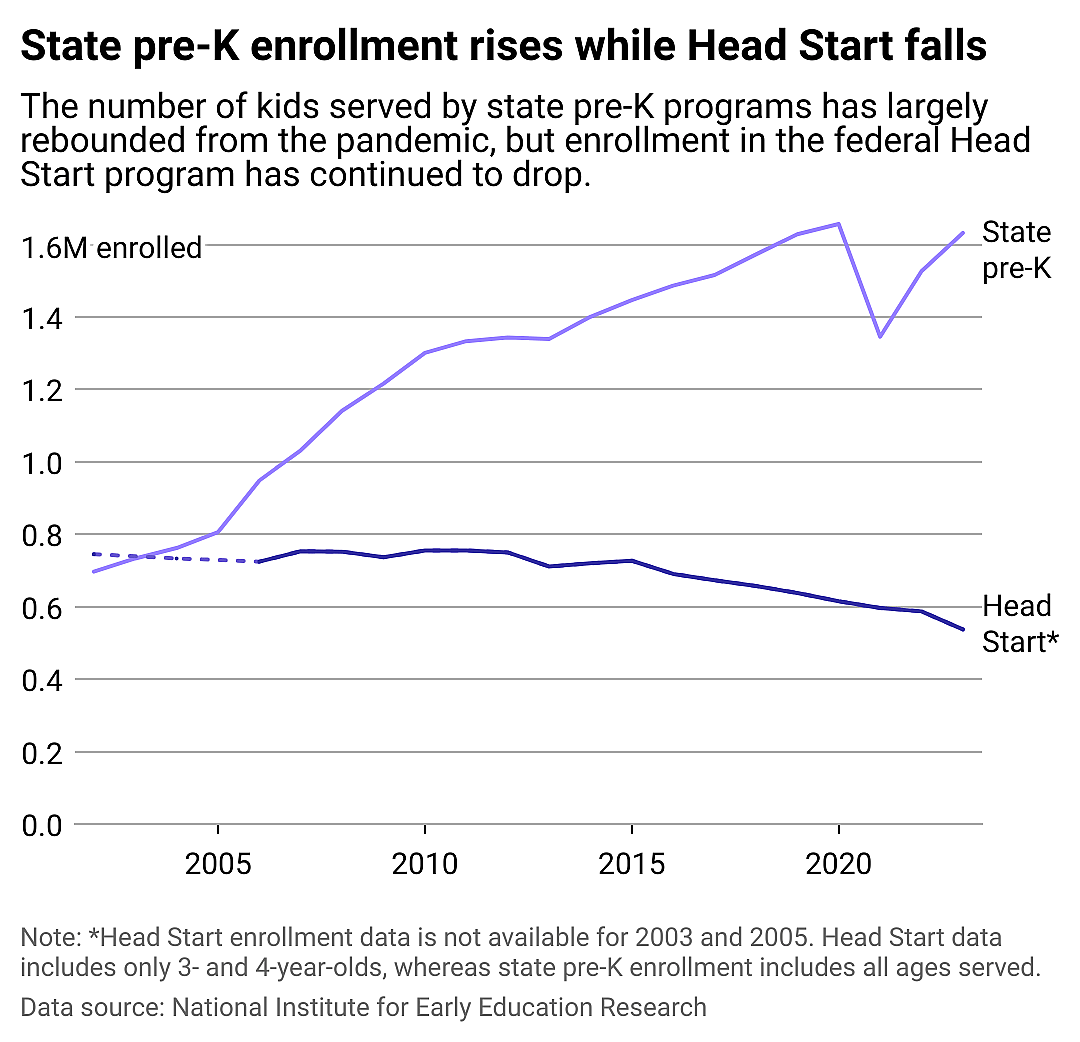
In addition to universal state-funded programs, the federal government funds pre-K for children whose families meet federal low-income guidelines through the Head Start program. From birth to age 5, these children are eligible for the federal program, run by school districts, nonprofits, and for-profit child care centers. Faith-based institutions and tribal councils, formed by elected or appointed representatives from a Native American tribe, can also apply to receive federal Head Start funding.
In 2023, the Biden administration announced increased funding for Head Start programming, emphasizing boosting wages for the program's educators, who are currently among the lowest-paid workers in America. In the wake of the COVID-19 pandemic, turnover for Head Start teachers and other staff members increased dramatically, from about 1 in 5 in 2019 to nearly 1 in 3 in 2022, according to an analysis of Head Start program data by the Urban Institute.
Teacher pay remains an obstacle to attracting and retaining qualified Head Start teachers. They earn an average of $35,000 annually, compared to $60,000 and $49,000, respectively, the average annual salaries for public school kindergarten and preschool teachers.
Moreover, the average Head Start staff vacancies quadrupled during the pandemic, from more than 2% in 2019 to nearly 9% in 2022. In both years, obtaining higher compensation elsewhere was the most common reason cited for departures, according to the analysis.