'Short burst' tutoring in literacy shows promise for young readers
'Short burst' tutoring in literacy shows promise for young readers
Small, regular interactions with a reading tutor — about 5 to 7 minutes — are making a big impact on young students' reading skills, new Stanford University research shows.
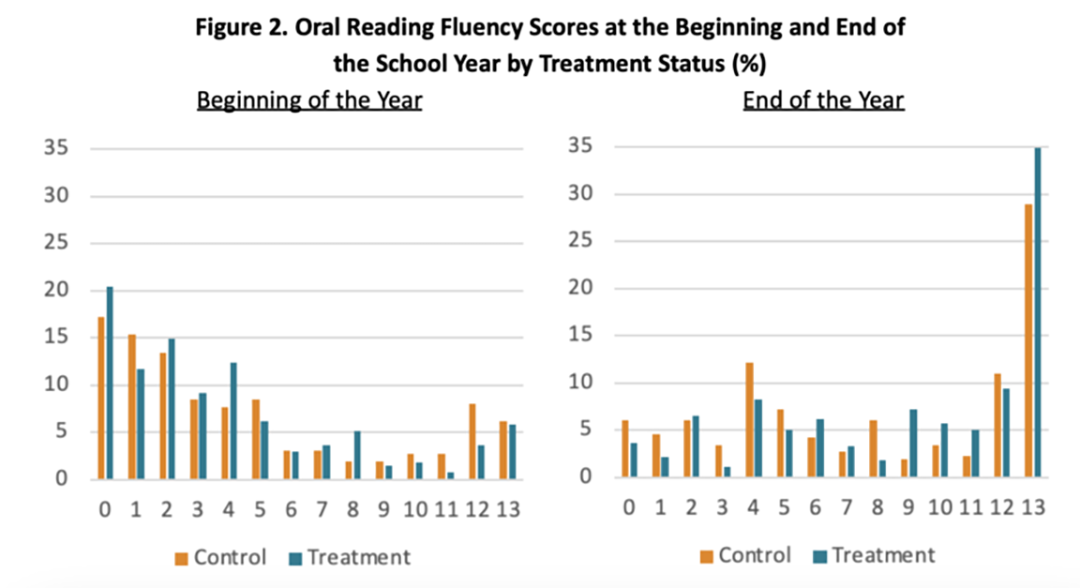
First graders in Florida's Broward County schools who participated in the program, called Chapter One, saw more substantial gains in reading fluency than those who didn't receive the support, according to the study. They were also 9 percentage points less likely to be considered at risk on a district literacy test.
Chapter One, which combines one-on-one tutoring with computer-based activities, also costs a fraction of other programs — about $500 annually per student — compared with programs that can run six times that amount. That aspect could make it easier for districts to continue providing students with that support once federal relief funds expire later this year.
The program's "short burst" model "leverages all the knowledge that we have about what works to help children learn to read," Susanna Loeb, who leads the National Student Support Accelerator at Stanford University, a leading tutoring research center, told The 74.
Chapter One curriculum materials are based on solid reading research, Loeb said. The fact that students work with the same tutor all school year and that the format fits young children's short attention spans are also strong features of the program, she added.
"By embedding a well-supported tutor in the classroom, they are giving students the personalized, relationship-driven instructional approach that really seems to work," she said.
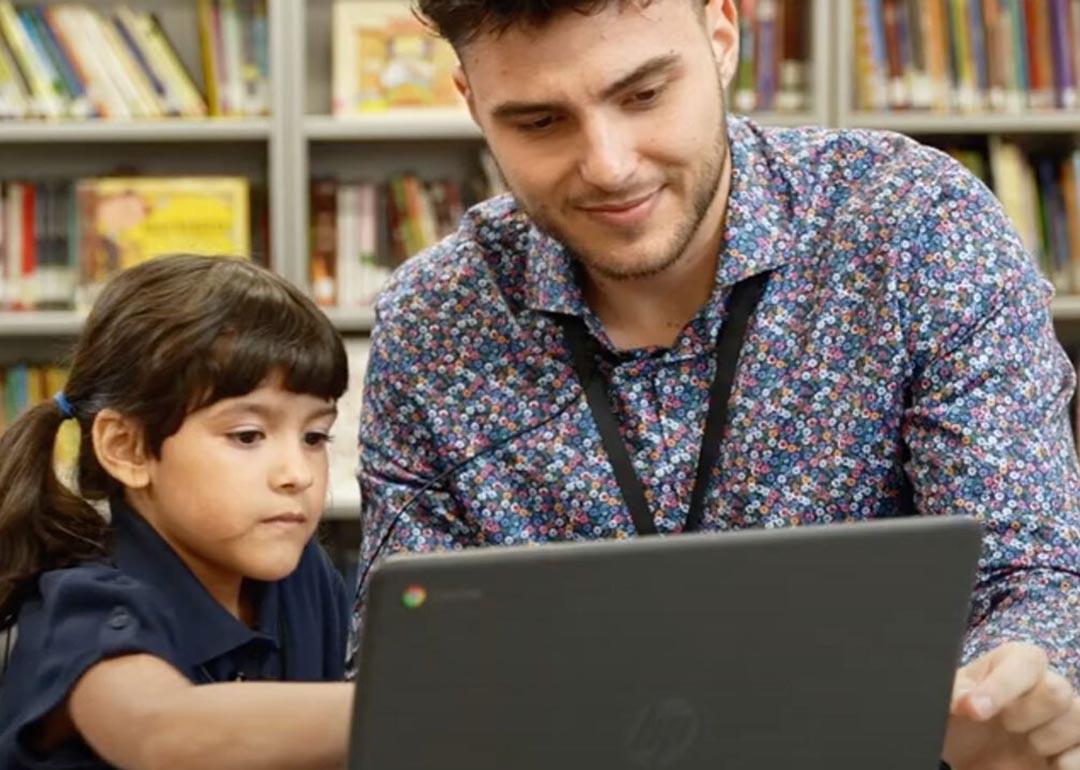
(Pictured above is Nick Dinelaris, a Chapter One "early literacy interventionist," working with a student at Coral Springs Elementary in Broward County, Florida.)
As districts continue to look for ways to boost reading scores and curb pandemic losses, findings strengthen the case for incorporating tutoring into the regular school day
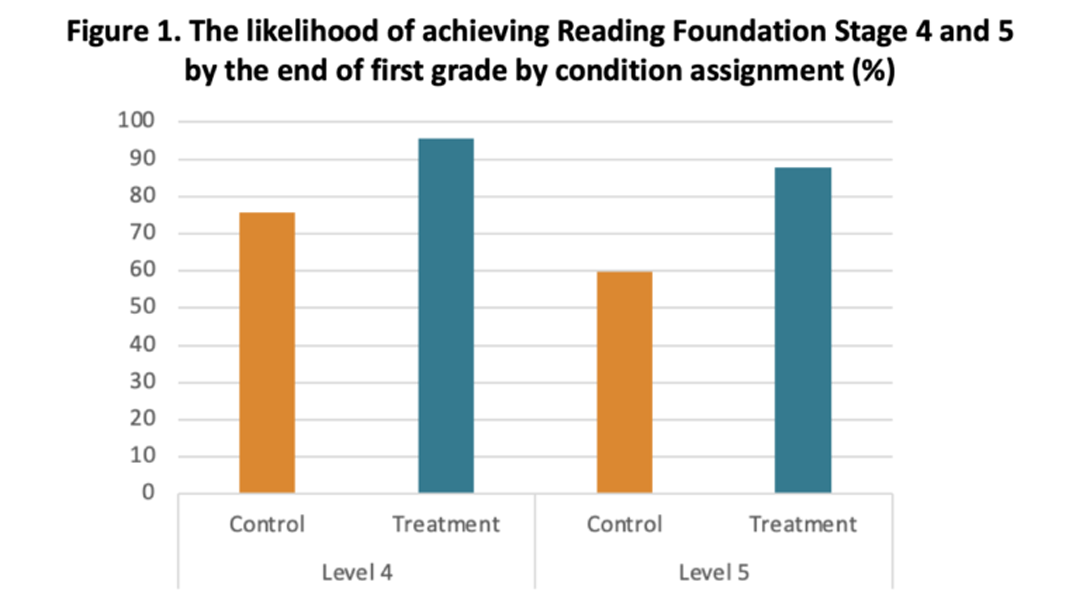
The model demonstrates that even brief contact with a trained tutor who focuses on specific phonics skills can help struggling readers reach grade-level goals. The findings, based on data from over 800 students in 13 Broward schools, build on promising results from the 2021-22 school year.
About half the students, then in kindergarten, were randomly assigned to receive tutoring while the rest got business-as-usual instruction.
In the 2022-23 school year, first graders who continued in the program were more likely than their peers to develop basic reading skills, such as accurately decoding short consonant-vowel-consonant words and those with a silent 'e' on the end. The researchers will continue to follow the students through third grade.
The program is considered a "push-in" model because the tutors, called early literacy interventionists, meet with students during the school day, generally at a table in the back of the classroom. Using a tablet computer, they lead students through short, scripted lessons where students need help — on specific letter sounds, blends or sight words, for example — and calculate the number of correct words read per minute.
Children making adequate progress might only see their tutor a couple times a week, while those who are far behind receive daily sessions. Later in the day, students spend another 15-20 minutes practicing with the same Chapter One software.
"It kind of runs itself," said Ingrid Rosales, a literacy coach at Orange Brook Elementary, a Title I school in Hollywood, Florida. "It doesn't really interfere with our instruction."
Convincing school districts
That's one key to the success of Chapter One — now serving over 20,000 students in 21 districts across 14 states, said founder Seth Weinberger. Tutors run their sessions while the teacher is either leading the whole class in a lesson or as students work in small groups. Over the course of the day, a tutor might meet with at least 25 students across multiple classrooms.
"More important than the affordability is how nondisruptive our program is," Weinberger said. "That made it much easier for us to convince school districts to allow us to do high-impact tutoring during the school day."
Even effective high-dosage programs often run a full 30 minutes a few times a week, making them harder to schedule. And research shows that when programs operate after school, participation lags due to a lack of transportation and scheduling conflicts.
"Once you move the sessions to after school, you really lose the consistency of it," Weinberger said.
Weinberger founded the Chicago-based program 30 years ago and developed the software to give students practice on basic reading skills. But the pandemic fueled greater demand. The nonprofit, which also works with schools in Canada and the United Kingdom, had 100 employees two years ago and now has 500.
The original version relied on teachers to blend the mini lessons into their instruction, an approach that wasn't always successful. Shortly before the pandemic, Weinberger's team substantially changed the model by having former teachers lead the sessions.
"It was incredibly successful," he said. But they also found that it could take two years of "intensive work" to help a student from a low-income family become a strong reader. "We said, 'There's no substitute for this, but we're going to have to create our own corps of tutors.'"
'That time adds up'
Other successful tutoring providers have reached the same conclusion — that expecting teachers to also manage tutoring sessions is unrealistic.
"Ideally, this type of work shouldn't fall on their backs," said A.J. Gutierrez, co-founder of Saga Education, which trains recent college graduates, retirees and career-changers to tutor middle and high school students in math. A 2021 study showed that the sessions, also offered during the school day, helped students score higher on tests, get better grades and pass classes at higher rates.
In Broward, teachers were initially skeptical about having tutors in their classrooms. Tutors weren't part of the school staff, and teachers were unsure how easily students would transition from group instruction to their individual sessions.
But it only takes a few weeks for students to pick up the routine. When their session is over, they go tap the next student to let them know it's their turn, said Hensley Philogene, who tutors at three Broward schools. After graduating from Florida International University, he joined the program because he was impressed with its track record.
One English-learner's progress especially stands out to him. Their sessions had a "rocky start" because the student didn't know any English and Philogene didn't know Spanish.
"You think to yourself, 'How will I be able to connect with this student?'" he said. But by March, the boy was "able to not only read the words, but [read them] fluently.'"
Teachers were also more supportive once they began to see the impact.
Forty-five percent of students who received the tutoring were considered at risk for reading problems, compared to 54% of those who did not receive the intervention. And even though higher-scoring students didn't remain in the study sample through first grade, the Chapter One group still made stronger gains than those without the program.
"Those five minutes can be very meaningful," Rosales said. "Seeing the same person every day — over time, that time adds up."
This story was produced by The 74 and reviewed and distributed by Stacker Media.