These are the most common names for Ivy League grads
This story was produced by Spokeo and reviewed and distributed by Stacker Media.
These are the most common names for Ivy League grads
What is in a name? Not only is the name your parents choose for you a core part of your identity, it can help shape the person you become, your behavior, potential career path and even how people treat you. But can it impact how likely you are to be accepted into Ivy League schools?
A Spokeo study has delved into the most common name for Ivy League graduates, to see what future names parents should consider for any future Yalies, Tigers, or Harvard grads.
Our research used Linkedin data to analyze 66,623,142 profiles to understand the most common first and last names for graduates across the Ivy League universities, made up of Harvard University, Princeton University, Yale University, University of Pennsylvania, Columbia University, Brown University, Dartmouth College and Cornell University.
Key Findings:
- Michael was the most common name for Ivy League graduates, ranking first for University of Pennsylvania, Columbia University and Cornell University.
- Jennifer, Jessica and Sarah were the most common female Ivy League graduate names.
- Smith ranked first for most common surnames across all graduates from the schools analyzed, followed by Johnson and Williams.
Most common graduate names overall
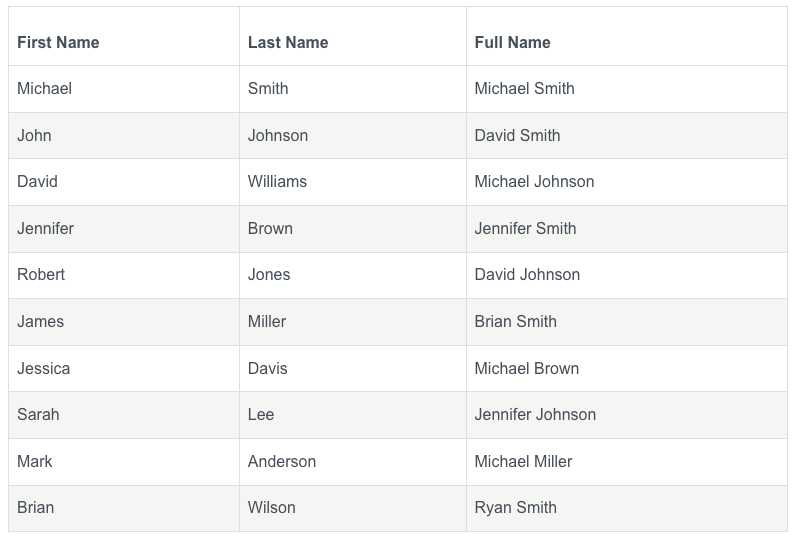
When looking at the most common names across all the Ivy League universities analyzed, Michael was the most common name for graduates, ranking first for University of Pennsylvania, Columbia University and Cornell University. John, which was the most popular graduate name for Harvard University and Dartmouth College ranked second, followed by David.
When looking across all the universities, the top ten list showed more gender diversity than the institute specific breakdowns, with Jennifer ranking fourth, along with Jessica in seventh place and Sarah in eighth.
Smith, unsurprisingly, ranked first for most common surname across all graduates, followed by Johnson and Williams.
Looking at the most common full names, Michael Smith, David Smith and Michael Johnson ranked highest, with Jessica Smith ranking highest for female-specific names.
Although assumptions cannot be made about the gender diversity of the top ten lists, all are much more heavily weighted toward male names. There could be a number of reasons for why the top ten lists are so unrepresentative of the wider college landscape, and why this impacts Ivy League institutions in particular.
Studies by the Wall Street Journal found that women have been significantly outpacing men when it comes to graduating college, due in part to higher numbers of female admissions and male students being more likely to drop out, particularly since the pandemic. In fact, data from the U.S Department of Education shows that as of 2021, women make up 59.5 percent of all U.S. college students.
However, the same research also revealed that some institutions are partaking in gender affirmation recruitment, in order to secure a closer ratio between male and female students, they have found to be discriminating against women in admissions in order to maintain a gender balance . One source suggests that this practice is 'higher education's dirty little secret, practiced but not publicly acknowledged by many private universities.
Ivy League institutions also have historically been known for their strong alumni networks, which can play a significant role in the application process. It is possible that these networks, which may have been predominantly male in the past, continue to exert influence on the success and prominence of male graduates. Female alumni may face different networking challenges, potentially affecting their visibility in top positions and the prevalence of their names among graduates.
It will be interesting to see how these top ten lists continue to change, and if these lists will show a more representative snapshot of college life for graduates.
Most common Harvard graduate names
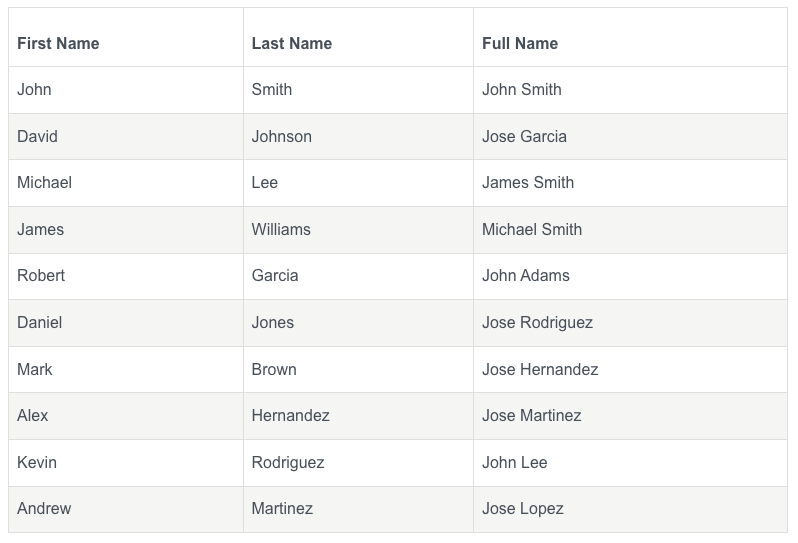
The top ten most common names for Harvard graduates are listed above.
Harvard is regarded as one of the most recognized and prestigious universities in the world, and with an alumni list that includes eight presidents, ten Academy Award winners, 48 Pulitzer prizes and 188 billionaires, it really is no surprise. But what names are most likely to appear on the graduating class list?
The research found that the most common name for Harvard graduates was John – not only was John the most common name for graduates, but it featured three times in the most common full name, John Smith, John Adams, and John Lee. Interestingly, three of the eight presidents that graduated from Harvard were named John – John Adams, John Quincy Adams and John F. Kennedy.
David and Michael make up the second and third most common names of Harvard graduates, with the most common surnames alongside Smith being Johnson and Lee.
Most common Princeton graduate names
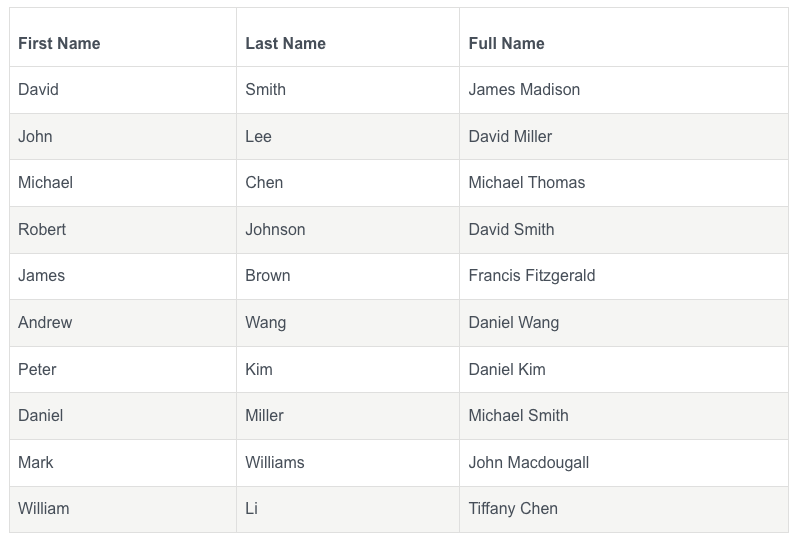
Listed above are the top ten most common names for Princeton graduates.
For Princeton graduates, David was the most common first name, as well as featuring twice of the top ten most common full names; David Miller, David Smith. John and Micheal also ranked highly for the most common graduate names for the New Jersey institution. Smith, the most common surname across the U.S., was the most common last name for Princetonians.
James Madison, Founding Father and fourth president was a graduate of College of New Jersey, which was later renamed as Princeton, and it seems his legacy lives on within graduates to this day, as his namesakes are the most common name combination. Tiffany Chen is the most common female name, and the only female name to appear on the Princeton list.
Most common Yale graduate names
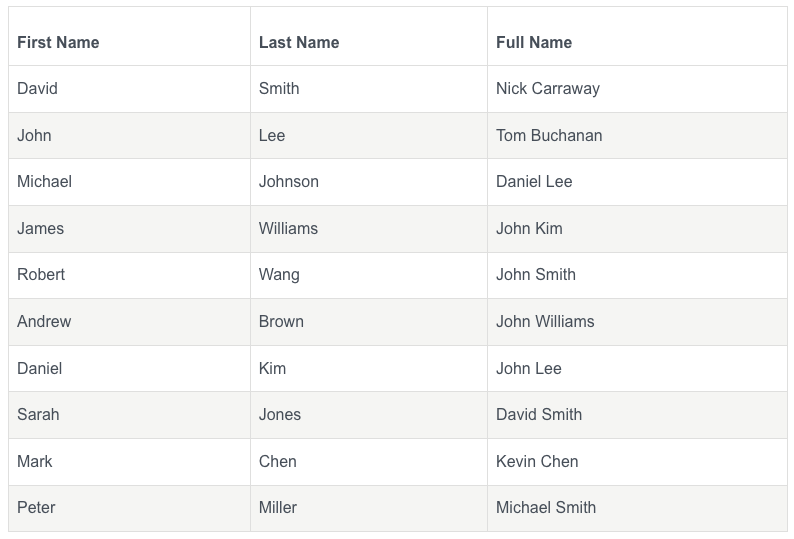
Above, the top ten most common names for Yale graduates are listed.
Based in New Haven, Connecticut, Yale graduates are most likely to be called David, John and Michael, according to our research. Nick Carraway was the most common full name, while some of the most common last names include Smith, Lee, Johnson and Williams.
As with the vast majority of the Ivy League schools, male names vastly dominate the most common name for graduates, with Sarah being the only female name that features in the top ten for most common Yale graduate names. However, Yale is renowned for female alumni such as Meryl Streep, Jodie Foster, Hilary Clinton and Angela Bassett.
Most common University of Pennsylvania graduate names
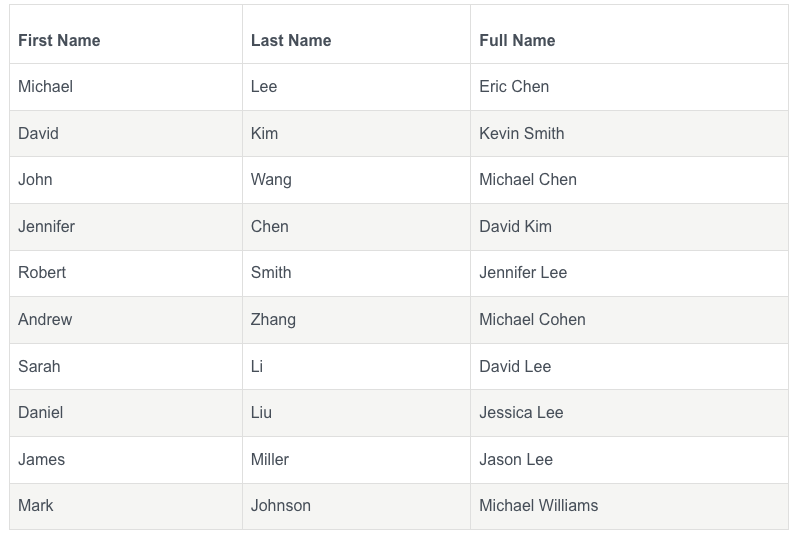
Listed above are the top ten most common names for UPenn graduates.
The University of Pennsylvania, also known as UPenn, has the largest number of alumni featured on the Fortune 400 of any other educational institute, making it one of the most renowned schools in the county. Michael, which features throughout the top tens of all the Ivy League schools analyzed, was the most common name for UPenn graduates.
Lee was the most common surname, and featured four times in the most common surnames; Jennifer Lee, David Lee, Jessica Lee and Jason Lee. Some of the other most common surnames for graduates from this university include Kim, Wang, Chen and Smith.
Most common Columbia graduate names
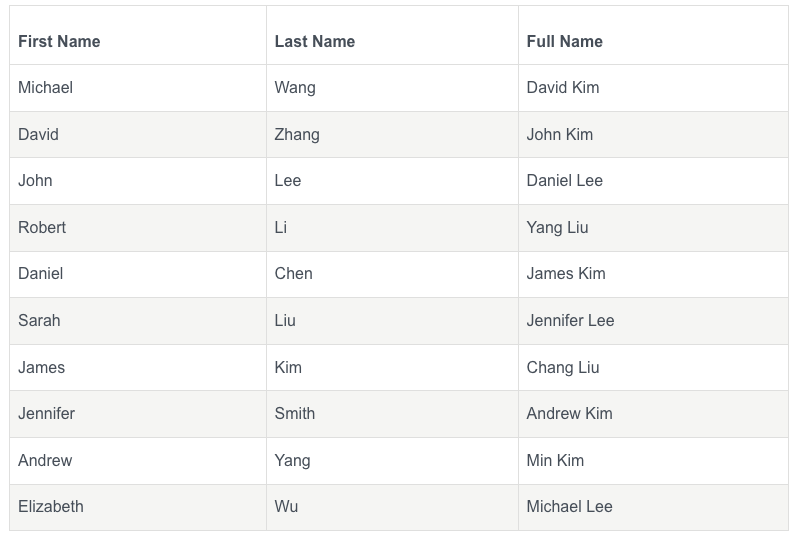
The top ten most common names for Columbia graduates are listed above.
Seven Founding Fathers, 102 Nobel laureates, 23 Olympic medallists and 33 foreign heads of state – the alumni list for Columbia University in the city of New York is certainly impressive. But what names are we most likely to see on the graduate list?
As with its Pennsylvania rival, Michael is the most common graduate name for Columbia, followed by David and John. Looking at the most popular surnames, Wang, Zhang and Lee came out top, while David Kim was the most common full name. While Kim ranked seventh for most common surnames, variables of the name featured in half of the most common full names – David Kim, John Kim, James Kim, Andrew Kim and Min Kim.
Most common Brown graduate names
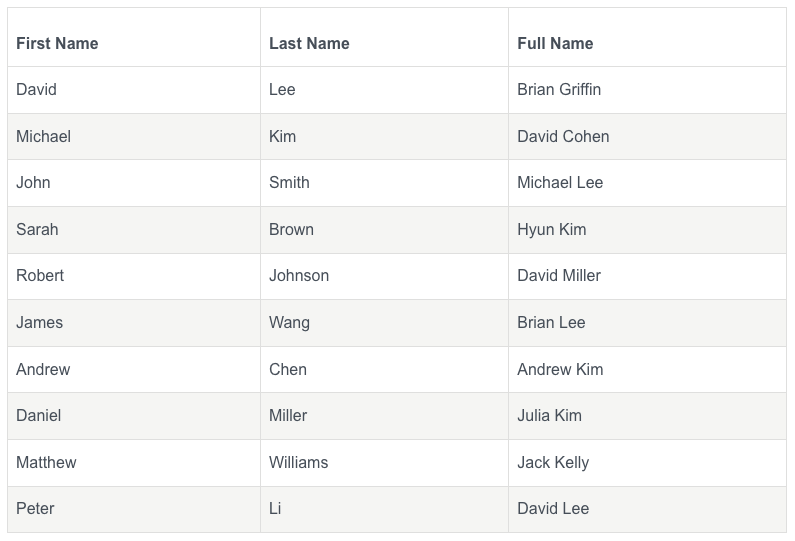
Above, find the top ten most common names for Brown graduates.
Based in Rhode Island, Brown University is best known for its science programs, particularly across the medicine, math and computer science disciplines, with scholars at the institute launching the oldest applied math program in the country, and the oldest engineering program in the Ivy League.
Graduates from Brown follow the trend of the majority of the Ivy League school, with David, Michael and John making up the most common first names. The most common surnames of Brown alumni were Lee, Kim and Smith. Brian Griffin was the most common full name, followed by David Cohen and Michael Lee.
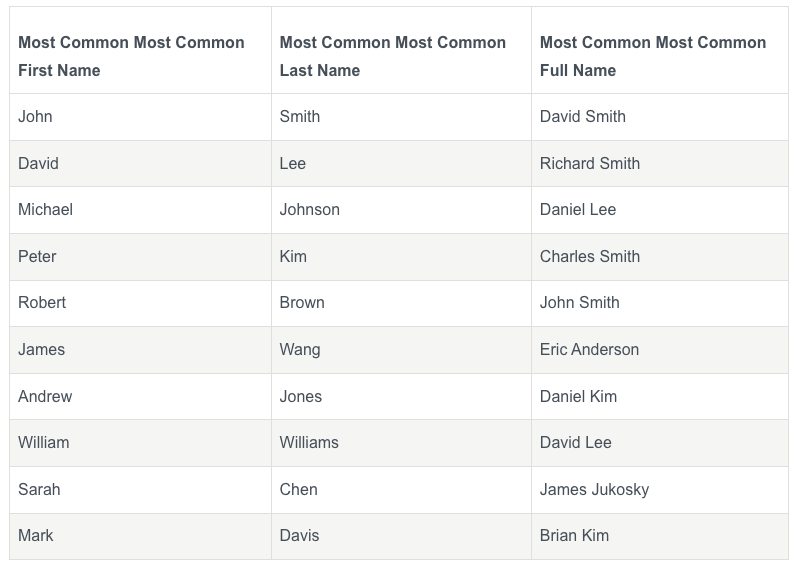
Most common Dartmouth graduate names
The top ten most common names for Dartmouth graduates are listed above.
Dartmouth College is a research university and undergraduate college based in New Hampshire, whose most notable alumni includes Dr. Seuss, Nelson Rockefeller, Mindy Kaling and Shonda Rhimes. When looking at the most common names for graduates, John, David and Michael top the list. Sarah was the only female name to feature on the top ten list.
Smith ranked first for the most common last name for Dartmouth, and made up four of the top five most common full names for the college; David Smith, Richard Smith, Charles Smith and John Smith.
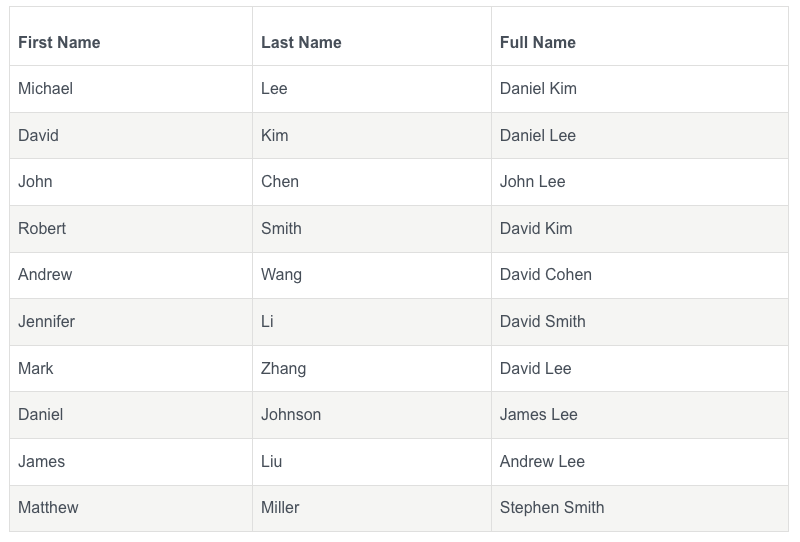
Most common Cornell graduate names
Listed above are the top ten most common names for Cornell graduates.
Based in Ithaca, New York, some notable alumni from Cornell University include Ruth Bader Ginsburg, Bill Nye and Toni Morrison. In terms of the most common names for graduates, Michael, David and John all ranked highest for the first names, with Lee, Kim and Chen all appearing the most for the most popular surnames.
Jennifer was the only female name to feature on the top ten list, ranking sixth as the most common name. David, which was the second most common name, featured four times in the most common full names, when combined with the surnames Kim, Cohen, Smith and Lee.
Methodology
Our research analyzed Linkedin data, which reviewed 66,623,142 profiles, from which first names and surnames were ranked by popularity across each of the Ivy League schools: Harvard University, Princeton University, Yale University, University of Pennsylvania, Columbia University, Brown University, Dartmouth College and Cornell University.
Data was pulled between Aug. 28 and Sept. 1 2023.