HeyTutor
1 / 1Challenges facing efficient school transportation
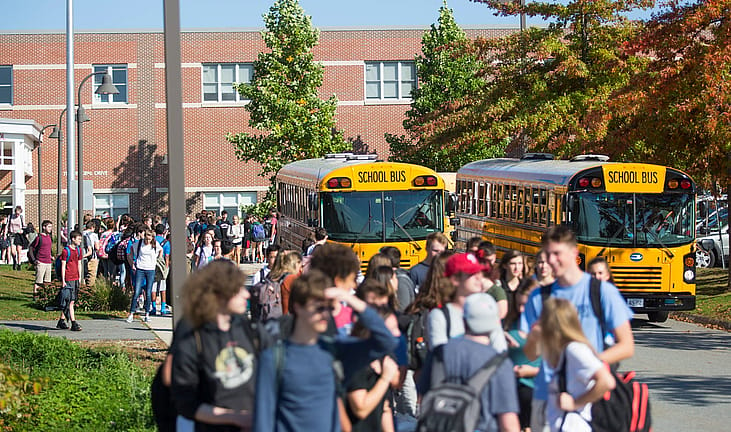
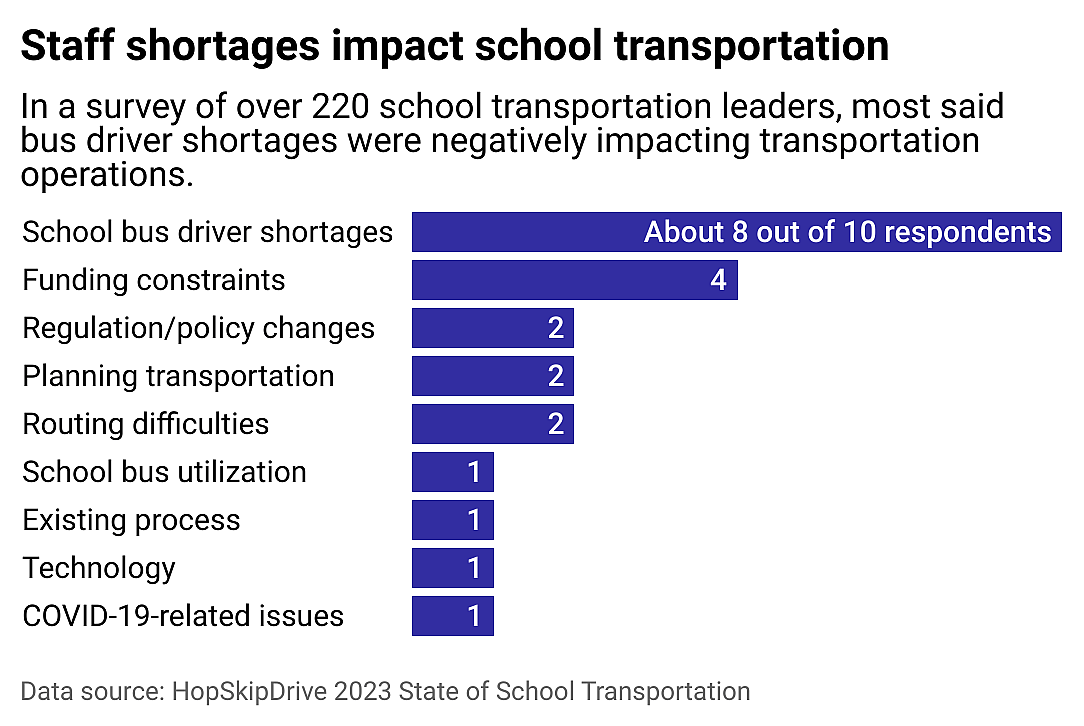
According to HopSkipDrive's survey, 2 in 5 respondents reported the bus driver shortage led them to limit their transportation offerings to students; at least 9 in 10 reported impacts on their operations in general. Notably, just two years ago, this figure was 78%, reflecting a growing problem.
A significant challenge to expanding transportation services, as reported by over 60% of survey respondents, was the difficulty in attracting new bus drivers, particularly in the aftermath of a surge of early retirement during the pandemic. In fact, bus drivers aged 25-35 were more likely to leave the profession altogether as COVID-related restrictions were lifted.
One way schools are attempting to combat the shortage is by making bus driver positions full-time rather than part-time. This entails addressing aspects that make the job less appealing to prospective applicants, such as insufficient wages and lack of benefits. For example, some districts are allowing bus drivers to serve as aides in classrooms or hallways in between school bus routes.
In the meantime, more than 2 in 3 respondents (67%) reported offering supplemental transportation services to students to compensate for the existing shortage. Some districts have welcomed all kinds of staff to fill in for bus driver vacancies, including a district superintendent. Others still are considering pushing back schools' start times altogether to accommodate longer and back-to-back routes.
School districts and students are not shouldering the burden of the school bus driver shortage alone—over a third of responding parents reported that coordinating their child's transportation needs was the most stressful part of the year. Nearly a third would consider transferring their child to another school if it offered more convenient transportation services.
Considering a 2019 Johns Hopkins University study found that students reliant upon public transportation have higher rates of absenteeism, such a choice would not be unreasonable. Chronic absenteeism is not just linked to poorer academic outcomes; it can have social and emotional repercussions—such as feeling isolated and disengaged—that stem from missing school.
Story editing by Ashleigh Graf. Copy editing by Paris Close. Photo selection by Ania Antecka.