Stacker
1 / 1Environmental concessions made alongside Willow's approval
The project's final approval is an adjustment of the original proposal. The Department of the Interior rejected two of the five drill sites, and ConocoPhillips will give up rights to 68,000 acres of leases it holds within the National Petroleum Reserve. The department expects the adjustments will reduce freshwater use and the impact of infrastructure development on migratory caribou populations.
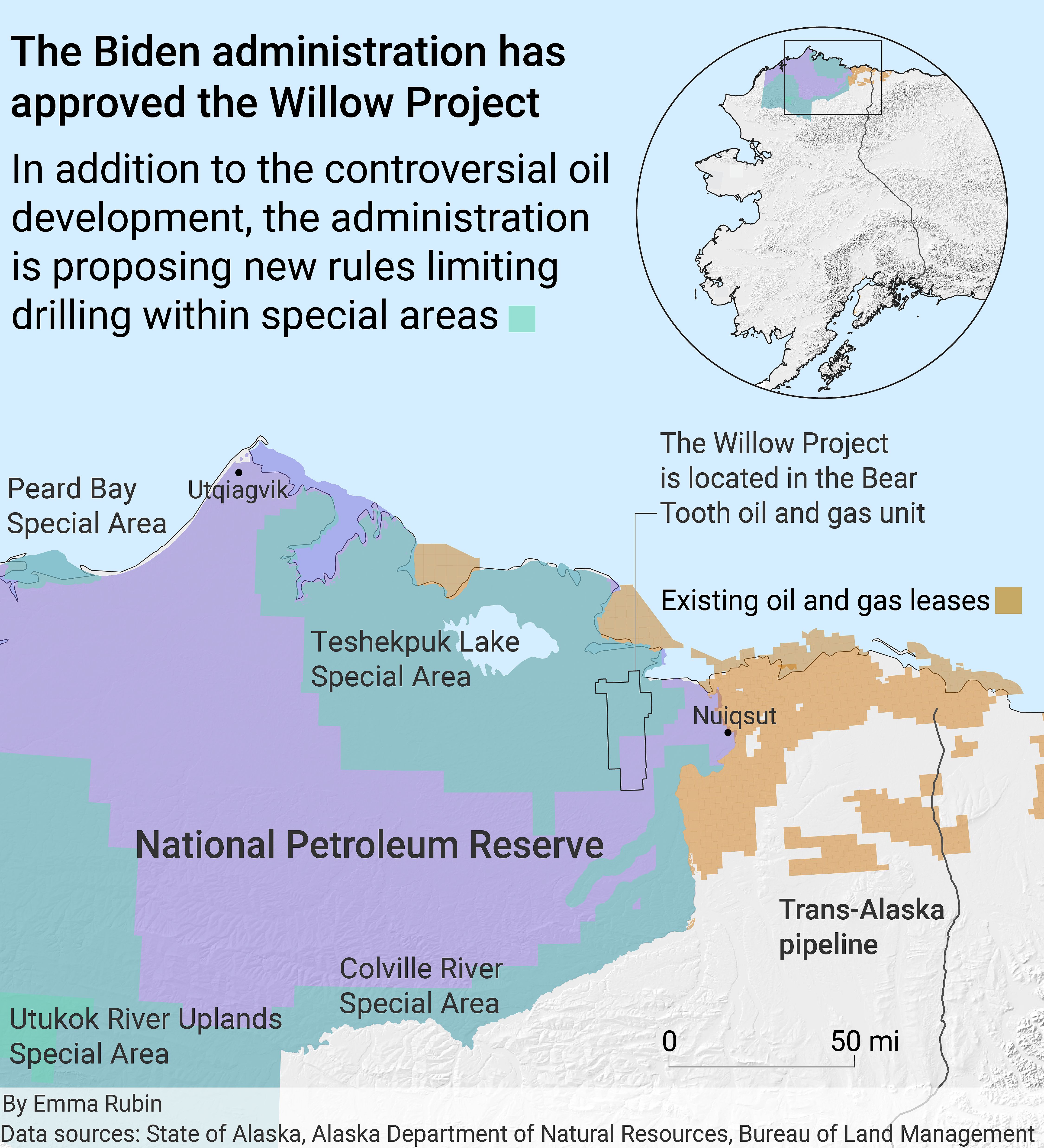
The administration is proposing additional rules that would limit industrial development on more than 13 million acres across six special areas within the National Petroleum Reserve. The Department said that "the proposed rulemaking would help protect subsistence uses in the NPR-A, responding to Alaska Native communities who have relied on the land, water, and wildlife to support their way of life for thousands of years."
Part of the Willow project is located in the Teshekpuk Lake Special Area
An additional 2.8 million acres of offshore territory in the Beaufort Sea will also be unavailable for oil and gas leasing indefinitely.
Alaska Senator Dan Sullivan said Willow's approval was monumental for Alaska but expressed frustration at the special areas announcement. "The fact that this Willow Record of Decision comes with the announcement of future legally-dubious resource development restrictions on Alaska lands and waters is infuriating and demonstrates that the Biden Administration's unprecedented lock-up of our state will continue," Sullivan said in a statement.
The concessions haven't satisfied environmental groups either
"Protecting one area of the Arctic so you can destroy another doesn't make sense, and it won't help the people and wildlife who will be upended by the Willow project," Kristen Monsell, a senior attorney at the Center for Biological Diversity said in a statement.
The Center for Biological Diversity is one of several environmental groups—including EarthJustice and Natural Resources Defense Council—that have said they will continue to fight the decision.
The National Petroleum Reserve is largely untouched by most human development. The area has also seen some of the fastest rising temperatures in the state according to the Alaska Center for Climate Assessment and Policy.
For the project, ConocoPhillips will build out gravel roads, drilling pads, and other infrastructure on top of permafrost, a frozen soil layer throughout Northern Alaska and the Arctic. Permafrost is currently thawing at an increased rate due to global warming.
The Department of the Interior noted that the North Slope's permafrost degradation is already happening in its environmental impact statement, and, beyond the environmental threats, it poses risks to the oil project itself. "Permafrost thawing and uneven settlement could cause damage to infrastructure such as gravel pads, roads, and pipelines. A shorter ice road season would affect the transport of materials and personnel that depend on ice roads," the report said.