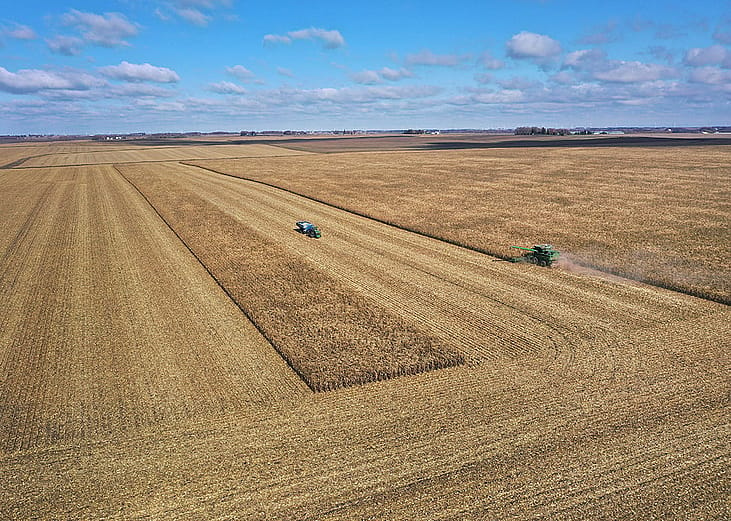
Photo: A flooded vineyard at Terranova Ranch.
The role of farms in recharging aquifers during particularly wet years began with a bold experiment set in motion by one Central Valley farmer a decade ago.
Don Cameron noticed that the groundwater levels on Terranova Ranch, where he is vice president and general manager, in Helm, California, were dropping by a foot or more each year. So, during the wet winter of 2011, when the wine grape vines were dormant and the region's rivers were running high, Cameron inundated the vineyard. "Our neighbors thought we were pretty crazy to do that," he says. "They thought we were going to kill [our crops]."
But Cameron was confident the vines could handle it — he'd seen grapes survive in high waters before. Sure enough, the vines were unharmed. And that summer, his groundwater levels were higher.
He's repeated the process in every rainy year since, including this one. Since March, Terranova has been flooding vineyards, pistachio orchards, and 350 acres of additional farmland with stormwater. The water got up to three and a half feet deep, which killed about 50 pistachio trees. But by the end of June, the farm had absorbed enough water to cover 15,000 acres a foot deep (a measurement called acre feet), and groundwater levels were rising. "I'm optimistic that we'll see a rise as we move into the later summer and fall," the veteran farmer told Reasons to Be Cheerful in July as he prepared for a stretch of scorching 110-degree days.
At his farm, pictured above, Cameron has since invested in infrastructure to channel water to farmland in wet years, with the help of multiple grants, and spoken about his experiences widely. While some farmers were hesitant at first, he's seen attitudes change.
"I tell people that if they don't do this, they're going to be out of luck," he says. "If they don't capture this water, long-term they're not going to be sustainable."
Even before the Sustainable Groundwater Management Act was passed, many districts in California already had aquifer recharge basins, like ponds dedicated to letting water soak into the ground. But using farmland allows water to sink in across a much broader land area. While the idea gained steam, some irrigation districts jumped in to set up systems to engage local farms.
Then came the massive precipitation of the winter of 2023.
Over the last decade, Tulare Irrigation District has invited growers to take on water during wet seasons. Initially, many weren't interested, says district manager Aaron Fukuda. Winter is a rare quieter time for busy farmers, and managing wet fields during those down months means extra work.
This year, though, growers in the region had a new incentive. At the peak of drought in May 2022, concern about groundwater levels led the groundwater sustainability agency that oversees Tulare to set limits on pumping. The system, which includes an online tracking dashboard, also works in the reverse: if farms take on excess water in wet seasons to recharge the aquifer, they earn credit to extract additional water from that aquifer later.
The opportunity to treat the aquifer like a savings account — with not just water deposits, but withdrawals, too — changed everything. The timing couldn't have been better. Historic rainfall inundated the Central Valley starting in December. When growers were invited in January to start running water through their irrigation systems to their fields, they jumped at the chance, Fukuda says: "The day we opened up the phone line we had 80 orders before lunch."
Over the next several months, farms in the Tulare Irrigation District let water trickle through drip irrigation systems, pool in the trenches of furrowed fields, or flood the land around their trees.
From January through June, the district diverted a total of 256,000 acre feet from swollen waterways, filling up recharge basins and distributing some to farms. About 105,000 acre feet passed through gates that release water onto farmers' land, some for irrigation needs and some for recharge.
The efforts are paying off. In some wells, water levels are measuring 15 to 20 feet higher than before this wet season. Fukuda believes that by pairing wet-year recharge with management of pumping, the district can minimize the need to leave farmland fallow.
California state officials preliminarily estimate a total of at least 3.8 million acre feet have been recharged across the state this year, including both on-farm and other efforts, though more data will be confirmed next year.
Amid this winter's deluge, Sustainable Conservation — which has been supporting on-farm recharge — heard from many other districts interested in implementing the approach in their areas.
"This has really been the catalytic year," Mountjoy says.
In addition to helping to stabilize groundwater stores, the practice promises to help mitigate subsidence, according to Mountjoy. Though aquifer recharge won't raise ground that has already sunk, he says, it may be able to stop it from sinking further. It can also help with flood mitigation, diverting some high waters away from rivers and reducing the impact of inundation on communities downstream.
The method essentially leverages farmland to address an existential problem in California: When you receive too much water, how do you not only manage the flooding, but also store that water for future years when you don't get enough?
"You need recharge basins and on-farm recharge to capture the big gulps in years like this," Mountjoy says.