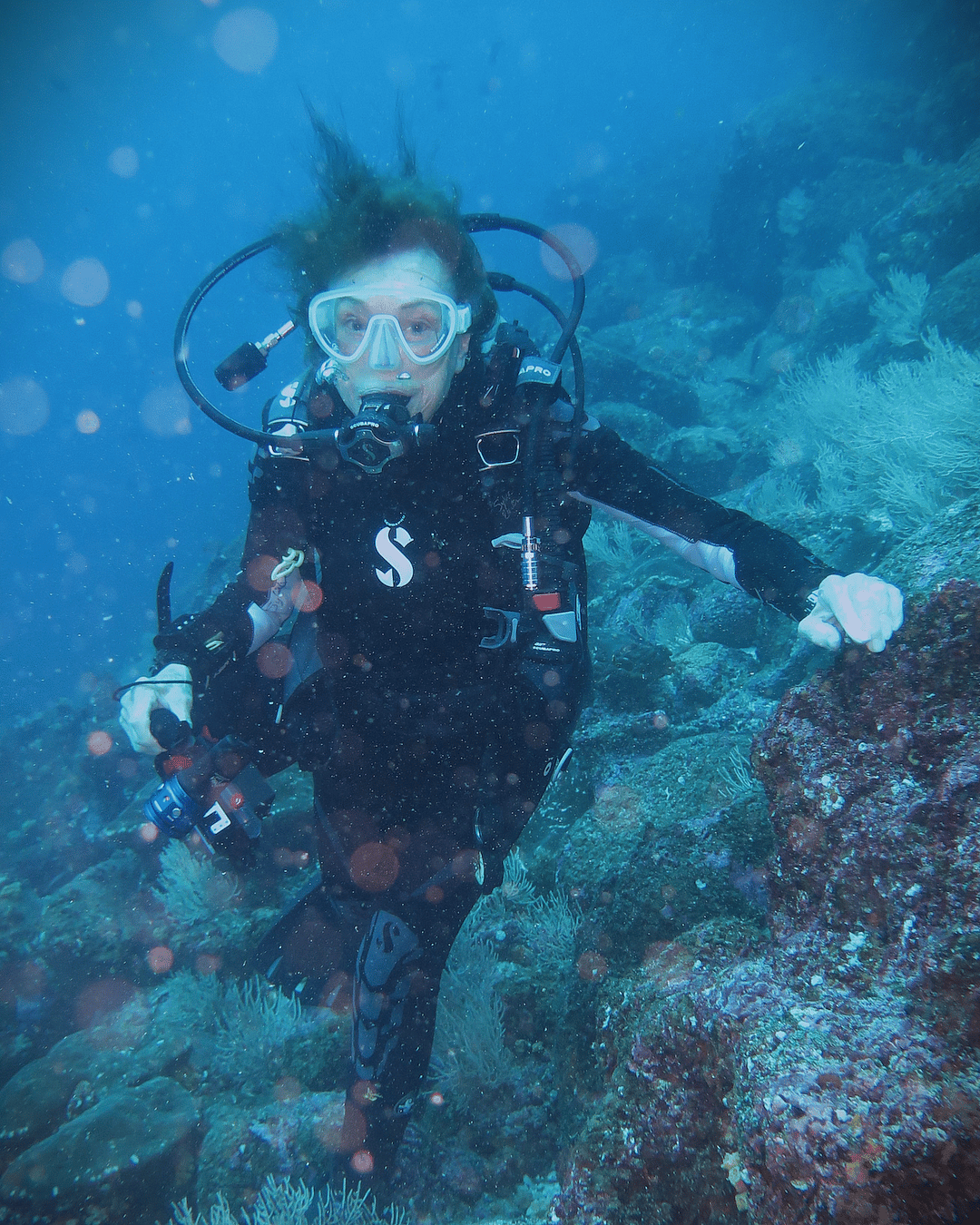
Carl Lundin // Mission Blue
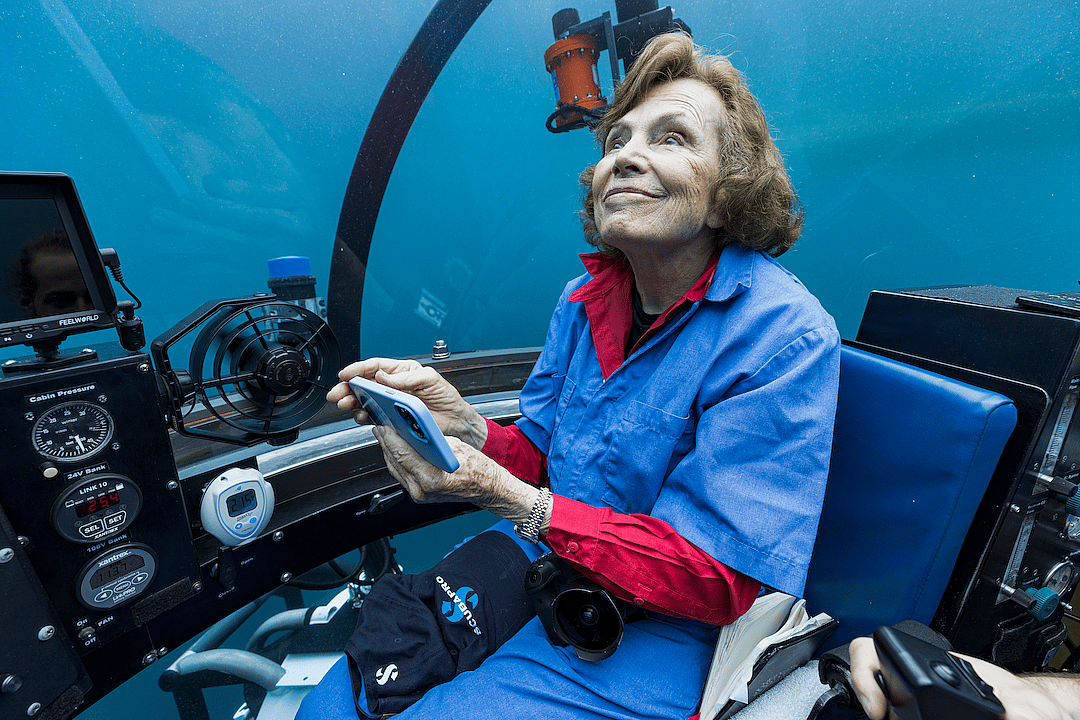
1 / 2The Harvard-trained marine scientist with a PhD from Duke University has made it her mission to advocate for the ocean
Earle compares the ocean to our heart. "You wouldn't say you need to protect just three percent or even 30 percent of your heart," she says. "The oceans are the heart of the planet. Without it, life is not possible."
Initially, Hope Spots were identified by renowned scientists. But after the 2014 Netflix documentary Mission Blue made her idea popular and people started reaching out to the nonprofit, Earle opened the process up to the public. "We're overwhelmed by nominations from the public," Rake admits before she adds, "in a good way!" She receives up to 100 nomination requests per year that are reviewed by a committee.
While Earle is petite in stature, she maintains a vigorous and outsized optimism. "I think you could get really depressed looking at headlines if you wished to focus on the bad news; there's plenty of it," she admits. "If we wait much longer to act on those opportunities we will lose the chance. So this is literally the best time that I can think of in all of history to be alive because just in my lifetime, I've witnessed greater insight, greater knowledge, about the fabric of life."
One Hope Spot is literally just outside the windows of her Alameda, CA, office — the San Francisco Bay. "Admittedly, it's not exactly pristine," Earle comments, "but better than it has been in the past because people are coming together to take action and restore its health."
When she started exploring the seas decades ago, humankind thought the oceans were so vast they could handle any amount of trash, toxic pollutants and fishing boats. Earle was among the first to sound the alarm.
She was also the one who pointed out that Google Maps should be called "Google Dirt" because it didn't map the oceans, only the land. Google promptly expanded its program to map the blue.
Some Hope Spots are already fully protected marine areas, and the designation is meant to help keep the protections in place when governments change or funds dry up. At other times, the nomination process for a Hope Spot can help galvanize the support of local governments and environmentalists to put legal protections in place. "Mission Blue is trying to help the local communities and ocean champions to move the needle," Rake says. "Then we're trying to maintain that status because as we know, administrations change and can roll back policies. We're using our collective power and community activism to let elected officials know how important this place is. No, you really shouldn't build a timber port right here in the migratory pathway of endangered southern right whales. This allows the elected officials to learn more about what's at stake and what the community wants."
For instance, Cabo Pulmo in Mexico was so badly overfished that fishermen kept pulling empty nets from the sea. In the late 1990s, the fishing cooperatives joined forces with scientists, implemented fishing regulations and replaced income from fishing with ecotourism. Through Global Fishing Watch, Mission Blue observed fishing ships leaving the area after protections were put in place. "The tuna industry was very against [the no-take designation] because they thought their catch would decline but it ended up being the reverse," Rake remembers. "They now see a 25 percent increase in their yield near the protected areas because of the spillover effect when you protect an area."
The Palmahim Slide in Israel is another example of a Hope Spot that didn't have any protection before it was nominated. The rare geological formation deep in the Mediterranean Sea, about 20 miles off the Coast of Tel Aviv, is a biodiversity hotspot where catsharks breed and bluefin tuna spawn. "We helped the marine conservationists with letters of support, scientific advisory and communication, and they were able to create a protected area approved by government officials," Rake explains. "We're using our international spotlight to really push for protection in these areas."
"Every Hope Spot is on a different journey," Rake says, referring to widely varying local regulations. She mentions Shinnecock Bay on Long Island's South Shore as another example where the Hope Spot designation had a measurable impact. "It was severely degraded, was having red and brown tides," Rake says. "There has been an absolute incredible change, doing restoration work with clams and oysters."