Izzy Ross / Grist
1 / 2Michigan exemplifies the tension between solar and local concerns
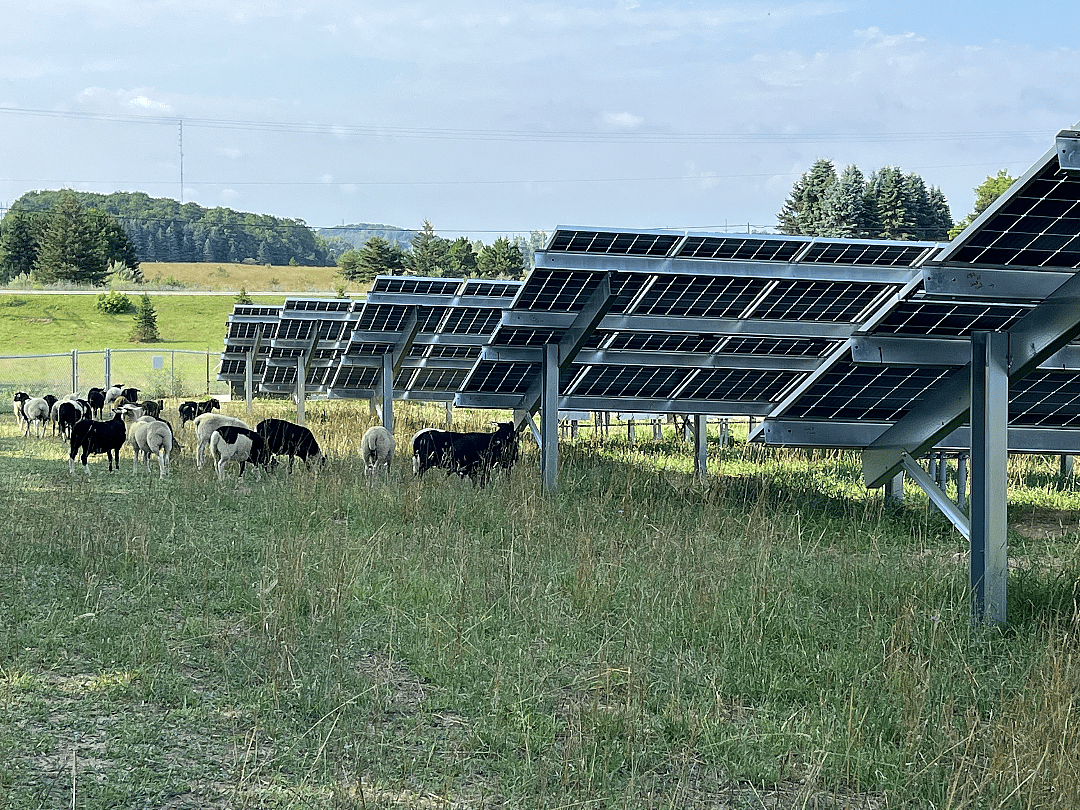
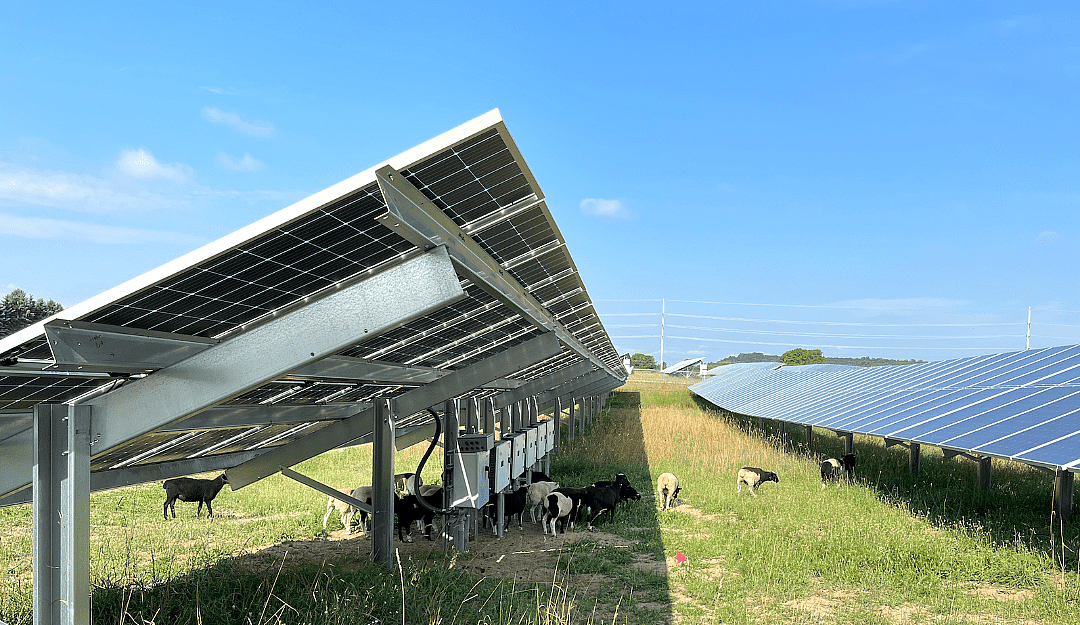
Photo: Sheep graze around solar panels at Heritage Sustainable Energy's M-72 array on Aug. 2, 2023.
Since townships decide where renewable energy projects are located, residents have a lot of say and many have placed moratoriums on solar and wind. The Sabin Center found that as of last May, 26 local Michigan governments had delayed or blocked utility-scale developments, the most of any state in the study. It didn't compare restrictions to the number of existing projects, but 118 wind and solar projects are already operating or under development, according to the state. As more are proposed, much of the focus is on the relationship between solar and farmland.
"Michigan has the most restrictive measures when it comes to siting solar on agricultural land," said Matthew Eisenson, who authored the May report. "There's a lot of apples to oranges, but I think Michigan just has the most activity on this issue of anywhere."
Debates over renewable energy have roiled communities in the state. A group called Michigan Citizens for the Protection of Farmland petitioned to block utility-scale solar on agricultural land last spring, though they withdrew it. In some places, residents have recalled officials who approved projects they didn't agree with.
Milan Township, in southeast Michigan, held a recall election last spring after residents voiced concerns about an ordinance that would have allowed large solar projects on agricultural land. Stephanie Kozar was elected township clerk during that recall. She's spent her whole life in Milan, and said it was a rough time for the community.
"There have been rifts between friends, between relatives, between acquaintances, because it is such a hot topic, and there are so many strong opinions and emotions about it," she said.
The township's original ordinance allowing solar on agricultural land had passed during the height of the pandemic, which Kozar said raised issues of transparency. Since then, she said, more people have started attending meetings and gotten involved in local politics.
"We're just trying to make the township a place where people want to come, want to live, and keep it in the agricultural spirit," she said. "It's about what the majority of our township wants. And that's our biggest goal, is making sure that their voices are heard."
Local opposition to renewable projects can often be nuanced, rooted in a wide array of reasons. Those include concerns about a project's impact on the environment and economy, and extend to governmental failures to consult Indigenous tribes, according to a 2021 study by Science Direct. Some rural communities worry that losing farmland to solar could fundamentally change their culture.
"I think this is a hot-button in most townships, one way or the other," said Bob Schafer, the supervisor of central Michigan's Keene Township, who took on the job after his predecessor was narrowly voted out during another recall election held last spring.
Schafer stressed that people there have a variety of opinions on renewable energy — many people support it, and some oppose "mega projects" but not smaller installations.
"All the landowners have some say," he said, "both those that are trying to obtain a project and those that may be surrounded by a project. We're trying to find a balance."
But that balance is hard to strike, and some Michigan lawmakers are trying to streamline the path to renewables. With a slim Democratic majority, Michigan's legislature is tackling a heap of ambitious climate legislation this fall.
Abraham Aiyash, a Democrat from Hamtramck, is the house majority floor leader and one of the sponsors of a climate package. He and other lawmakers want the state to have the power to approve utility-scale projects, which he said is necessary to reach their climate goals.
"There is no other way," he said. "If we are not setting a rapid pace for investing in solar and wind we will not meet the energy centers that we are going to be setting."
Still, Michigan has a deep history of local decision-making, and for some, the idea of transferring power to the state is unacceptable. Judy Allen, the director of government relations for the Michigan Townships Association, said doing so would create a one-size-fits-all approach.
"It's not a cookie-cutter situation, and that's why we think it's incredibly important that you have that local voice and that local process in terms of location and permitting," she said — even when it means farmers can't do what they want with their lands.