Andia // Universal Images Group via Getty Images / Grist
1 / 2The nation's taste for meat and dairy is undeniable
In addition to a steady, decade-long-rise in beef consumption, which hit 20 billion pounds in 2021, Americans gobbled up 12 percent more cheese, butter, and ice cream than in the previous year, continuing an upward trend that started half a century ago.
There's a fundamental disconnect, though, between our growing demand for animal-based protein and its enormous carbon footprint. Producing a pound of steak generates nearly 100 times more greenhouse gas than an equivalent amount of peas, while cheese production emits eight times the volume of making tofu.
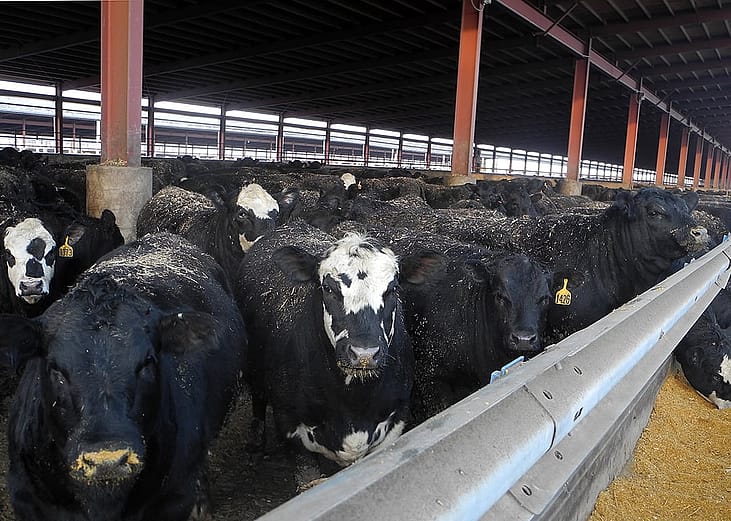
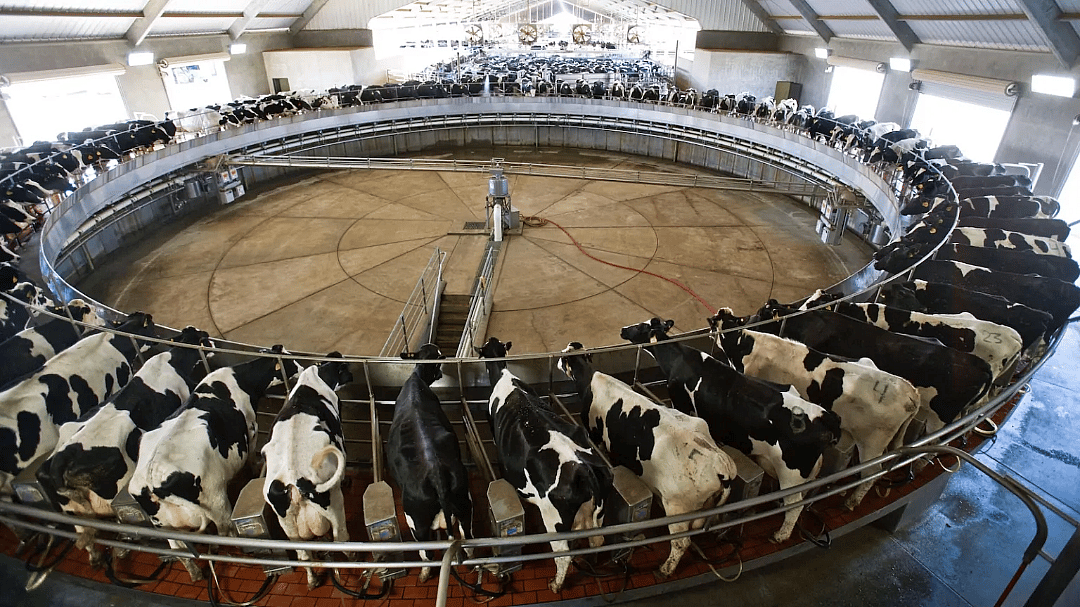
Although the American beef and dairy industries are among the most efficient in the world — due in part to better breeding, genetics, and nutrition — they still leave a significant hoofprint. The nation's 92 million cattle generate 4 percent of the country's total greenhouse gases and account for 40 percent of all agricultural emissions.
However, if those herds were to magically disappear, it wouldn't eliminate the problem entirely. According to a peer-reviewed study, an animal-free agricultural system would shave just 2.6 percent off the country's total greenhouse gas emissions. Of course, any reduction would be noteworthy given the nation's outsized role in climate change — that drop would be equivalent to three times Portugal's annual emissions — though that benefit would come with drawbacks.
With no livestock to feed, the acreage now used to grow silage and hay could be replaced with food crops. Yet because higher-value fruits and vegetables require quality soil, specific climate conditions, and ample water infrastructure, most of that land would be limited to growing calorie-heavy, hardy broad acre crops such as corn and soybeans — a system change that would add its own climate impacts.
In fact, agriculture's current emissions are a result of a certain balance between crops and livestock, said Robin White, a professor of animal and poultry science at Virginia Tech and the lead author of the research. Crops need fertilizer, a resource often provided by livestock, and producing synthetic versions is an energy-intensive process that typically requires fossil fuels and emits methane. Cattle also help keep agricultural byproducts — from fruit peels and pulp to almond hulls and spent brewery grains — out of landfills, reducing the carbon output of crop waste by 60 percent.
Eliminating the nation's cattle and replacing feed production with food crops would create more food, White said, resulting in a caloric surplus of 25 percent. That abundance, however, would come with deficits in essential nutrients, as plant-based foods tend to fall short in vitamin B12, calcium, iron, and fatty acids. (Although existing studies reflect good long-term health in vegetarians, research on those who eschew all animal-derived foods is inconclusive.)
Larger discussions around sustainability tend to overlook these complexities, said White. Food insecurity is often tied to caloric sufficiency, but doesn't always reflect nutritional needs, particularly those of vulnerable populations. Pregnant, lactating, and elderly women, for example, are susceptible to anemia and low bone density, mainly due to inadequate iron and calcium intake — nutrients readily available in red meat and dairy products, and easily accessible to large swaths of the population.
"These types of nuances get lost," said White, when we focus exclusively on the broader metrics of diet change. While balanced choices can work for individuals, keeping the country adequately fed and healthy is a complicated endeavor. "There's an entire agricultural system behind that food production," she added, and changing the pieces within it requires careful examination.