David McNew/Getty Images via Grist
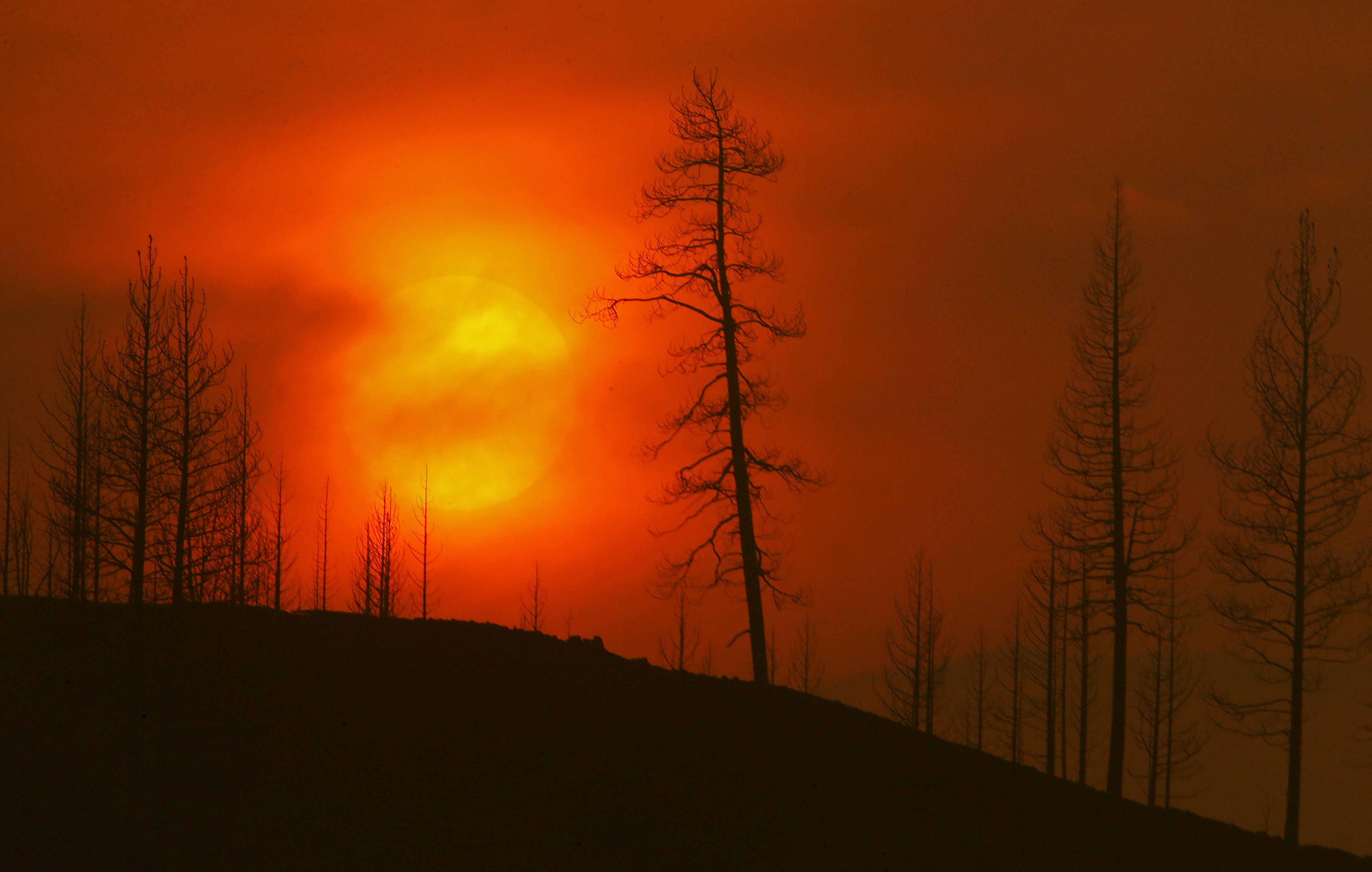
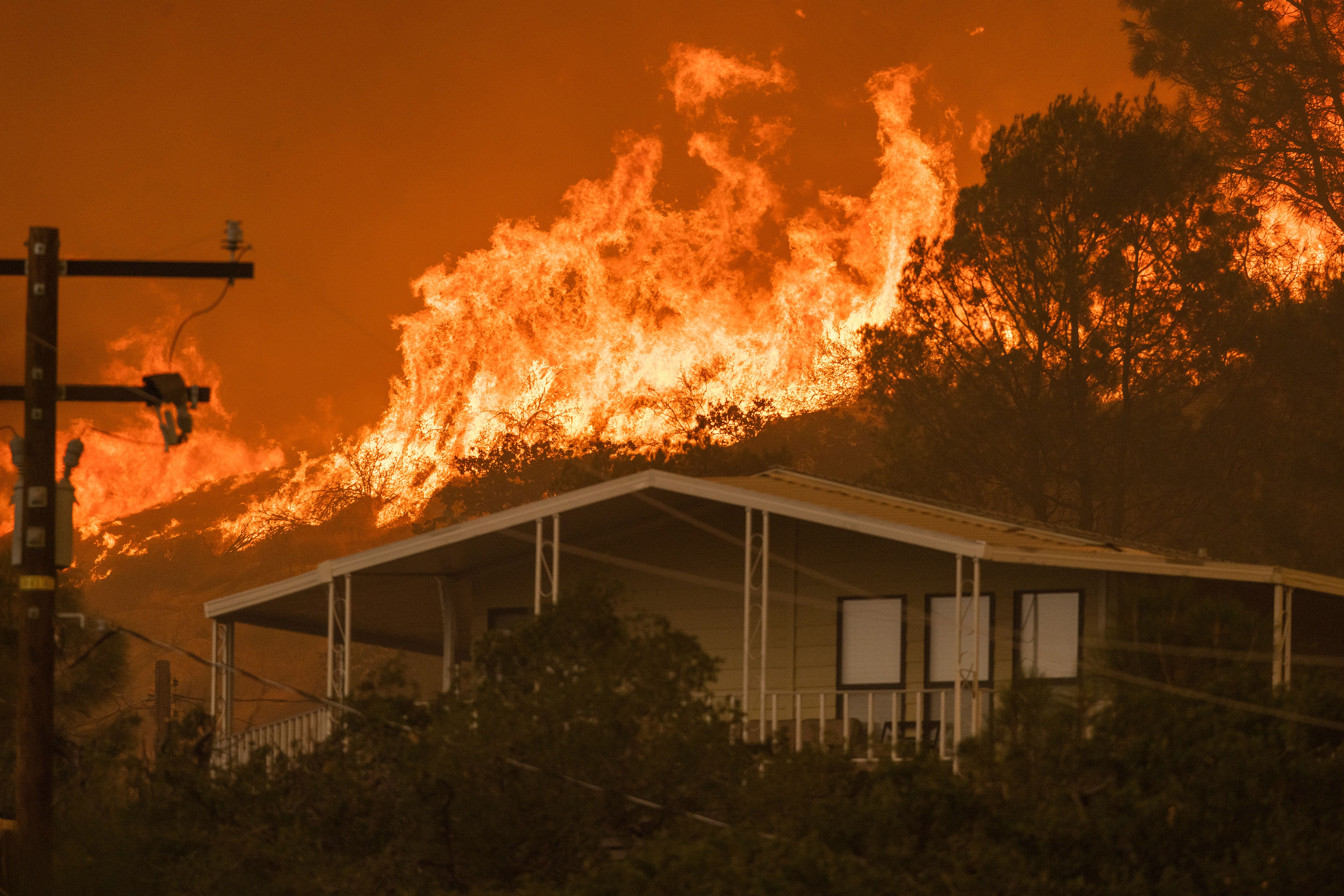
1 / 2On average, 1 in 4 Californians live under threat from wildfires
In California, many residents find themselves on the leading edge of this crisis. Rural areas were the first to be affected. But now, even people in suburban areas and across a broad spectrum of society — including politicians themselves — are seeing their coverage vanish.
The problem itself is pretty simple: Nearly a quarter of Californians now live in areas at risk of catastrophic fire. Knowing what to do about it is a much thornier question.
After several close calls with nearby fires, Beth Pratt decided to refinance the mortgage on her home in Midpines, outside of Yosemite National Park, and spent $100,000 — all the equity in her home and all her savings — to reduce her risk. She installed a metal roof and built a water storage tank with a fire hose hookup. She completely sided her house in metal, replaced her decking and railings, and cleared brush. Most of these measures went far beyond the basic tree trimming that Allstate requested during her last home inspection. She will now be paying off her mortgage till she is 80. Despite her efforts, she got a letter this July canceling her policy.
In 2018, Governor Gavin Newsom announced a moratorium on homeowner policy cancellations for one year in ZIP codes near wildfires, a condition which applied to Pratt's community after a fire in July 2022. Pratt's cancellation arrived this summer almost exactly when that grace period ended, right in the middle of wildfire season. Last year, the state's insurance commissioner required insurers to give discounts for the kind of steps Pratt took, but rather than adjusting her rates, Allstate chose to drop her coverage. (Allstate made a quiet decision last fall to stop writing new policies in California. State Farm followed suit this spring.) "I feel like I did everything right. But it didn't matter," she said.
Pratt's mortgage requires her to have homeowners insurance, putting her at risk of eventually defaulting. She tried to find another private insurer to no avail. Eventually, she turned to the California FAIR Plan, a state-backed policy that covers people who have been denied private coverage at least three times. Its budget comes from levies on insurance companies operating in the state, but these coffers are shrinking: The FAIR Plan itself announced that it was seeking permission from the state's Department of Insurance to hike premiums by nearly 50 percent.
Most of Pratt's neighbors in Midpines have also lost their insurance. Some may still qualify for private policies, but can no longer afford them. "What you're talking about in an area like mine is not rich people or second homes, but working-class people, people who have lived here their whole lives, losing the ability to insure their properties," she said.
Nationwide, approximately one in three houses is located in the wildland-urban interface. But even documenting the hazards has been contentious: The Oregon Department of Forestry tried to issue a map in 2022 showing 80,000 homes were at risk. But homeowners worried this would decrease their property values and raise their insurance rates protested until the state rescinded it. Or take the 2018 Camp Fire, which began when a spark from an electric transmission line owned by the utility Pacific Gas & Electric blew into a firestorm near the town of Paradise. In its aftermath, insurance companies sued PG&E, reclaiming around $11 billion — or about 85 percent of their claims. The utility later declared bankruptcy.
There's a long history of insurers going after the entities that caused expensive claims, a process known as subrogation. Empire Blue Cross and Blue Shield, for example, won $18 million in 2001 from Philip Morris and other tobacco companies to cover the medical treatment of smokers. Advocates suggest insurers could take a similar approach to the fossil fuel industry, whose product has helped worsen wildfires. Rather than individuals, or even insurers, said Peter Bosshard, the coordinator of the Insure Our Future campaign, "it should be the polluters who pay."
Multnomah County, Oregon, took its first step in this direction in June, suing several multinational oil companies for the heat dome that smothered the region in June 2021, killing at least 69 people in the county, which includes Portland. (The death toll across the Pacific Northwest was much higher: at least 250 in the U.S. and another 400 in Canada.) In addition to $50 million in damages, the county is also seeking $50 billion for research and to implement "weatherproofing" to help handle future extreme heat.
"What we're staring at now is a situation where everything is going to get more expensive," said David Pomerantz, executive director of the Energy and Policy Institute.
Homeowners aren't the only ones finding they're priced out of the insurance they need. Utility companies, for example, are also struggling to find wildfire liability coverage to protect them from lawsuits like the ones PG&E faced. That makes upgrading utility infrastructure even more important — but that ultimately costs consumers money, too. PG&E is currently improving its transmission network and asked California regulators for a $3.2 billion rate increase this year, or an average bill increase of around $450 a year. Perversely, utilities themselves primarily profit by making these kinds of capital expenditures, so "every utility in the West is doing this to some degree," Pomerantz said.