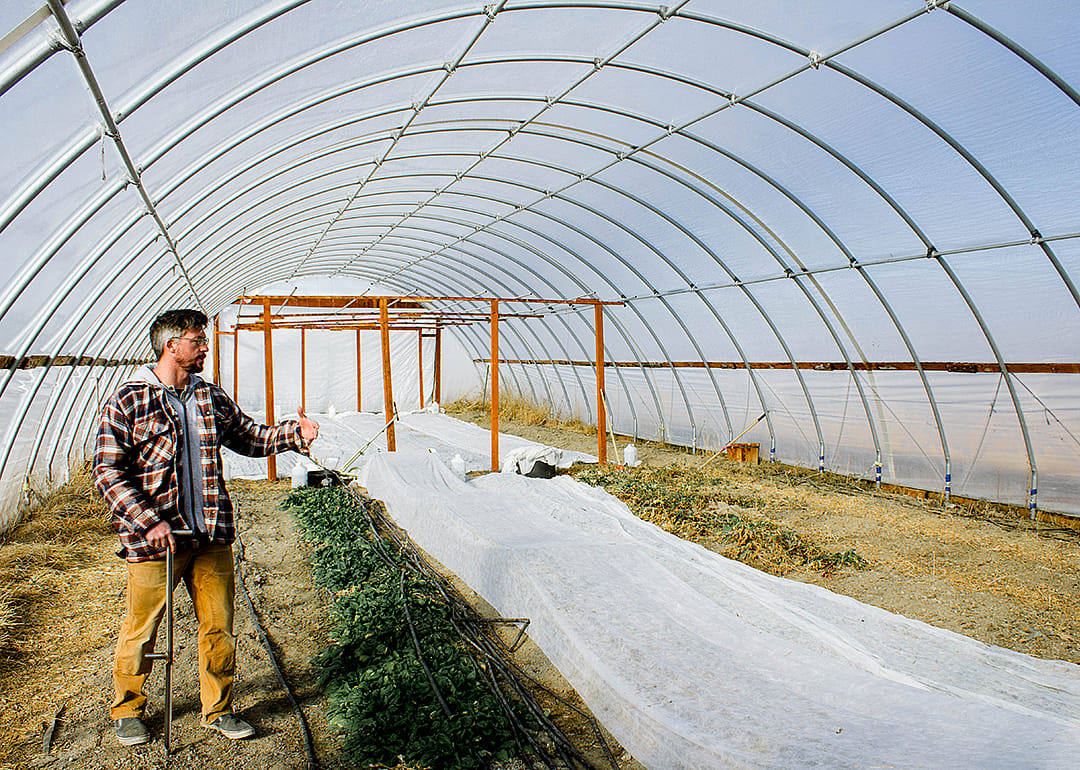
Claire Carlson for The Daily Yonder
1 / 1Trump administration freezing out farmers
But since executive orders paused a large portion of USDA spending, the agency's role as a farm investor is in flux. "As a result of that, we're seeing contract terminations, contract modifications—a whole host of things," said Mike Lavender, policy director for the National Sustainable Agriculture Coalition, a grassroots alliance of organizations that serve small and mid-sized farmers and ranchers. "There's anger and confusion over why contracts are being paused indiscriminately."
On Feb. 10, a federal judge found that the Trump administration had defied the judicial mandate to reverse the funding freeze. But to farmers, that discovery is largely meaningless without delivery on payments. While the recent rollout of $20 million of frozen spending will get some money to farmers, countless more are still left without.
If they go much longer without promised grant funding, they risk losing their businesses, which would be a blow to both the farmers and the people they employ, Lavender said.
The latest agriculture census found that between 2017 and 2022, the U.S. lost 7% of total farms. Lavender said that this number could increase if farmers don't get payments soon, leading to further consolidation of agriculture where just a few corporations control large swaths of the industry.
"It's particularly painful [to lose a farm] not as a result of something outside of control, but happening as a result of something intentional, driving further consolidation, harming rural communities and farm families in the long term," Lavender said.
Mass USDA layoffs could also bring long-term challenges to farmers, even if they do survive the spending freeze.
Lotspeich Family Farms, for example, relied on the assistance of a district conservationist at the USDA extension office in Elko, Nevada, during their grant application process. She's the one who first told the Lotspeichs about the NRCS grants for hoop houses and later helped them navigate the application steps.
"The support of the local USDA–NRCS folks was absolutely crucial, especially for the first round of applications, because they helped us navigate through all the more arcane parts of it," Lotspeich said.
As of Feb. 20, 2025, the number of fired USDA employees has not been publicly released, but Agri-Pulse reporting from inside sources estimated thousands of firings inside the agency—1,200 of them from NRCS, the program that the Lotspeichs got money from.
Now, the Lotspeichs are waiting to hear back from USDA's Farm Service Agency about an operating loan so they can start construction on a new processing building that will give them additional cooler space and a washing station for harvested crops. But because of the current confusion about USDA spending, Lotspeich said they've paused plans on that project indefinitely.
Delayed and canceled projects are a reality many farmers will have to contend with if payments are pushed back much longer.
"From the conversations we've had, whether farmers or organizations who are providing technical assistance, the urgency is immediate, and the need for scenario planning is immediate, which is why the relief and the clarity [from USDA] needs to be immediate," Lavender said.