Ash Ponders for the 19th
1 / 4From Accidental Advocate to Barrier-Breaking Leader
Cázares-Kelly jokes that she got into voting rights work by accident. In 2016, she was an academic adviser at the Tohono O'odham Community College when her friend and colleague Daniel Sestiaga, a member of the Fort Yuma Quechan Indian Tribe, approached her about a favor. He had been recruited by the American Indian Higher Education Consortium, which represents the interests of tribal colleges across the country, to register students to vote. He asked Cázares-Kelly if she could help. She knew all the students by name and was "just like a changemaker on campus," he said.
On the first registration day, Sestiaga got pulled into a meeting, so Cázares-Kelly had to do the work by herself. Despite not having any training, she thought, "It's probably not that hard. I've registered myself and other people. Like, it'll be fine."
Instead, she recalled, "It turned out to be really hard."
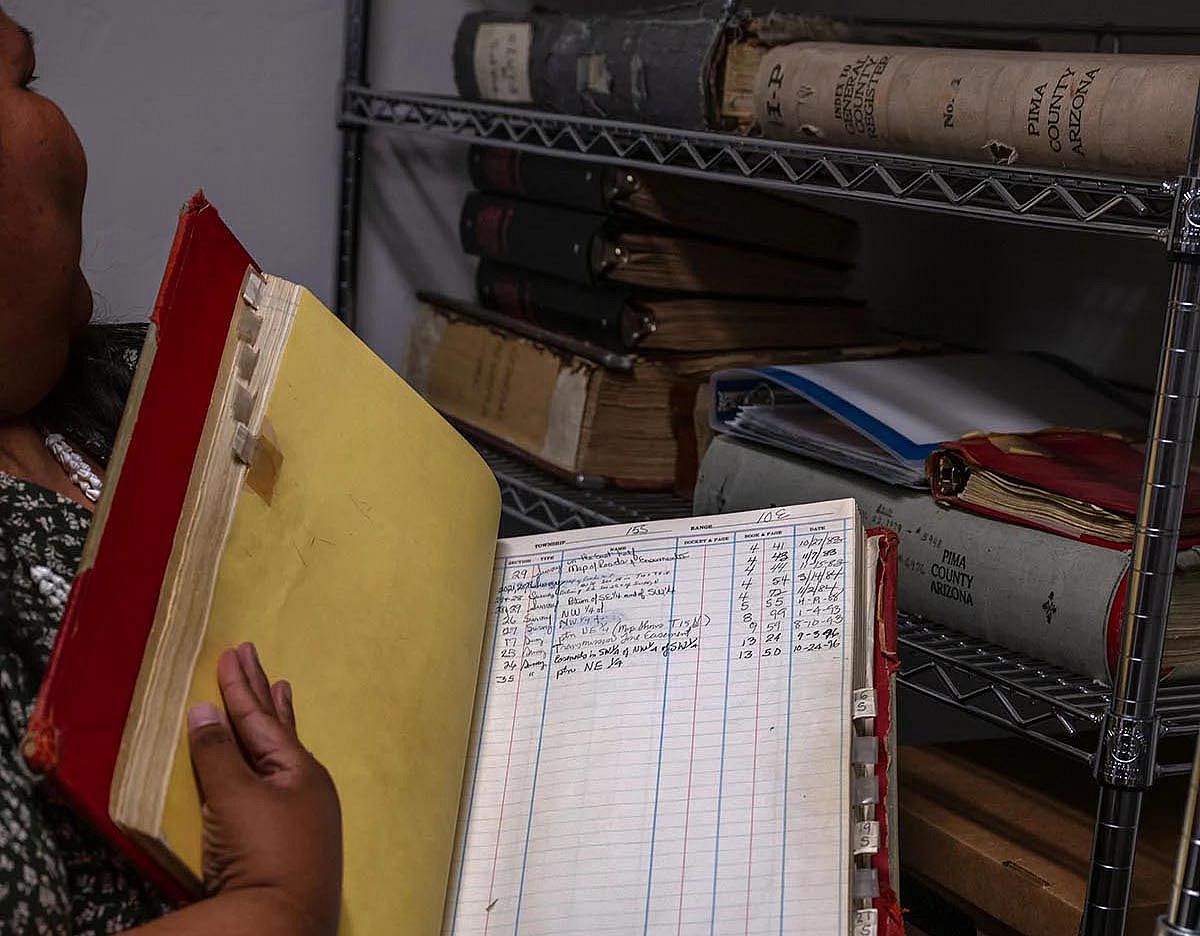
One of the challenges is that voter registration isn't set up for the realities of tribal land. "The problem on the reservation is if you're asked for your physical address, you just kind of make it up," she said. "Because there is nothing you can really reference." Instead of a street name, one might describe where they live in relation to a landmark or a mile marker. For example, the college's address was Highway 86, milepost 125-and-a-half, she said.
The form also includes a spot to draw where you live. "Well, my nation is the size of Connecticut," Cázares-Kelly said. "Are you asking for the shape of my nation and a star? Like, what are you looking for here?"
All of this can create confusion for residents who sometimes just list their PO boxes, which don't count as physical addresses. That will delay their registration, Cázares-Kelly explained.
Non-native students had issues, too, particularly if they were from out of state. Some students didn't have driver's licenses. "Every single person's situation was so completely different," she said. "It ended up being incredibly complex."
She took her questions to the office of then-recorder F. Ann Rodriguez. She had so many that, at one point, she bumped her sister's number off her speed dial list and replaced it with the number for Rodriguez's office.
And the work was just beginning. "People started getting the voter registration cards back, getting their voter IDs in the mail, and they were so excited to show me or thank me for helping them register," she said. But then it became, "My mom wants to register now, my auntie, my boyfriend, my uncle. How do I get them a form?" Cázares-Kelly realized she didn't know. "It was like I pulled a thread from a sweater and all of a sudden this sweater started unraveling."
One of the things she learned is that the post office on the reservation should have voter registration forms available, but hadn't stocked them in years. "Having no influence and no title and no anything, I reached out to the postmaster, I reached out to the recorder's office, and I connected the two," she said. Soon, the forms were where they should have been all along.
Cázares-Kelly's voting advocacy quickly turned into an obsession, Sestiaga said. One day, he recalled, "We were cruising through the village on a lunch break or something and she said, 'If there was a way that I could make a full-time job out of getting people registered to vote, I would do it.'" Teasing her, he told her she'd just have to become the next county recorder. "She was like, 'Get out of here! Like, I have no interest in politics. I have no interest in campaigning.'"
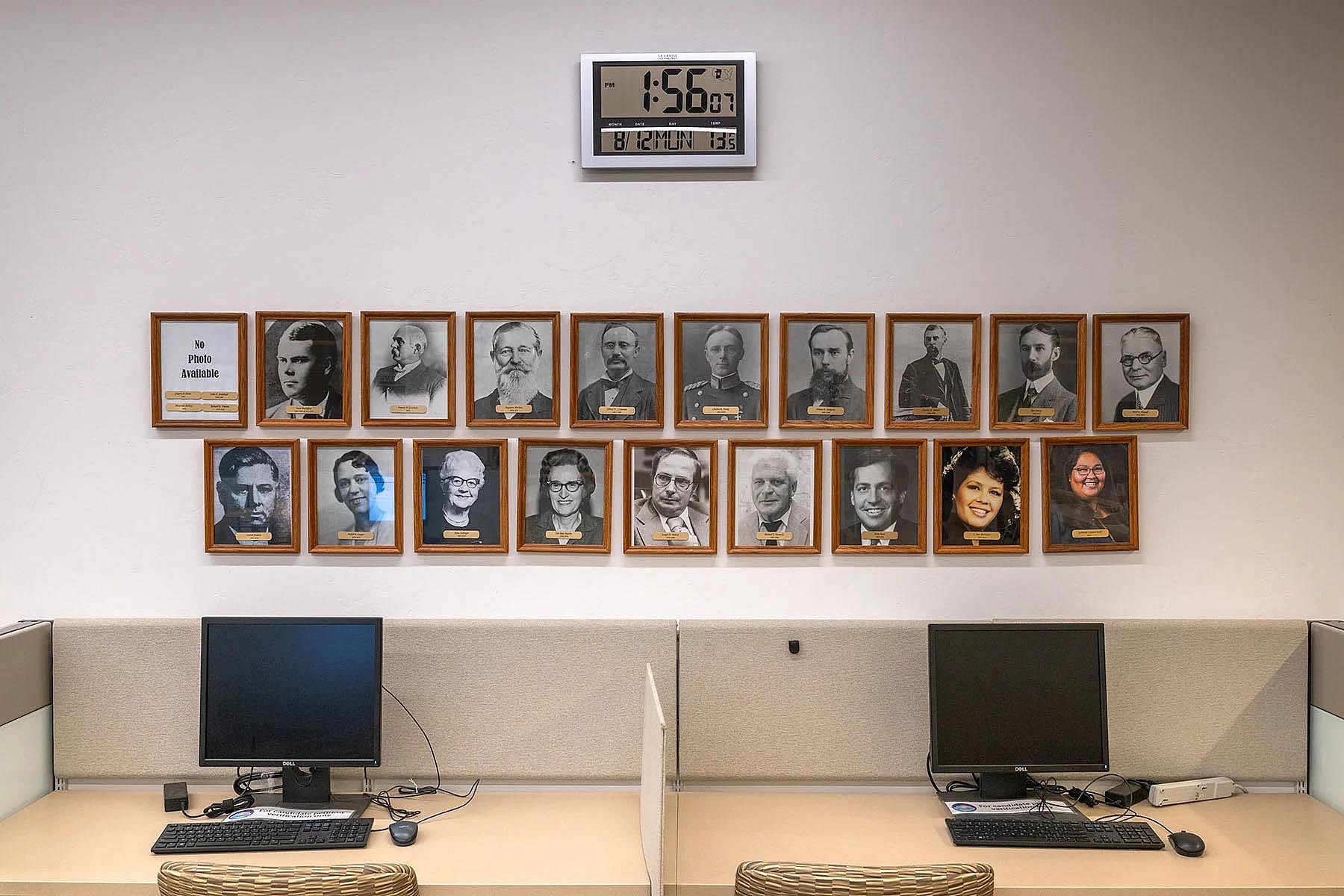
But she also recognized there was a need for better outreach, particularly on the Nation, he said. So when Rodriguez announced in 2019 that she was going to retire after 28 years of service, it felt a little bit like fate to Sestiago. A lot of other people who knew Cázares-Kelly had a feeling she would go for the seat. "I remember seeing that headline, and I just thought to myself, 'Oh my goodness, she's going to run for this,'" her husband, Ryan Kelly, said.
Cázares-Kelly wasn't sold yet. She was, first and foremost, an educator. She had no desire to be a politician, and the thought of raising campaign money made her uncomfortable.
But it nagged at her how long it had taken to build a relationship with the current recorder's office. She thought about having to do that all over again once Rodriguez left office. And what if the new recorder was anti-Native? "I was worried," she said. "Eventually, I recognized that I care about this office and I understand a lot about the needs that are not being met, and I have a sense of duty to at least try."
She launched her campaign in 2020, right at the start of the COVID-19 pandemic. That meant having to canvass neighborhoods with social distancing measures in place, doing no-contact lit drops and outreach through Zoom forums and virtual fundraisers.
Worse, a candidate who wanted to win her community would need to do a lot of driving—and her car was having engine problems. She needed money to get back on the road. When she was registering voters, she sold banana bread to pay for gas. But fixing the car would take a much bigger sum, and she felt bad asking for money from people who might not have any to spare. A friend assuaged her guilt: "I think you're saying, 'Hey, community, I've invested in you,'" she recalls him telling her. "Now you're asking, 'Can you invest in me?'"
She set up a GoFundMe for $3,500 and quickly met the goal. "It was just shocking to me that people would give me money," she said. But it didn't surprise her husband, a former teacher who is now a labor organizer with the AFL-CIO. Because she never wanted to get into politics, she had won community support just by being herself, he said. "Gabby walked into the race already having so many meaningful community relationships," he said.
Those ties had deepened in 2017, when she, her longtime friend April Ignacio and a few others co-founded an advocacy organization called Indivisible Tohono. They have organized everything from sock drives to candidate forums to Pride events on the Nation.
That network of friends was ready to spread the word about her campaign. It helped that she made a TikTok video that went viral, showing her speeding by the National Mall in Washington, D.C. on an electric scooter while wearing a traditional red dress and yelling, "Excuse me, I'm Indigenous, coming through!" That moment became part of her campaign slogan and bumper sticker design.
So when Election Day came, her supporters were hopeful that she might have a shot. "We had a good group of people who are really all rooted in the community," her husband said. "I think we quietly suspected that it was going to be a landslide victory."
And they were right. She beat her opponent by more than 80,000 votes.
Ignacio said it was a barrier-breaking moment for Cázares-Kelly. "As a rez girl growing up, we didn't have the idea that we could do this. We didn't have people in our community who were doing things like this," she recalled. "For me to watch my best friend make history, it's still very emotional. And I think that she's the star who she's always been."