The Trace
1 / 2What happens after a gun is stolen?
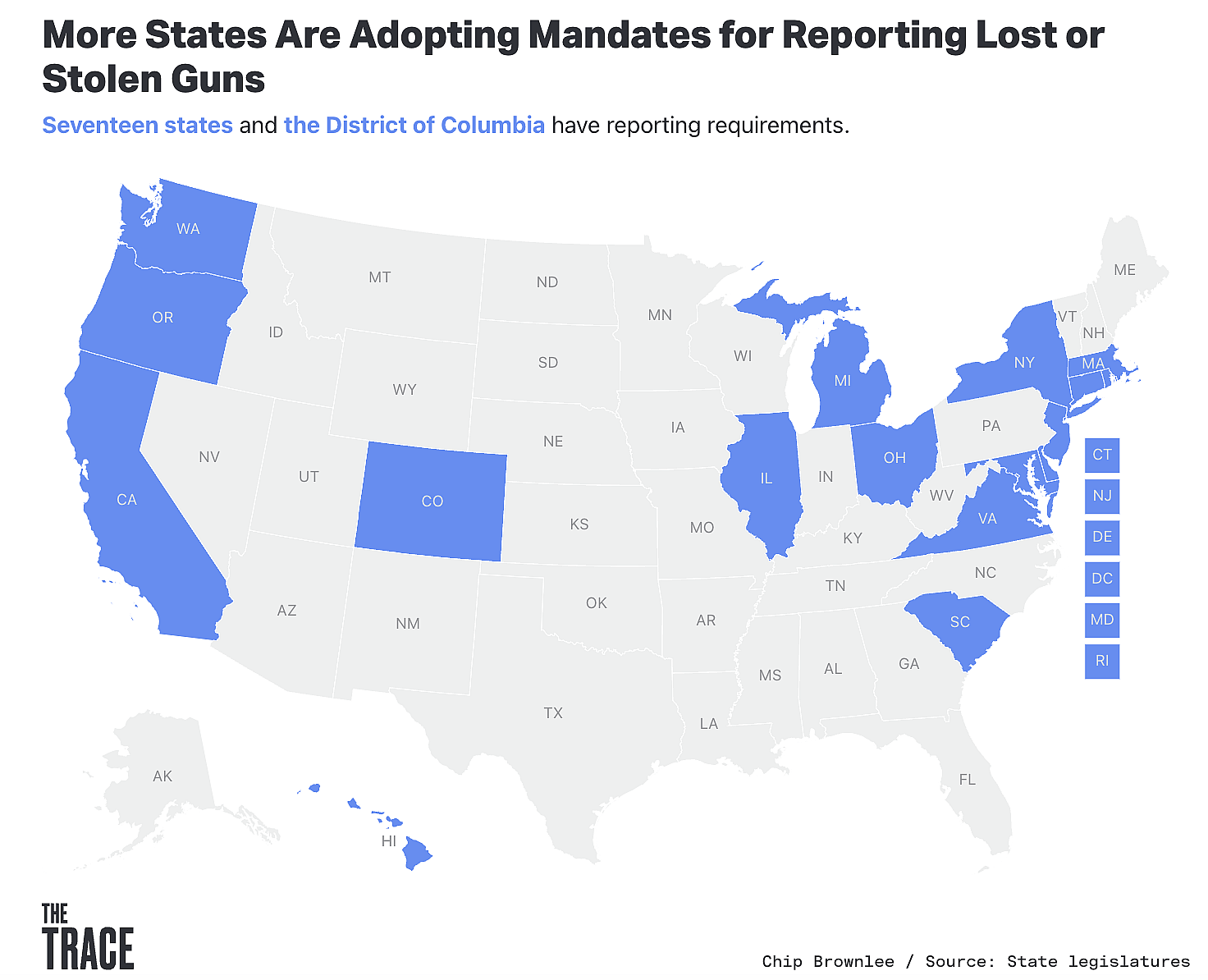
Proponents say reporting requirements, at their most basic, enable law enforcement to track down stolen guns faster—hopefully, before they're used in a crime. But the laws do more than that. As in the Connecticut case, they can also help to identify trends of suspicious purchases and "thefts" to suss out cases of straw purchasing and gun trafficking.
"That helps a lot in firearms trafficking cases and dealing with straw purchasers, who routinely use a gun being 'stolen' as their excuse," said Michael Bouchard, a former Bureau of Alcohol, Tobacco, Firearms and Explosives assistant director and president of the ATF Association.
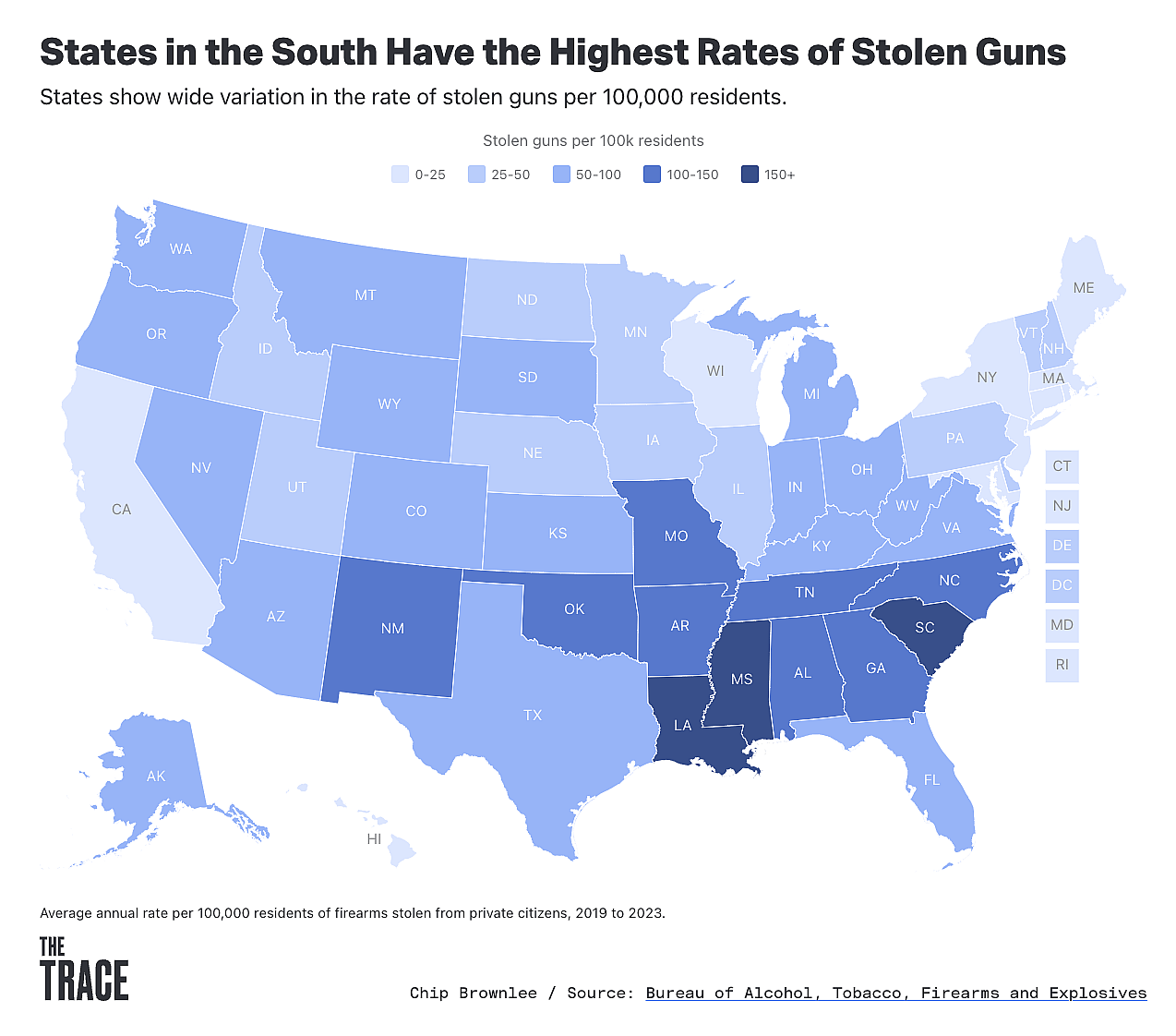
Firearms stolen from private citizens account for nearly 95 percent of all guns stolen in thefts, according to a 2025 ATF report. From 2019 to 2023, nearly 1.1 million firearms were reported stolen, and more than 1 million of those were stolen from private citizens, or roughly 200,000 annually.
Once out of the hands of their original owners, those guns are much more likely to be used in crimes, according to research published last year in the journal Injury Epidemiology. For the study, the Violence Prevention Research Program at the University of California, Davis, analyzed over 8 million gun sales records and tens of thousands of reports of crime guns being recovered by law enforcement. They found that guns reported lost were three times more likely to be used in crimes. Stolen guns had nearly nine times the likelihood.
The researchers noted that guarding firearms against theft and loss should be a "primary focus" of efforts to prevent gun violence.
"If someone steals your gun, it's likely a gun thief is going to use it in a crime, probably against somebody," Bouchard said. "If an officer confronts someone with a firearm, and it's been reported stolen, now that's one crime gun that's taken off the street before there are any more victims."
In Minnesota, state Representative Kaohly Vang Her, a Democrat, has been trying to get a mandatory reporting requirement passed for several years.
"I own a gun. I've hunted probably for about 25 years," Her said. "It makes me feel more strongly that we need better gun violence prevention and about what it means to be a responsible gun owner. When I think about lost or stolen firearms, it's just common sense that this is what we should be doing."
Her's bill passed the Minnesota House during the state's 2023-2024 legislative session, but it ultimately failed in the upper chamber. She plans to file a new version in the coming weeks. Lawmakers in at least three other states—Texas, Missouri, and Kansas—have proposed similar bills, while legislators in Illinois and Ohio have proposed measures to strengthen existing requirements. The proposals come after the Biden administration released model legislation that states could follow.
In Congress, U.S. Representative Sean Casten, an Illinois Democrat, introduced a bill on Feb. 21 that would require lost or stolen firearms to be reported to law enforcement within 48 hours. But it faces an uphill battle with Republicans in control.