Hers
1 / 3Postpartum Hair Loss Explained
Postpartum hair loss is actually quite common. Known as telogen effluvium, it's a form of temporary hair loss that can occur as a result of things like extreme stress, illness, medication side effects, traumatic events to the body (like surgery or childbirth), and sudden hormonal changes.
What's happening physiologically has to do with the hair growth cycle. Each hair goes through a growing phase (anagen), transition phase (catagen), and resting phase (telogen) before the hair falls out (exogen) and the cycle starts again.
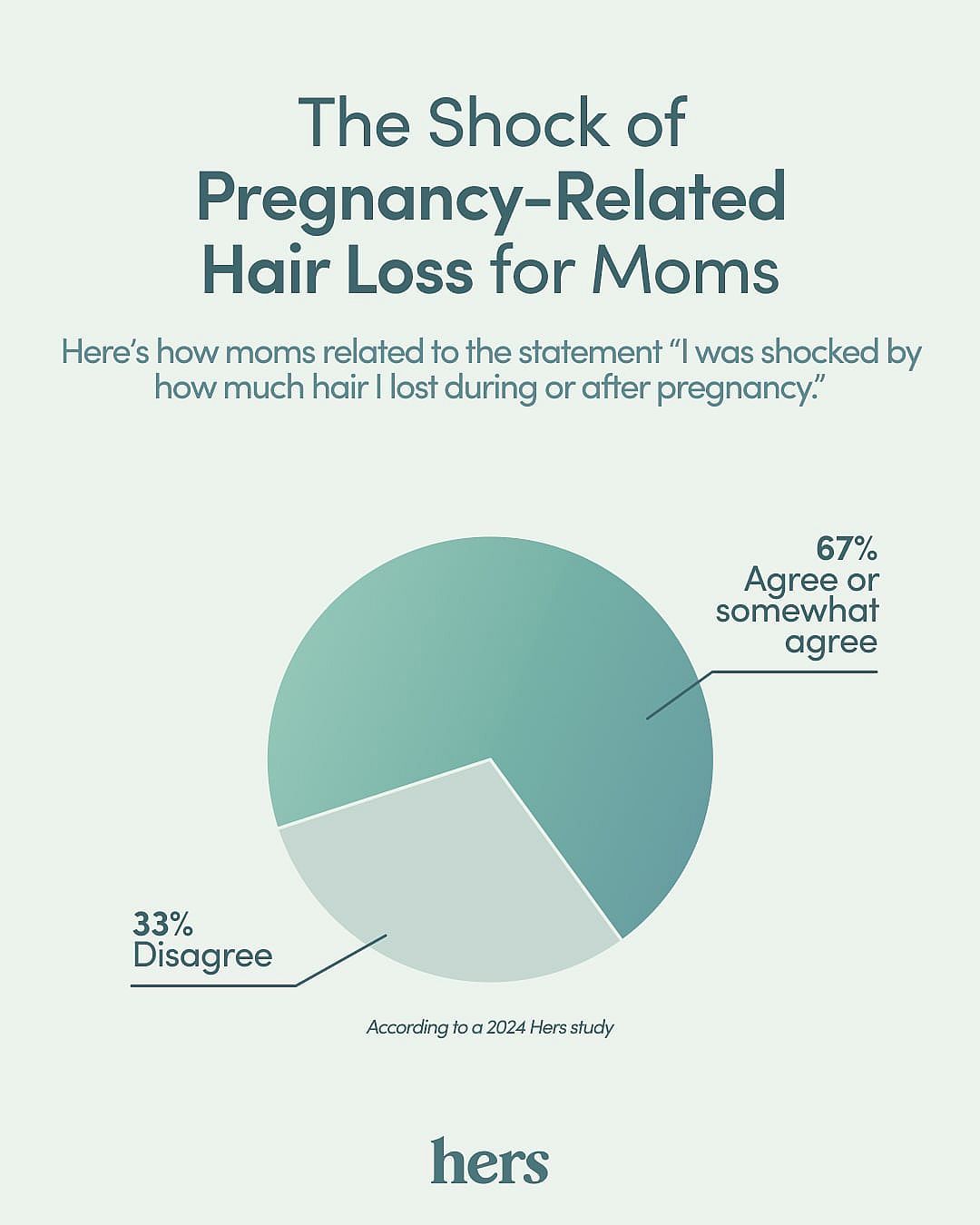
During and after childbirth, hormonal shifts can cause many hairs to go from the anagen phase to the telogen phase around the same time, and those hairs then fall out a few months later. The good news: postpartum hair loss usually stops about six to 12 months after childbirth.
But those 12 months can have a major impact on a mom's sense of self.
Power Hair: The Quantifiable Impact of Hair Loss for Moms
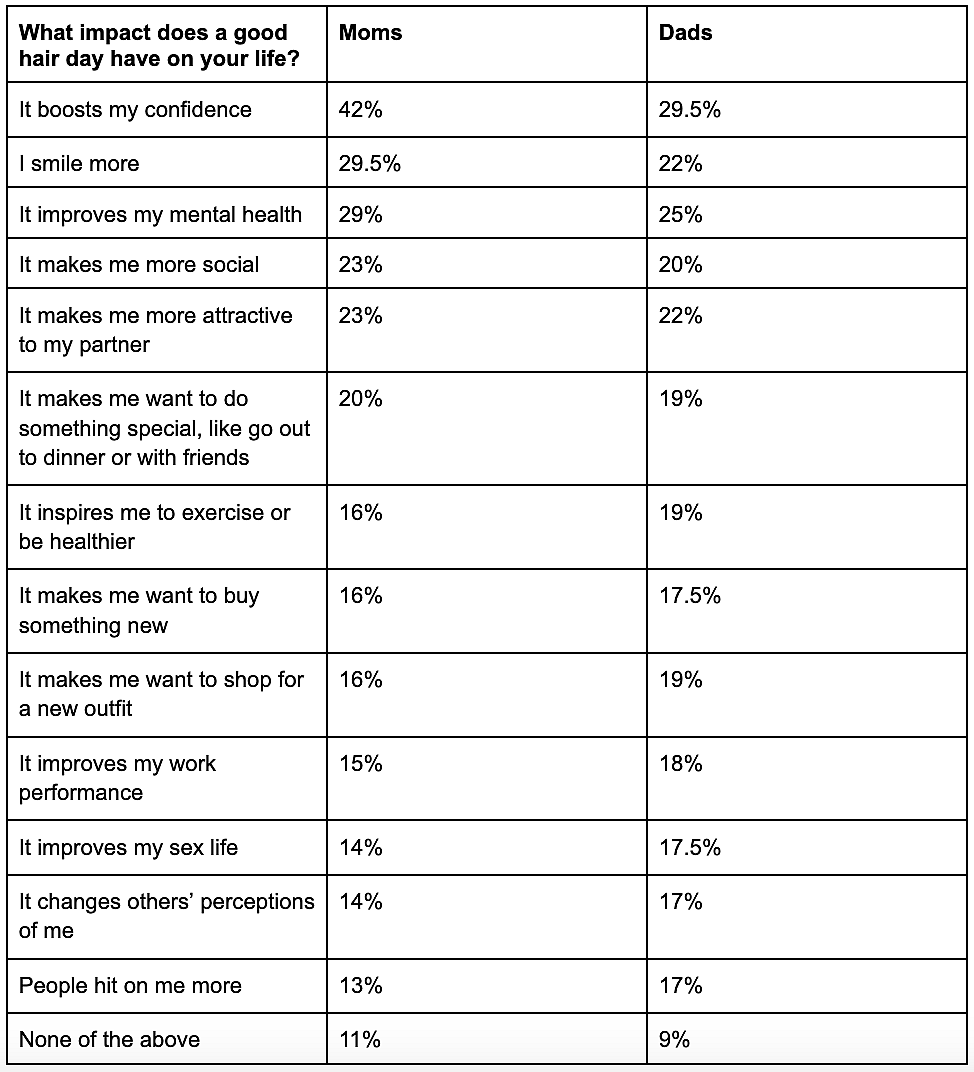
Hair plays a significant role in building self-esteem, particularly for women. In fact, according to our study, 85% of women and 88% of moms agree, "It's amazing how much a good hair day can boost my mood," and 42% of moms say a good hair day boosts their confidence, as compared to just 29.5% of dads who feel the same.
Uplifting a new mom's mood is arguably as important as anything else during this transitional time (the CDC reports about 1 in 8 new moms experience symptoms of postpartum depression). Good hair, while not life changing, is an instant mood-booster. It's also a simple way for moms to feel back in touch with their pre-mom selves.
Not only is the effect of good hair real, it is also quantifiable. Nearly 9 in 10 (89%) of moms say that having good hair impacts their everyday life in one or more ways; this compares to 85% of women and 85% of people overall.
This may not seem like a big difference, but it means nearly all moms who lose hair are likely to experience one or more negative effects in their day-to-day life. The biggest impact is a loss of confidence, followed by smiling less, feeling less mentally in-check, having fewer social connections, and feeling less attractive to their partner.
It may even have financial implications: 20% of moms say they are more likely to go out to dinner or out with friends when they have a good hair day; 16% say they treat themselves to something new; and an equal 16% say they go shopping for a new outfit.