Rula
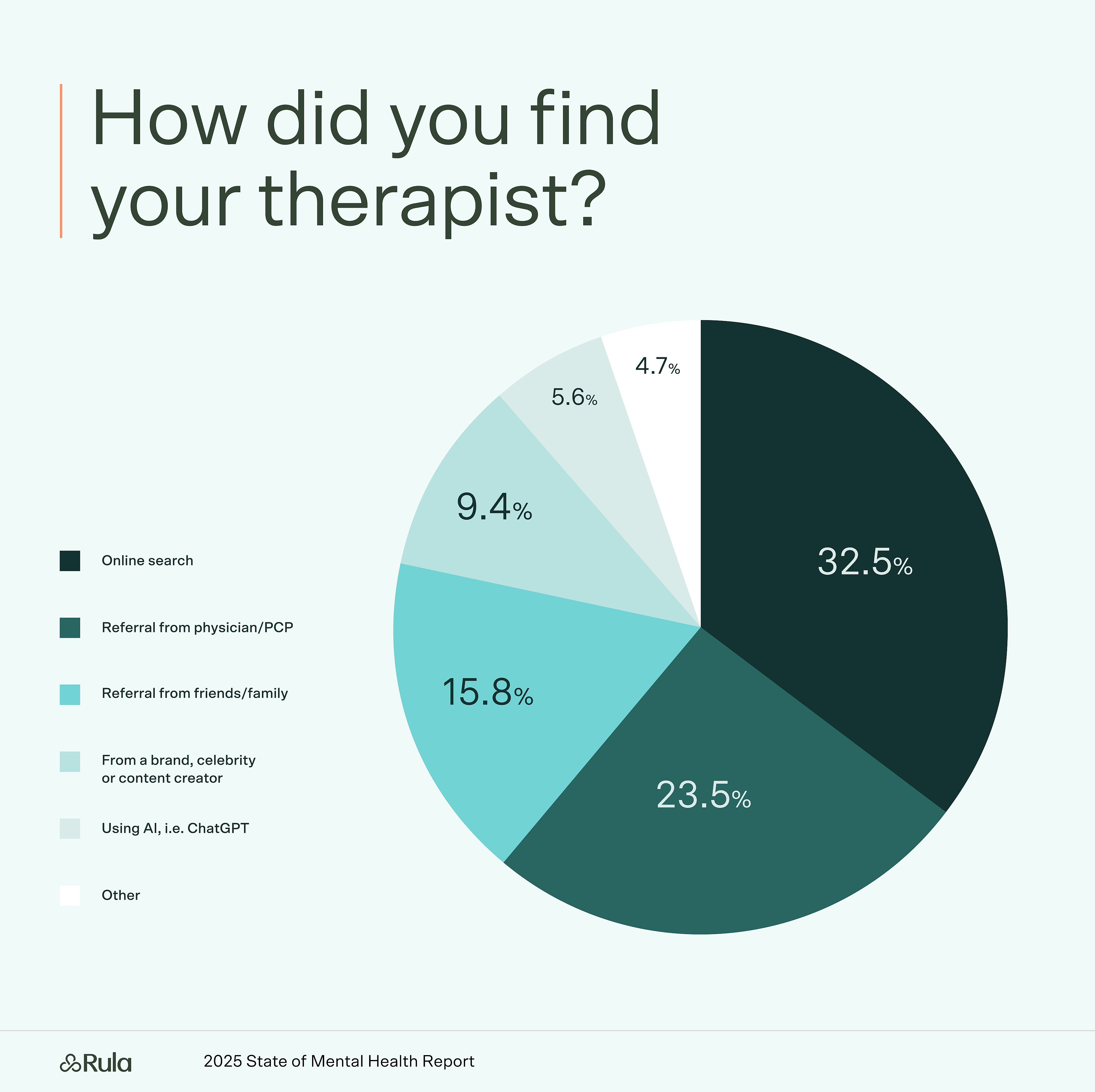
1 / 2How did you find your therapist?
- 23.5%—Online search
- 32.5%—Referral from physician/PCP
- 15.8%—Referral from friends/family
- 9.4%—I looked into a therapy resource I learned about from a brand, celebrity or content creator
- 5.6%—Using AI, i.e., ChatGPT
- 4.7%—Other
2. An uncertain world is driving people to seek help, but many are struggling to access it.
These are challenging times, and external pressures can directly impact mental health. Therapy can help people cope with these challenges and regain a sense of autonomy in a world where everything feels out of control. It's no surprise, then, that 28.5% of respondents say economic uncertainty would influence their decision to seek care.
However, not everyone who needs care can afford it. Cost remains the biggest barrier to access, and a potential recession and rising costs of living could put care even further out of reach.
- 25% of respondents stated that the cost of care would discourage them from seeking mental health support.
- 42.9% of respondents said that increased costs due to economic factors—such as tariffs, inflation and a rising cost of living—have impacted their ability to access mental healthcare.
Cost-related concerns mean that people who may be seeing progress in therapy are quitting. 19.2% of respondents stopped going to therapy because they felt it became too expensive, and 15.9% did so because their insurance coverage changed or ended, making care unaffordable.
3. Online platforms mean there are more ways than ever before to "go to therapy."
It may feel like therapy is everywhere in popular culture: from the widespread adoption of "therapy-speak" on platforms like TikTok, to celebrity testimonies about their experiences with their mental health, and TV shows tackling mental health-related plotlines. But what does it actually look like to go to therapy today?
The answer is that there is no one-size-fits-all approach to therapy anymore—and that's a good thing.
Today, people have a wide range of options for how they can access therapy and get the support they need to reach their goals. For example, the survey found that nearly a quarter of respondents would prefer an online option over traditional in-person appointments.
The growth of online therapy means that people have access to a wider set of therapists, beyond those that they'd be able to commute to. This means that it's easier than ever before to find a therapist with expertise in a specific treatment type. When people have access to diverse mental healthcare options, they can try multiple approaches, providers, and formats to find a good fit. Online resources, such as this free quiz, can also help determine the mental health support style that is right for you.
4. Even in a world of endless perspectives online, beliefs toward mental health are shaped by those closest to us.
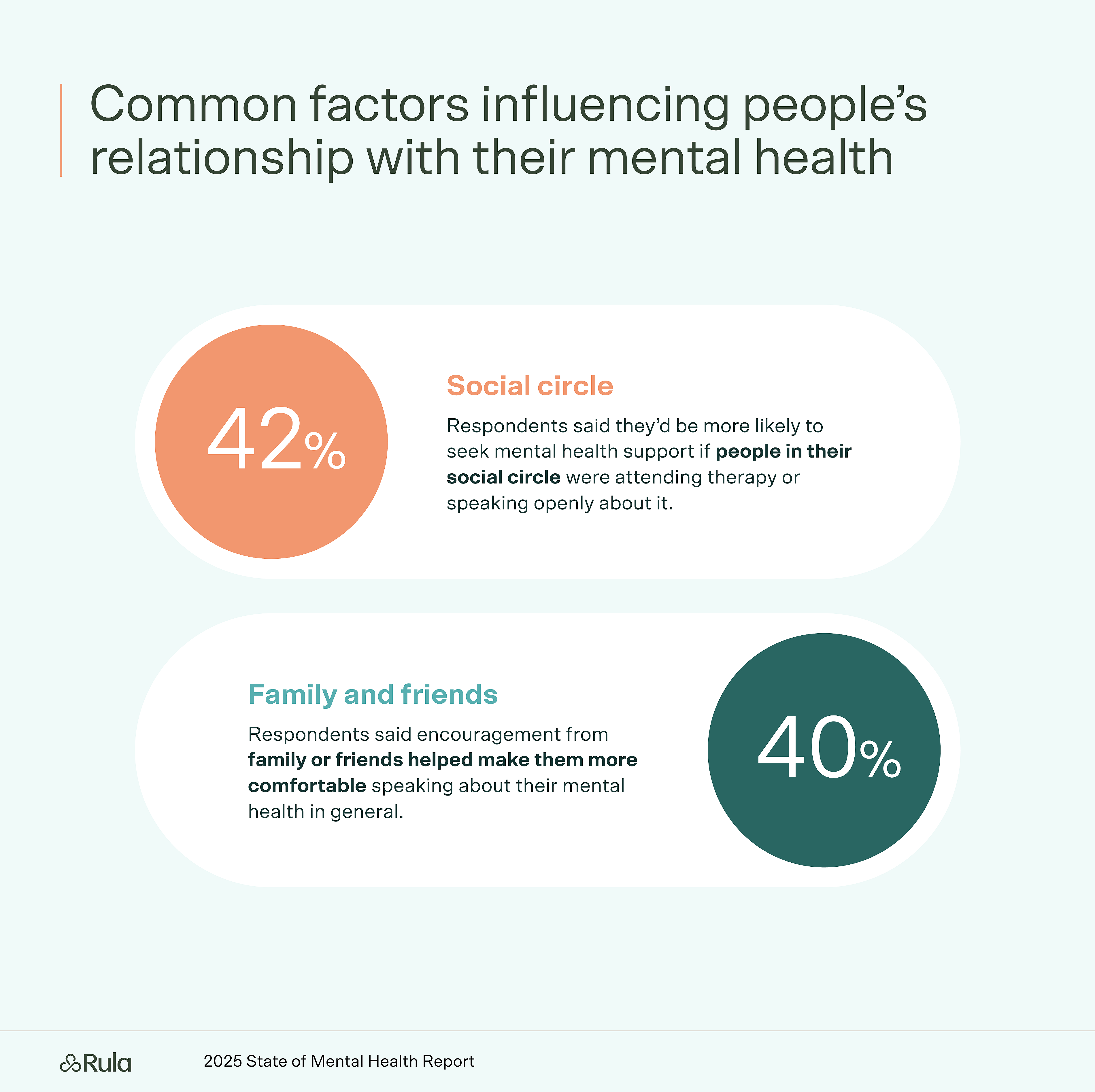
Seeking mental healthcare is a personal choice, but we're all influenced by the culture and people around us. Like with other major life decisions, people's approaches to mental healthcare are influenced by their friends, family, and others within their immediate social circle. Rula found that these close relationships and social influences have the greatest impact on inspiring people to take the next step on their mental health journey—more so than public figures and brands.
- 41.7% of respondents said they'd be more likely to seek mental health support if people in their social circle were attending therapy or speaking openly about it.
- 39.9% of respondents said encouragement from family or friends helped make them more comfortable speaking about their mental health in general.
Our stories and actions often have more impact than we realize—especially within our closest circles. Simply sharing your experience might offer someone you care about the encouragement they need to begin their own mental health journey.