Northwell Health
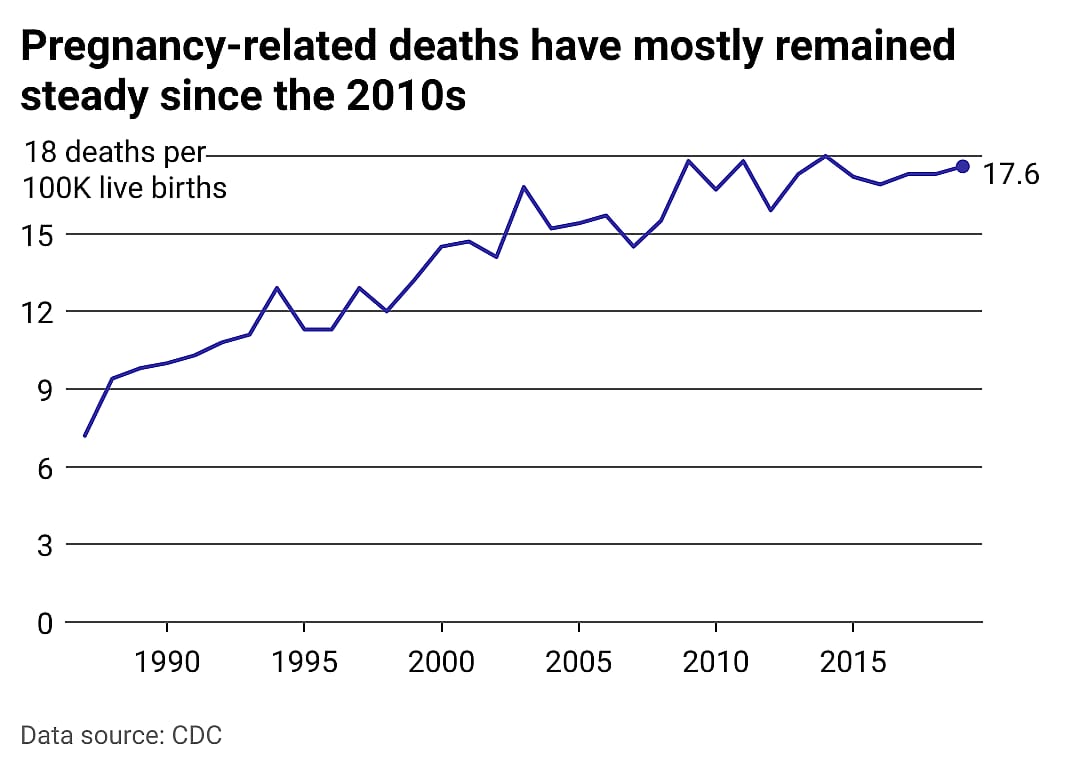
1 / 3Before the pandemic, the rate of pregnancy-related deaths approached 18 per 100,000 live births
The CDC implemented its Pregnancy Mortality Surveillance System in 1987. Since that time, pregnancy-related mortality has trended steadily upward.
While the CDC cannot fully pinpoint why this is the case, it surmises that it could be partly due to the commensurate improvement of data systems, such as the PMSS, in documenting these deaths, leading to an increase in reported deaths overall. Moreover, the nationwide adoption of pregnancy checkboxes on death certificates in 2018 undoubtedly helped identify overlooked deaths, despite their relative ineffectiveness as qualifying pregnancy-related deaths from causes such as accidents or substance abuse.
The CDC reports that the underlying causes of pregnancy-related death from 2011 to 2015, were split nearly evenly among deaths during pregnancy; during delivery or the following week; or within one year of delivery—roughly one-third of all deaths equally. Within those time frames, heart disease and stroke were the leading causes of death, accounting for 34% of fatalities, while infections and severe bleeding were also influential causes.
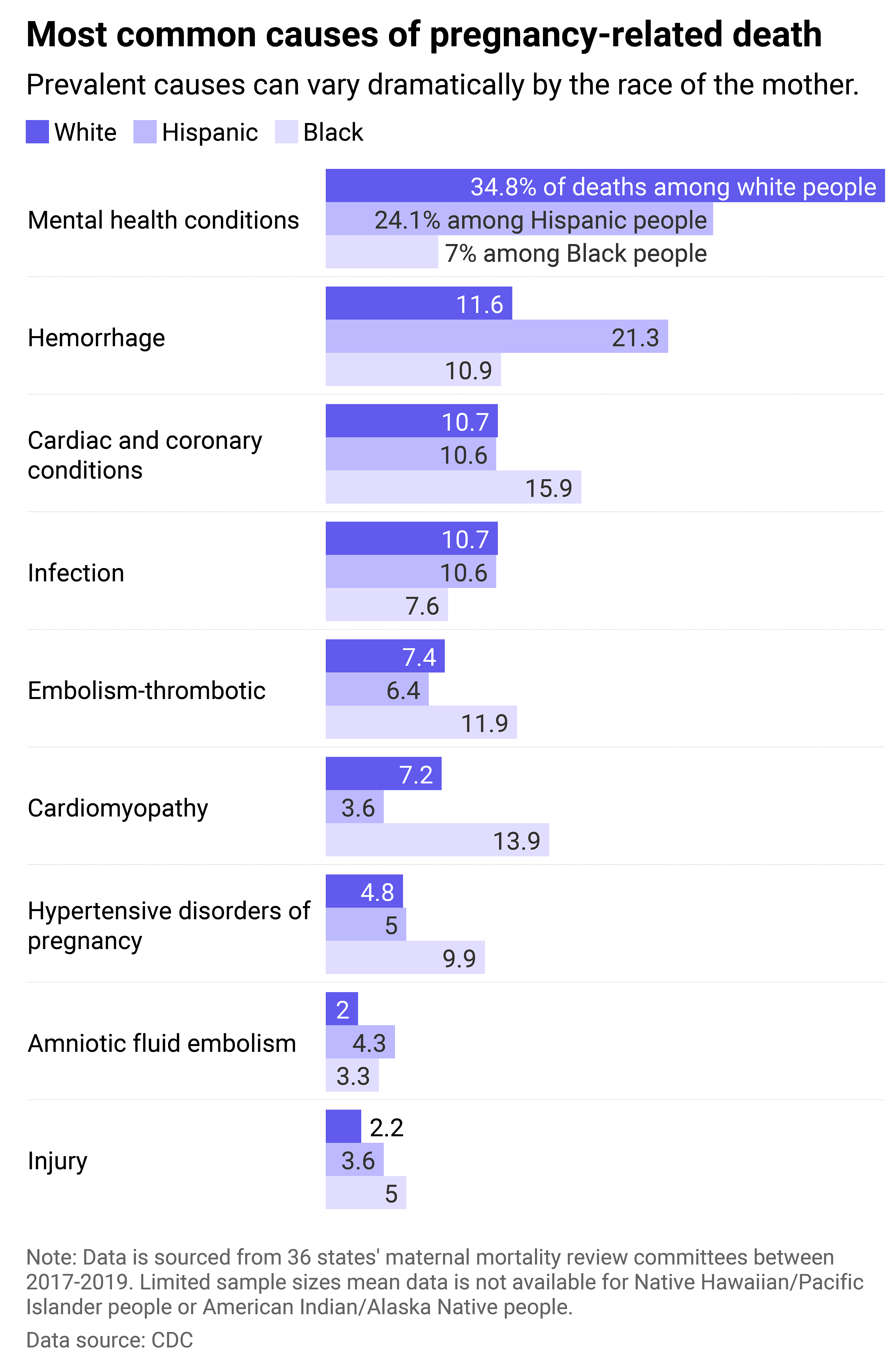
Later data covering 2017 to 2019 showed that heart-related issues, along with infection and hemorrhage, remained the leading cause of death. Unfortunately, this CDC data does not qualify in further detail deaths attributed to "other cardiovascular conditions" and "other noncardiovascular medical conditions," which leaves a measure of uncertainty regarding minor and potential trends in the cause of death.
Thankfully, many of these all-too-preventable conditions that lead to fatalities are gaining some increased attention. The CDC's Eliminate Maternal Mortality Program recently granted $2.8 million for nine new Maternal Mortality Review Committees, which review pregnancy-related deaths on a state or local level to establish recommendations for preventing future deaths. MMRCs are currently operating in 39 states and one U.S. territory. Their research is helping to expand insurance coverage and improve long-term post-childbirth care.