Minerva Studio // Shutterstock
1 / 10Nutritional nudges encourage more evidence and less fad diets
The guidelines were established for good reason: A cacophony of conversation around fad diets and what's healthy left Americans confused about what information to believe when they're in the grocery aisle.
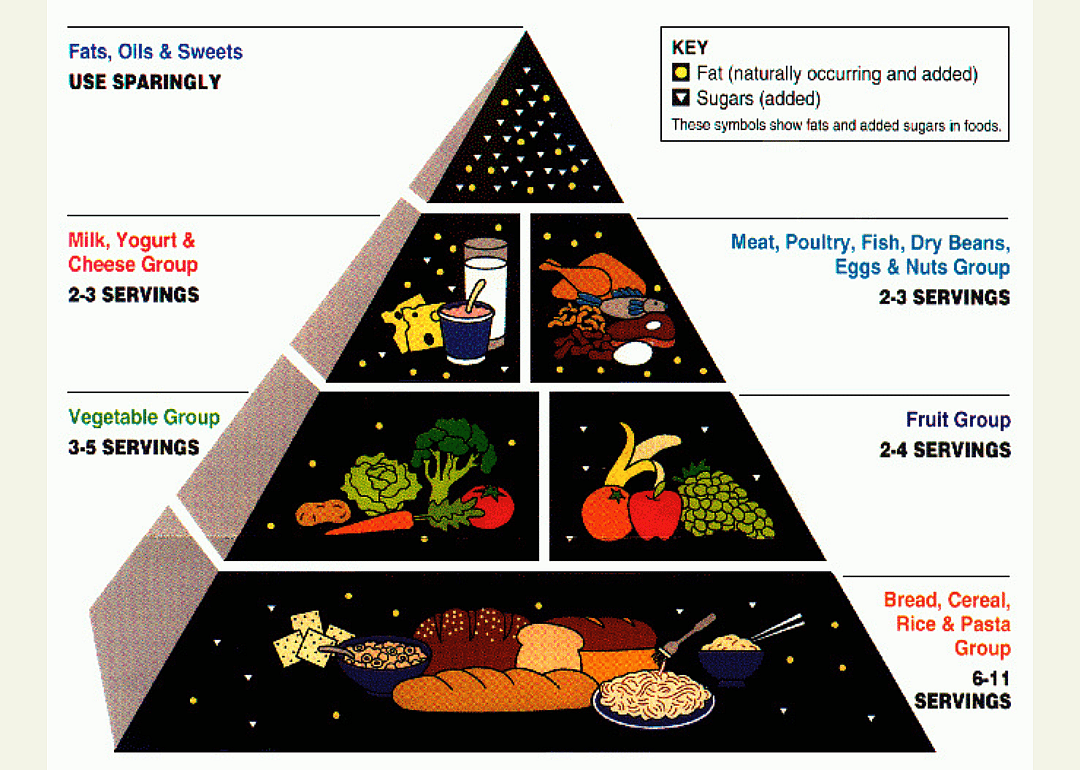
Long before the public was captivated by social media influencers offering tips and advice on nutrition and savvy marketing campaigns by food manufacturers themselves—nutritional campaigns like the food wheel of the '80s and the food guide pyramid of the '90s helped ordinary people perceive the healthiness of food.
Over time, the guidelines have become stricter and more detailed, while its authors try to make them more accessible for the average person. They no longer recommend specific nutrients but rather try to take a holistic view of the food and beverages, knowing people often consume the same ones again and again over many meals.
Despite shifting approaches over the decades, what's stayed the same is the constant debate and varying opinions among experts. Though guidelines have been available for decades, Americans' diets still don't get a passing grade. "It's pretty self evident that the guidelines have done nothing to prevent our country's epidemics of obesity and diabetes," Nina Teicholz, executive director of the Nutrition Coalition, told The New York Times.