fizkes // Shutterstock
1 / 2Care based on community values
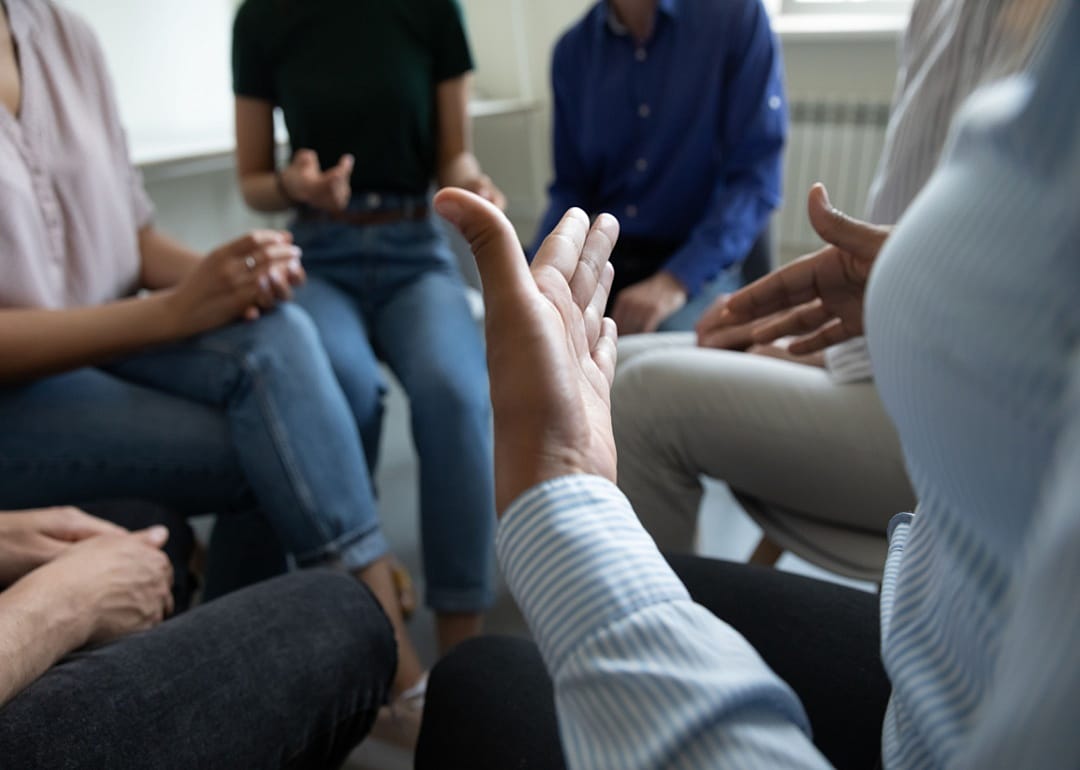
Community care helps individuals through mutual support and nurtures the well-being of the larger community. This approach, often used by people of color and LGBTQ+ communities, is usually based on the community's values, supporting it through mutual aid, healing, and faith.
It is an effective way to reach underserved communities because of the amount of trust involved—especially since many communities of color distrust the medical system. Community care has also been around for generations, thanks to the wisdom and trust that exists within the community.
Cleveland-based certified nurse practitioner Mary Louise Tatum, who specializes in psychology, has found establishing trust difficult but crucial for community-based programs.
"It's very slow and very tedious, but once they open up, you got to be ready for the blast of emotion," Tatum told Stacker. "Because the emotions are there, and you got to realize the emotions aren't personal. Sometimes that stuff is still bottled up."
Through community care initiatives, people of color can find programs and professionals who understand their values, backgrounds, and the history of their culture. In their role at SIPA, Gana counsels many Filipino families through their children coming out as queer or transgender. Gana is Filipino and came out as nonbinary to their own family recently.
They use that experience to inform their approach to other families seeking care, pointing out that many aspects of Filipino culture are gender-neutral. For instance, there are Filipino Indigenous healers called babaylan who transcend gender. The Tagalog language doesn't use the pronouns "she" or "he"; instead, it uses the gender-neutral "siya" (pronounced "sha").
Gana pointed out that language accessibility is a huge issue for the Filipino and Latino communities that SIPA serves in LA. Although they often work with their patients in Tagalog, they noted that the culture has many other languages, including Ilocano and Kapampangan.
"We need folks who are culturally competent, who are fluent in the multiple languages that we have," they said. "There'd be some families that would meet where their first language is Kapampangan, or Bisaya, which is the southern region of the Philippines; their second language is Tagalog; and their third language is English."