Guava Health
1 / 5What is Long COVID?
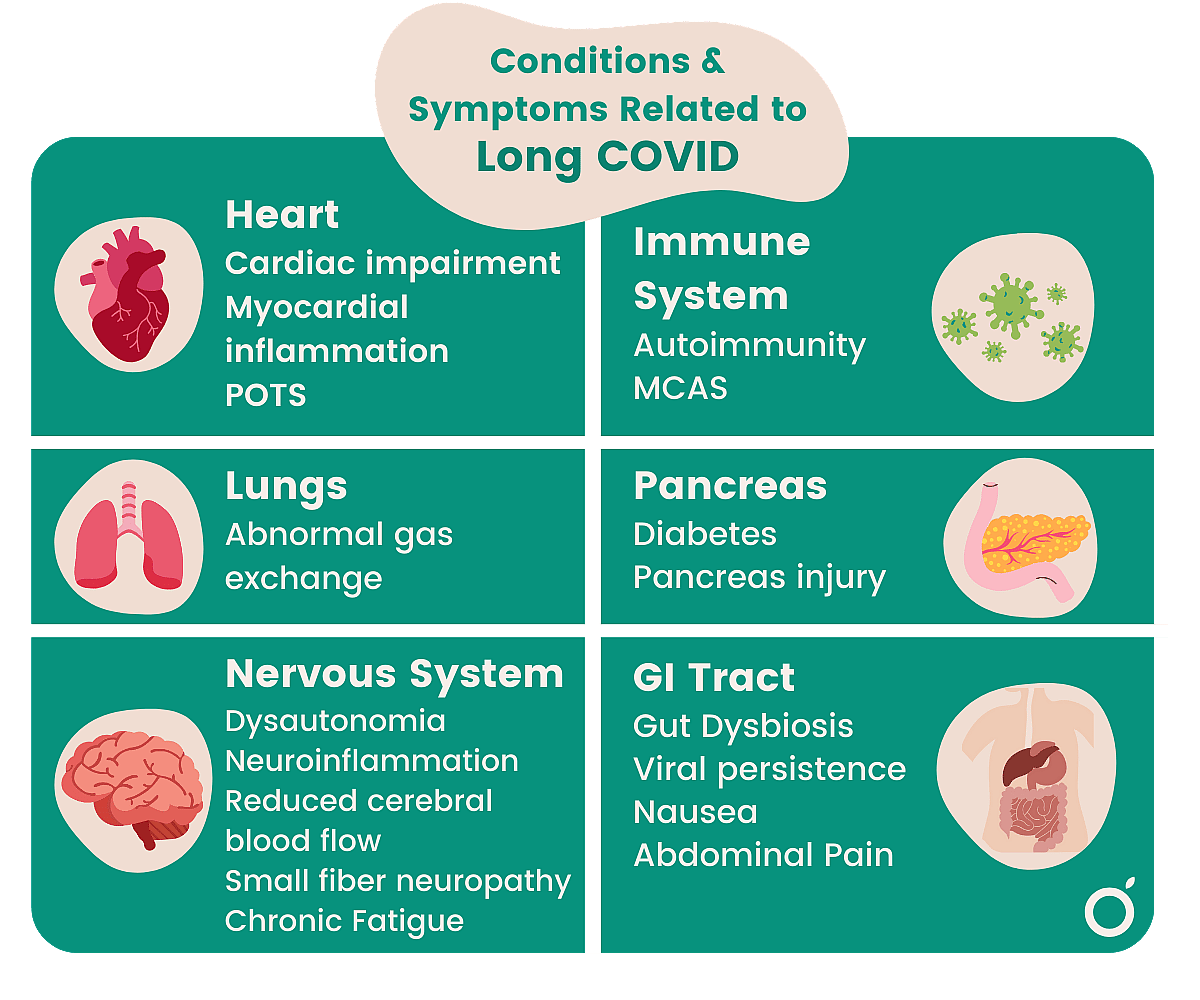
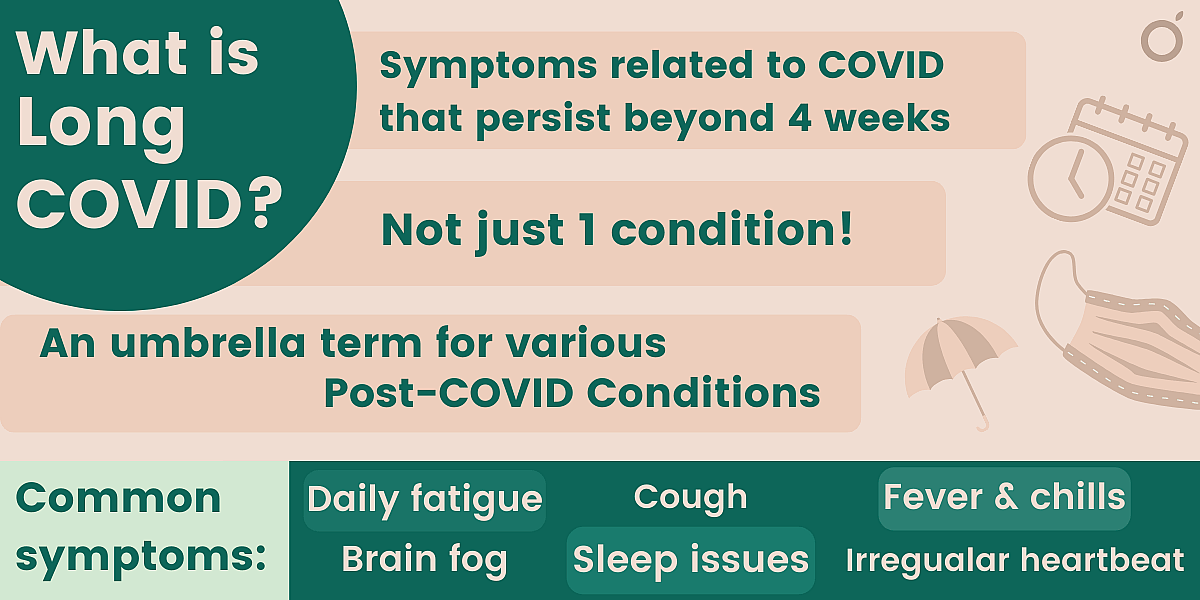
Long COVID is the persistence of symptoms and conditions associated with COVID for more than four weeks after the initial infection. It's used as an umbrella term for various symptoms and conditions that can occur all over the body, which makes it pretty different from traditional illnesses.
Although today it's widely recognized and accepted by the medical community, the term Long COVID was actually coined by patients first. Since it's not just one condition, you'll likely hear it referred to in medical news and literature as Post-Covid Conditions or PCC.
What are the symptoms of Long COVID?
Many of the symptoms associated with Long COVID are easily identifiable because they're the same ones you would have had with COVID. What makes Long COVID different is that symptoms persist weeks to months longer than the normal 1-14 day timeframe. These symptoms can also be accompanied by novel ones or others that come and go, change, or worsen over time. The most common symptoms of long COVID are:
- Prolonged daily fatigue
- Issues with sleep, insomnia that results in daytime fatigue
- Restless legs syndrome (especially at night)
- Brain fog
- Dizziness and headaches
- Fever and chills
- Weakness
- Distorted or lost sense of smell or taste
- Cough, shortness of breath
- Rapid or irregular heartbeat
Is Long COVID an autoimmune disease?
Although the research is ongoing, Long COVID itself is not considered an autoimmune disease. There is evidence, however, that SARS-CoV-2 can trigger or uncover other autoimmune disorders. An autoimmune disease is a condition in which your immune system malfunctions and attacks its healthy cells. Patients with autoimmune disorders have "autoantibodies" circulating in their bodies, which are antibodies designed to attack their own cells. Interestingly, one 2023 study showed that Long COVID patients tend to have elevated levels of autoantibodies for up to 12 months after infection.
There are a handful of viruses and pathways that are known to provoke autoimmune disorders, like Epstein-Barr Virus (EBV) triggering Lupus, or rubella virus triggering rheumatoid arthritis (RA), so SARS-CoV-2 shouldn't be considered an exception without ample evidence. For now, though, it may be safer to say that Long COVID appears to be "autoimmune-related" and that the topic deserves more research.