Guava Health
1 / 4What is gastroparesis?
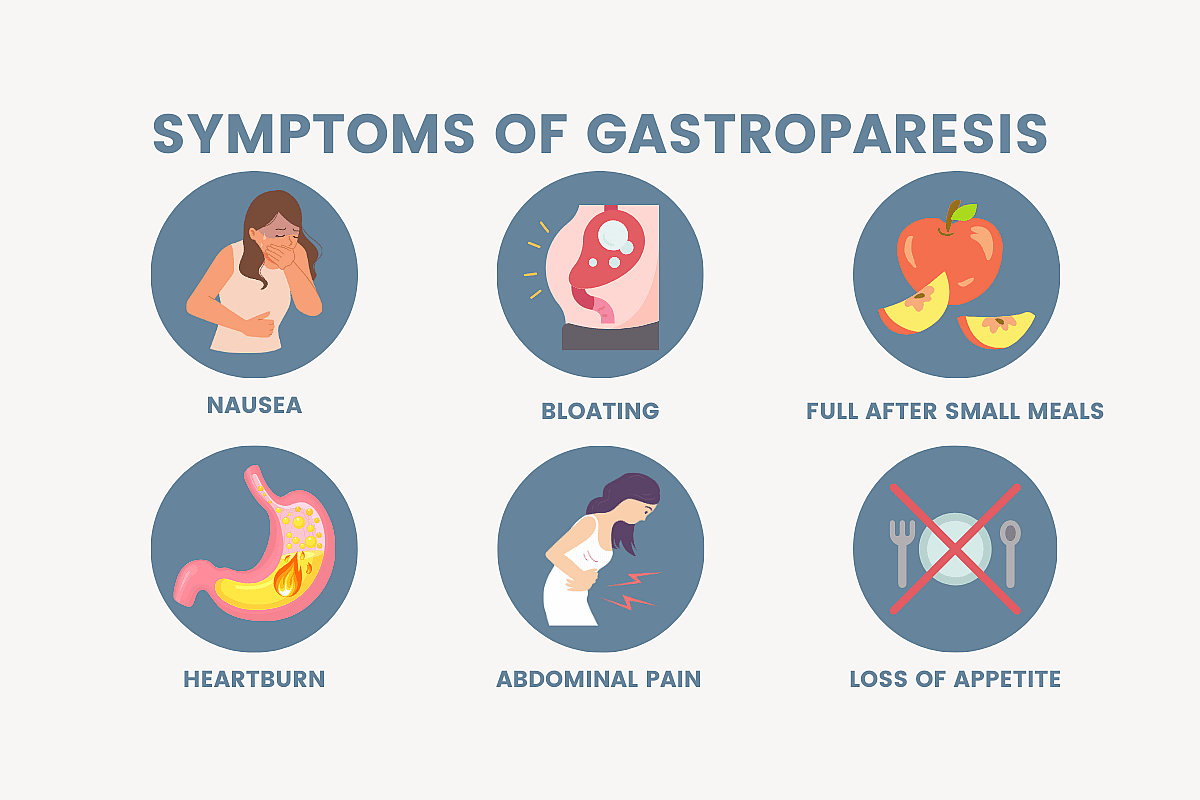
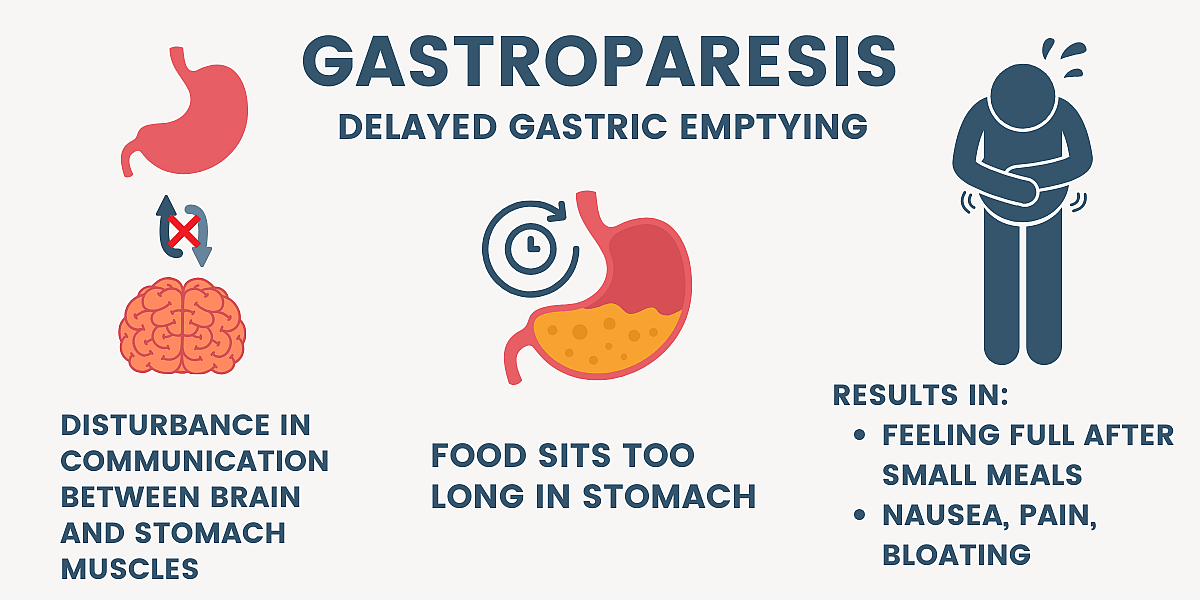
Gastroparesis is a condition that happens when your stomach muscles fail to contract normally, which can slow down or stop digestion altogether. This sort of gut paralysis is what leads to "delayed gastric emptying" and its accompanying symptoms.
What causes gastroparesis?
Gastroparesis occurs when the stomach's normal muscular contractions, which help move food through the digestive system, are impaired. There are many reasons why this might happen, and sometimes doctors are unable to pinpoint one in particular (in which case it's called idiopathic gastroparesis). However, some common factors that we know to be involved are:
1. Diabetes: High blood sugar levels over time can damage the vagus nerve and 'pacemaker' cells in the stomach muscles. This damage disrupts stomach muscle functions by interfering with normal nerve-to-stomach communication pathways.
2. Post-surgical complications: Surgeries involving the stomach or intestines can lead to nerve damage, triggering gastroparesis.
3. Infections: Certain viruses and bacterial infections can impact the nerves controlling stomach muscles, causing gastroparesis.
4. Connective tissue disorders: Hypermobility spectrum and connective tissue disorders like Ehlers-Danlos Syndrome (EDS or hEDS) are sometimes associated with minor gastroparesis, meaning slower digestion and delayed gastric emptying.
5. Nervous system diseases: Conditions like Parkinson's disease, autonomic dysfunction, or multiple sclerosis can affect the nerves involved in digestion.
6. Medications: Some medications, like those affecting the nervous system (opiates, for example) and digestive systems, can contribute to delayed gastric emptying.
A couple of medications that have been recently associated with the onset of gastroparesis are those that contain semaglutide, like Wegovy and Ozempic. They're meant for weight loss and work by slowing down digestion so that patients feel full longer, but in severe cases can cause gastroparesis.