Doctors and Clinicians
1 / 2Just how widespread is medical debt?
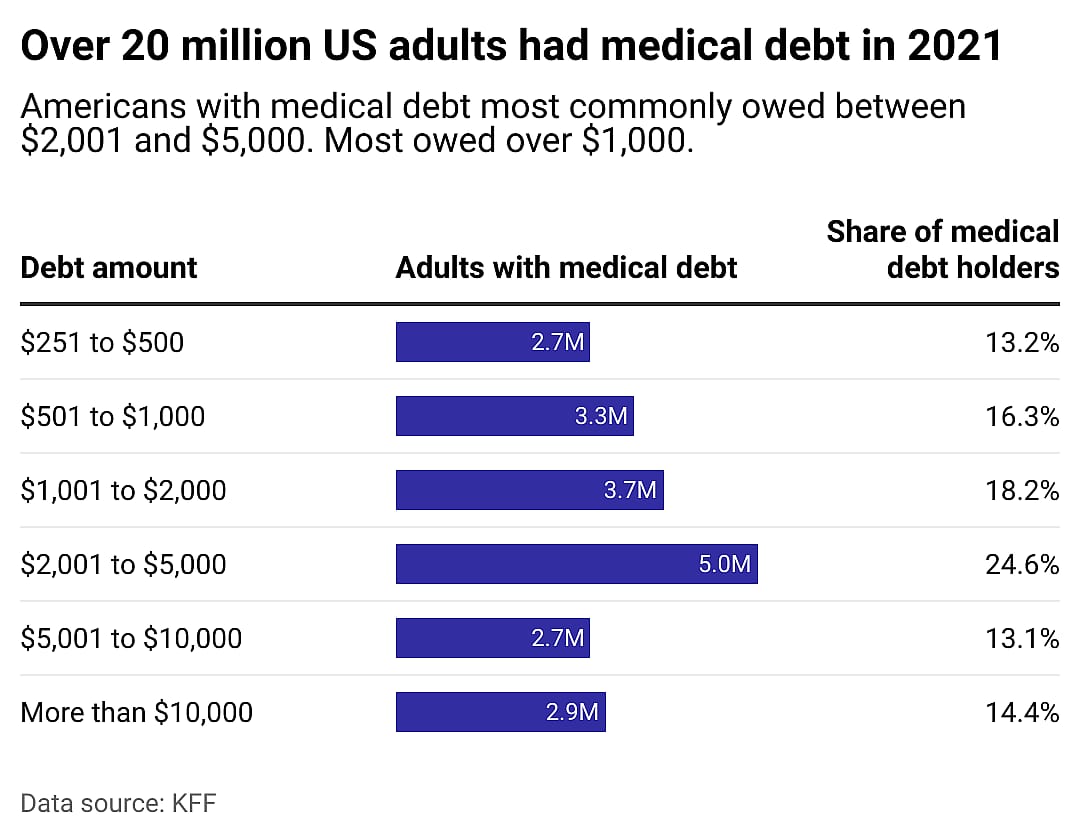
Figuring out just how many Americans have medical debt is tricky. No singular database exists on the topic, so researchers have to rely on survey data. One estimate from the Census Bureau found that roughly 15% of households had at least some medical debt in 2021. Using the same dataset, KFF estimates that around 8% of American adults had medical debt in 2021. Overall, people in the U.S. had a total of $220 billion in medical debts.
These estimates lean conservative, counting only medical bills and not other forms of debt such as credit card bills. In a separate analysis, which included credit card bills resulting from medical procedures, KFF estimates that around 40% of American adults have some form of medical debt, or 100 million people.
While it may be unclear exactly how big America's medical debt problem is, surveys show consistent patterns when it comes to what groups of people are most likely to have unpaid medical bills. People with lower incomes, for instance, are more likely to report having medical debt. Around 11% of people who earn up to twice the federal poverty line have medical debt, compared with only 4% of people who make over six times the federal poverty line. Similarly, adults who lack health insurance for part of the year or the whole year are more likely to have unpaid medical bills.
It is also clear that people with high amounts of medical debt are more likely to have to make sacrifices to make their finances work. The KFF survey reports that among American adults with medical debt, 63% say they have had to cut spending on essentials such as food and clothing, while 48% say they have used up all or most of their savings. A study published in JAMA Psychiatry found that medical debt was associated with higher rates of depression and anxiety. People with medical debt were also more likely to delay mental health treatment, further exacerbating the problem.