Knowable Magazine
1 / 2A viral beginning
New interest in the relationship between stress and cancer growth emerged in part from research into how stress affects the body's response to human immunodeficiency virus (HIV). In the 1990s and early 2000s, genomics researcher Steve Cole and his team at UCLA investigated why people infected with HIV who were under high stress tended to have worse outcomes, including larger viral loads and poorer responses to antiretroviral drugs.
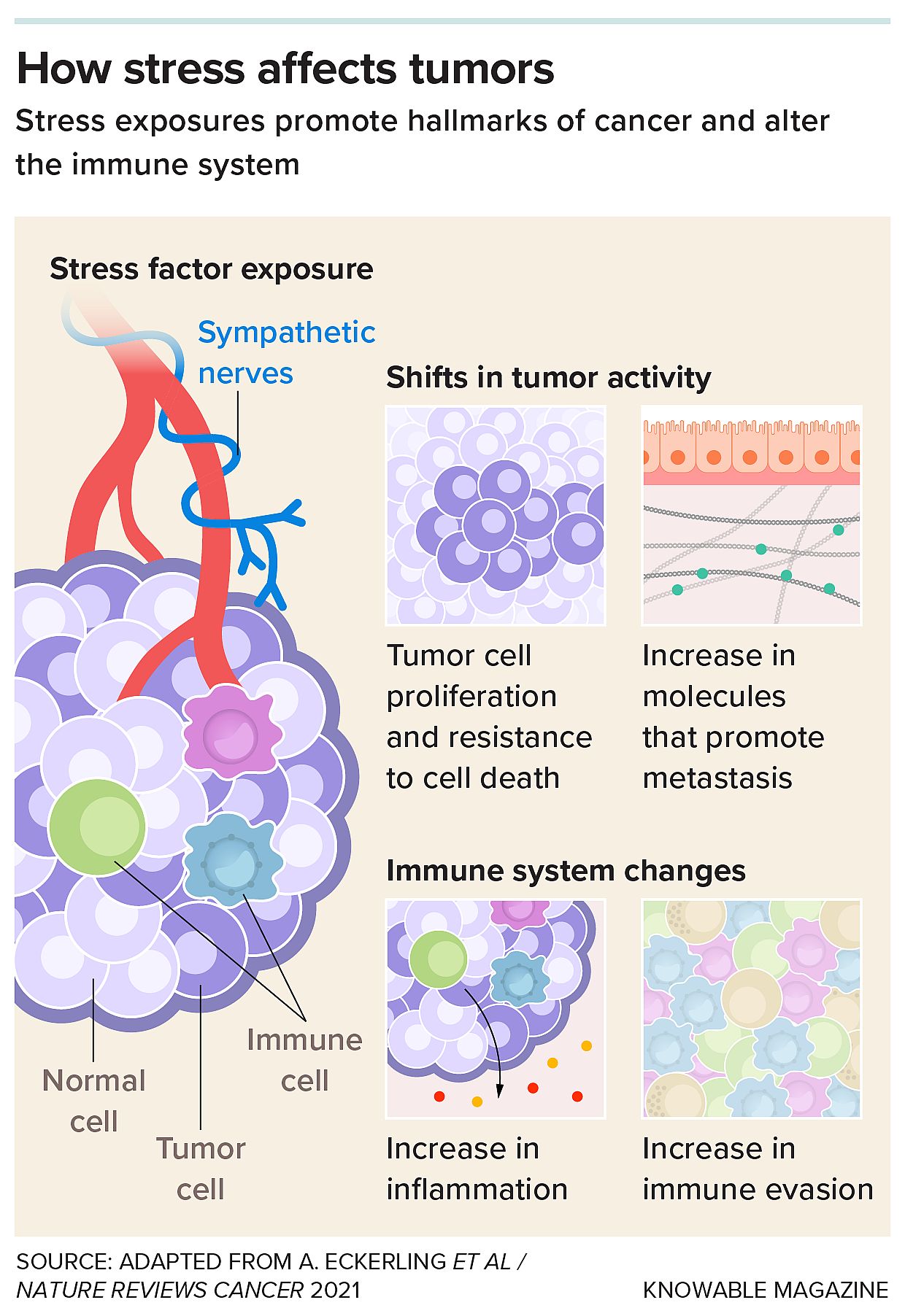
Cole's team discovered several routes through which stress could worsen HIV infections. In monkeys, they found, the lymph nodes of stressed animals had many more connections to sympathetic nerve cell fibers—which execute the body's fight-or-flight response—than the nodes of unstressed monkeys. Lymph nodes contain immune cells, and the nerve fibers reduced the antiviral function of these cells, which, in turn, led to an increase in the replication of a version of HIV that infects monkeys and apes.
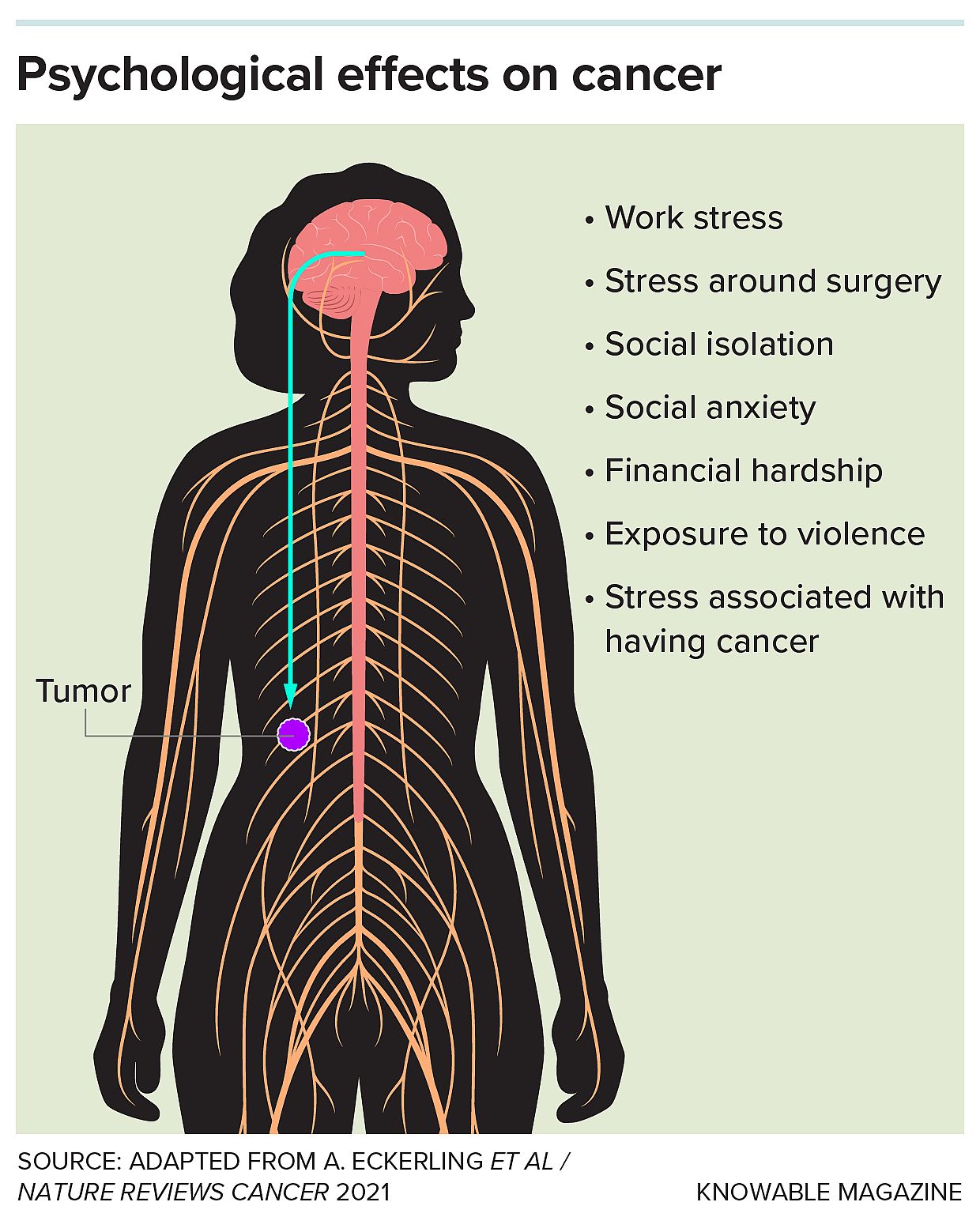
Lymph nodes, in addition to housing immune cells, also act as the body's drainage system, flushing away toxins through a network of tissues, organs and nodes called the lymphatic system. Importantly, cancer cells can hijack this system, using it to travel through the body. Erica Sloan, a postdoctoral trainee of Cole who was involved in the HIV work, wondered whether stress, via the sympathetic nervous system, might also affect lymph nodes in those with cancer.
Sloan, now a cancer researcher at Monash University in Australia, went on to discover in mice that chronic stress increases the number of connections between the lymphatic system and breast tumors, making the cancer cells more likely to spread. Strikingly, treatment with a drug—a beta blocker that blunts the activity of key molecules of the sympathetic nervous system such as norepinephrine—prevented these effects.
Research by other groups has shown that stress can lead to molecular changes, particularly within the immune system, that influence how cancer progresses. Some of this work suggests that, when stress leads to inflammation—a broad immune reaction typically brought on by injuries and infections—it can boost the growth of tumors.
Stress can also impair the activity of immune cells that play an active role in fighting cancer. In the early 2000s, research by University of Iowa behavioral scientist Susan Lutgendorf and her colleagues found that in patients with ovarian cancer, depression and anxiety were associated with impaired tumor-fighting immune cells. In another study of people with ovarian cancer, the researchers found that poor social support was linked to higher levels of a growth factor that stimulates blood vessel growth around tumors. This growth, called angiogenesis, enables new blood vessels to supply nutrients to tumors and—like the lymphatic system—provide pathways through which cancer cells can spread to other parts of the body.
Lutgendorf and her colleagues have since found that stressful situations have a similar effect on mice with ovarian cancer, enhancing tumor angiogenesis and cancer spread. Equally important, they've found that these effects can be reversed with beta blockers. Other groups have found similar effects of blocking stress signals on other types of cancer in rodents, including blood and prostate cancer. In addition, researchers have found that increasing levels of stress hormones such as norepinephrine and cortisol in mice can make previously dormant cancer cells more likely to divide and form new tumors.
Studies like these are revealing that stress can trigger a cascade of biochemical changes and alter a cancer cell's environment in a way that may promote its spread. "Stress signaling and stress biology really have an impact on most—if not all—of these processes," says Jennifer Knight, a cancer psychiatrist at the Medical College of Wisconsin.