Wysa
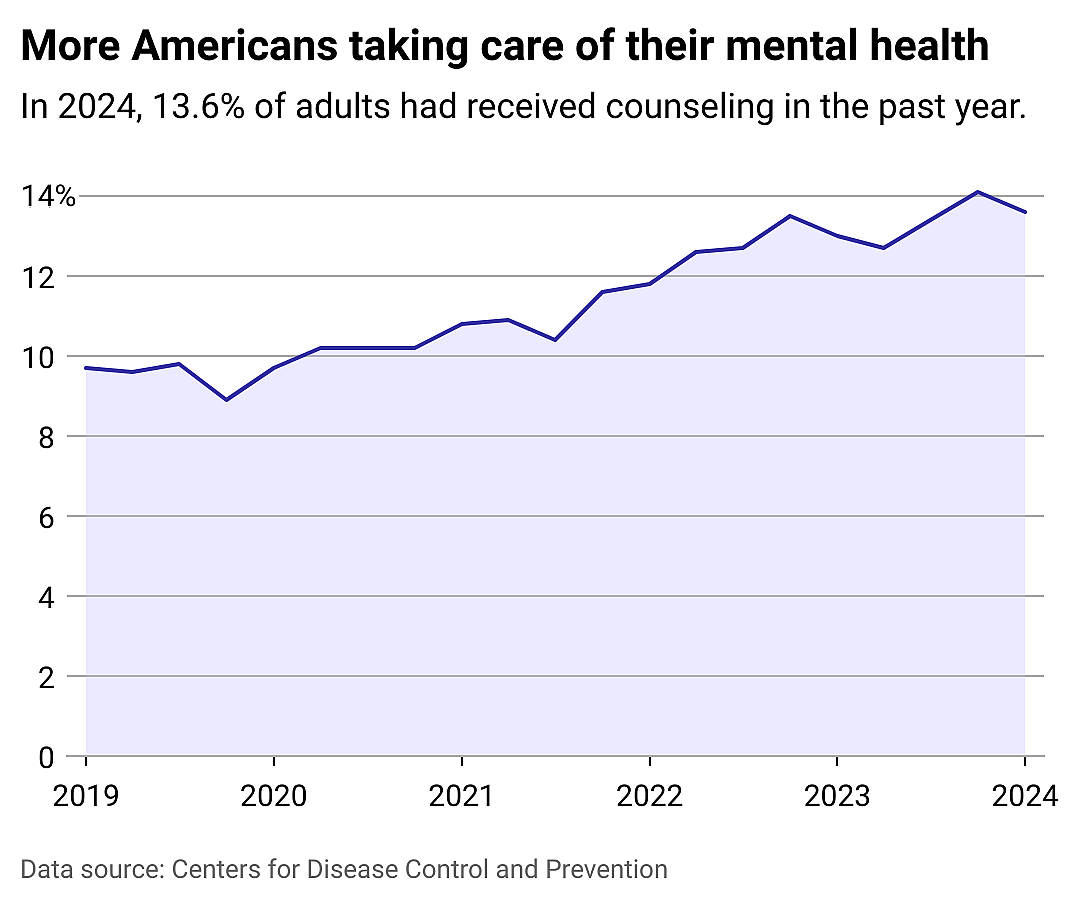
1 / 2More people utilizing therapy
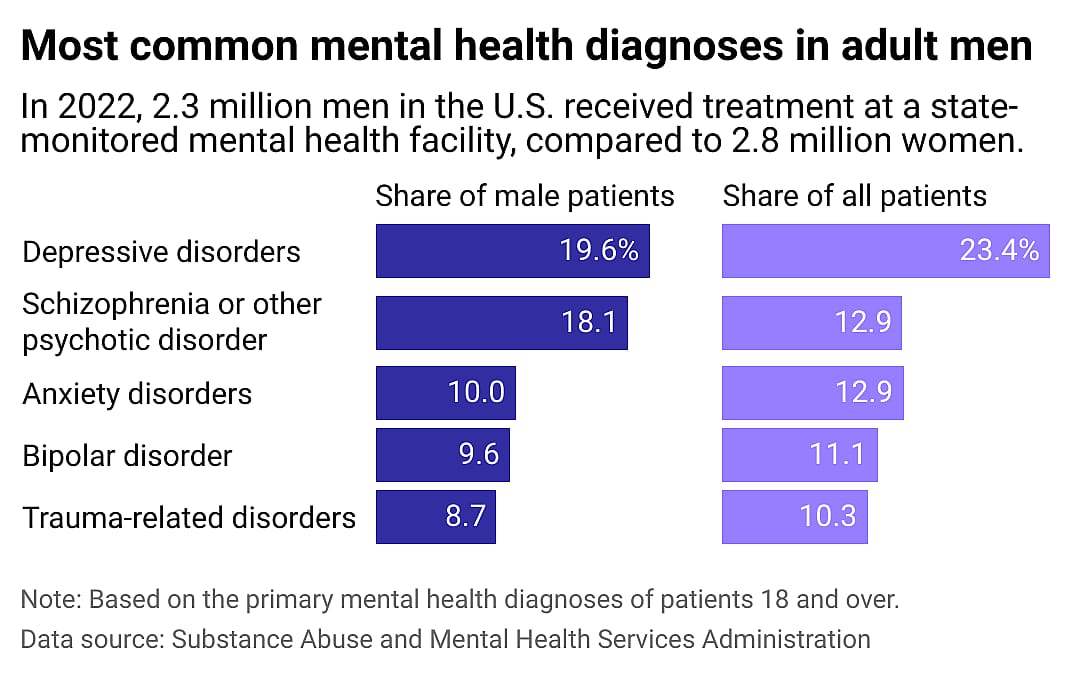
Though more people are receiving counseling, not everyone is sitting on the proverbial couch equally; the number of men, older people, and people of color seeking mental health services tends to be lower than the general population. The reasons why these groups are missing out crossover greatly among these demographics.
Despite the CDC declaring racism as a contributor to poorer health outcomes, Black Americans and Hispanic or Latino people continue to receive little institutional support. In 2018, nearly 7 in 10 Black Americans and Hispanic adults received no mental health treatment in the previous year compared with half of the overall population, according to the Substance Abuse and Mental Health Services Administration.
For decades patients have expressed feeling more comfortable with therapists of the same race or ethnicity, but not everyone has that luxury. For example, in 2021 only 5% of U.S. psychologists identified as Black and only 0.13% as American Indian or Alaska Native, according to the APA. Mental illness has also been historically stigmatized in Black communities.
"For many in the African American community, our story is one of perseverance and resilience. After all, we survived slavery; surely, we can survive 'sadness' or 'anxiety.' In this mindset, anything less would be considered spiritual or moral weakness," Victor Ray Armstrong, vice president of Behavioral Health Services for Atrium Health, wrote for Policy Research Associates in 2019.
Race plays a role in seeking treatment, but age is a factor as well. Older people are also impacted by stigma and negative beliefs about mental health treatment. A 2021-2022 national survey by the SAMHSA showed that, among older adults, 95% who might benefit from treatment said they did not think they needed it. Baby boomer women were more likely to seek and receive treatment than men, accounting for half and a third of the survey respondents, respectively.
Structural issues like accessing transport to attend appointments, difficulties navigating the health system, isolation, and cost are also deterrents.