QMedic
1 / 2Where you live can impact cost of care
Assisted living facilities and the fees associated with them are regulated at a state level, so the cost and scope of services vary widely depending on where in the country you live. When a person signs on for a facility, it typically comes with a move-in fee and a monthly rent. Residents also pay for add-ons like physical therapy, laundry services, or transportation.
Charges can also occur the more one needs help with daily activities such as bathing, dressing, or going to the bathroom. Some facilities also offer memory care programs for people with Alzheimer's disease or dementia, which again means additional fees. All of these activities require caregivers, which assisted living communities currently lack—and the scramble is also hurting residents' pockets.
Four out of 5 assisted living communities reported facing staff shortages in 2021, according to a survey of 122 assisted living communities from the American Health Care Association and National Center for Assisted Living. As a result, many communities have started offering higher wages and more benefits to help attract skilled workers, bumping up costs for residents.
Another factor to consider when calculating the bill is the cost of living in the state where the facility is located. The cost of living is the amount of money people need to cover basic expenses like food, transportation, and health care, all of which an assisted living facility provides. The higher the cost of living in the state, the higher a facility's rate typically is.
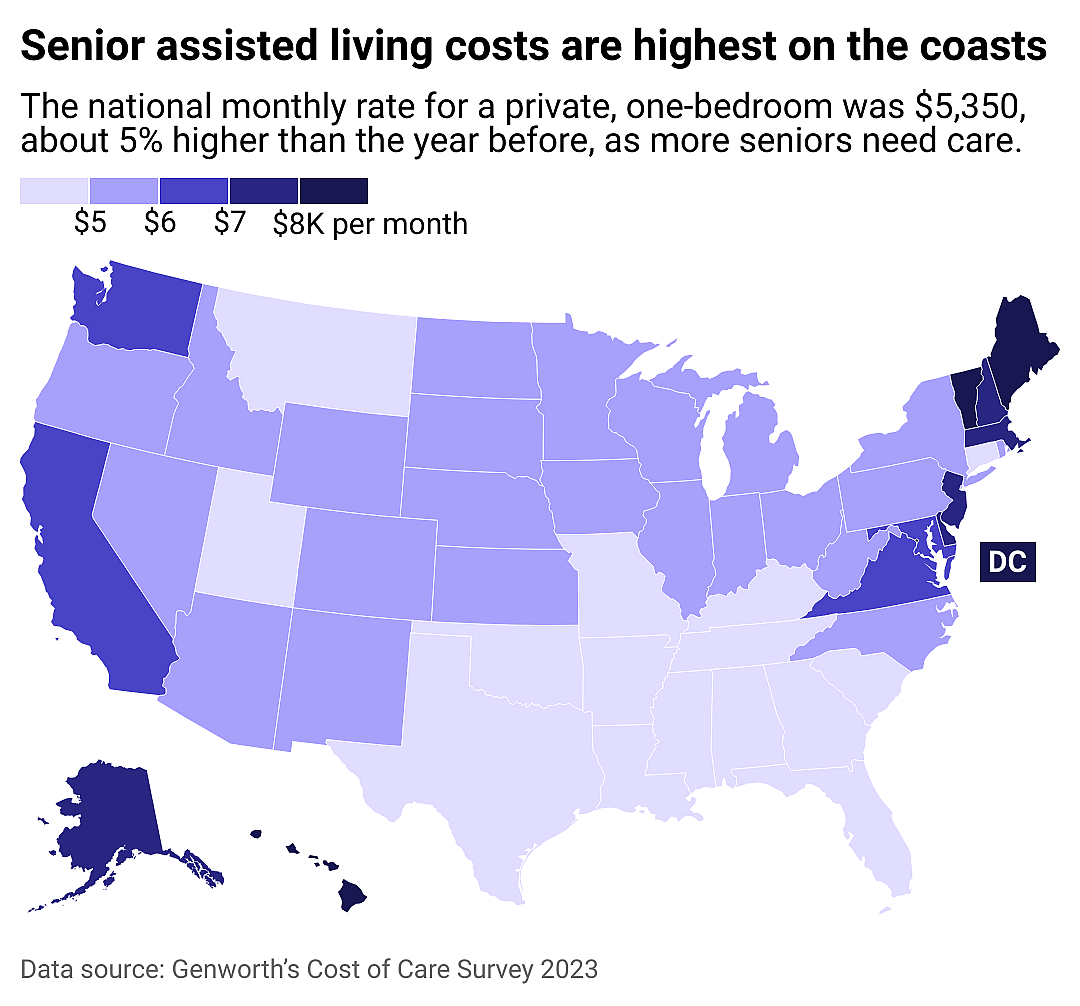
Washington D.C. tops the list for the most expensive assisted living cost at an average of $9,563 per month and just 16 beds for every 1,000 adults over 65. This isn't surprising considering the district ranks the second-highest when it comes to the cost of living among U.S. states. Hawai'i, which has the highest cost of living index among all the states, comes second in assisted living costs, at $9,340 per month and just 17 beds for every 1,000 adults over 65. Generally, coastal states attract the highest costs, with several Northeast states, Alaska ($7,250 per month), California ($6,250), and Washington ($6,138) at the top of the ranks.
On the other hand, Mississippi boasts the lowest cost for senior assisted living, at $3,800 per month and 13 beds for every 1,000 adults over 65. The state is also the least expensive place to live when taking the cost of living into account. Mississippi is followed by Georgia, at $4,120 per month and 20 beds per 1,000 adults over 65.
A critical problem shared by both the elderly community and the facilities themselves is the number of beds available competing with growing needs. In fact, across the country, there are only 43 licensed beds in assisted living facilities for every 1,000 adults over 65. This problem is only expected to get worse. According to the Census Bureau, by 2030, 1 in 5 Americans are projected to be of retirement age. The challenges around caring for the aging generation go beyond this group as the impact will affect policymakers, health care providers, and families across the country.