Guava Health
1 / 4There's lots of gray area in the brain — but even more white area
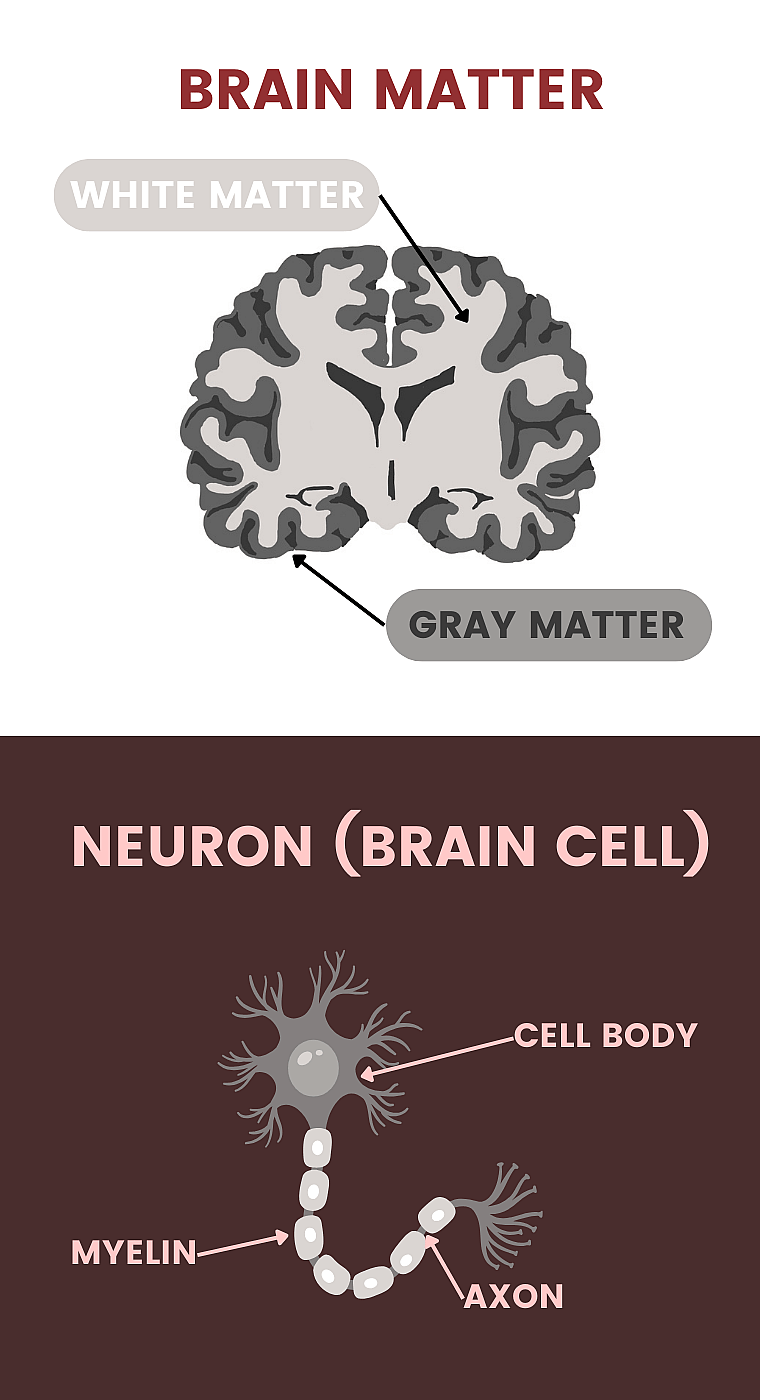
The building blocks of our brains are gray and white matter. Gray matter is typically where most of the focus goes, since it's responsible for daily functions like controlling movement, memory, and emotions. Gray matter is the outer layer of the brain, and as Rizor described, "is like a cortical ribbon that goes along the edge of the brain. Gray matter is where functional activation is happening. It's where the cell bodies [of brain cells or neurons] are really clustered."
About 40% of the brain is gray matter, while the other 60% is white matter. If white matter makes up over half of our brain, then it must also have a pretty important role.
Why is white matter white? Myelin wraps around the axons of brain cells, which are the long cable-like connections between cell bodies. Myelin helps speed up the rate that electrical signals travel across the brain. When white matter is compromised, this can affect sensory, motor, and cognitive functions (basically the ability to sense, move, and think).
Rizor described white matter to be "fatty tissue underneath the outer layer of gray matter that consists of bundles of axons. You can think of it kind of like bundles of straws, or highways that transmit information between the different brain regions in the gray matter. It can perform this long-range cross-communication between different areas in the brain."
It seems that white matter is the vital medium for messages to be sent across different parts of the brain. If these areas are changing, this could imply changes in communication. The potential impact of this on womens' cognition, emotion, and overall brain function is still being investigated.
What has been observed is that white matter changes across hormonal transition phases like puberty, taking birth control, menopausal treatment, and gender transition treatment — however, there is a lack of research exploring standard, baseline hormonal and brain changes across a natural menstrual cycle.
Rizor and her colleagues noticed this lack of research in naturally cycling young women. Women make up half of the population, and nearly all women naturally cycle for decades of their lives. Discoveries related to this brain-hormone connection have implications for a drastic portion of the population.