STD Testing Clinics
1 / 2Syphilis rates ebb and flow based on social mores, science
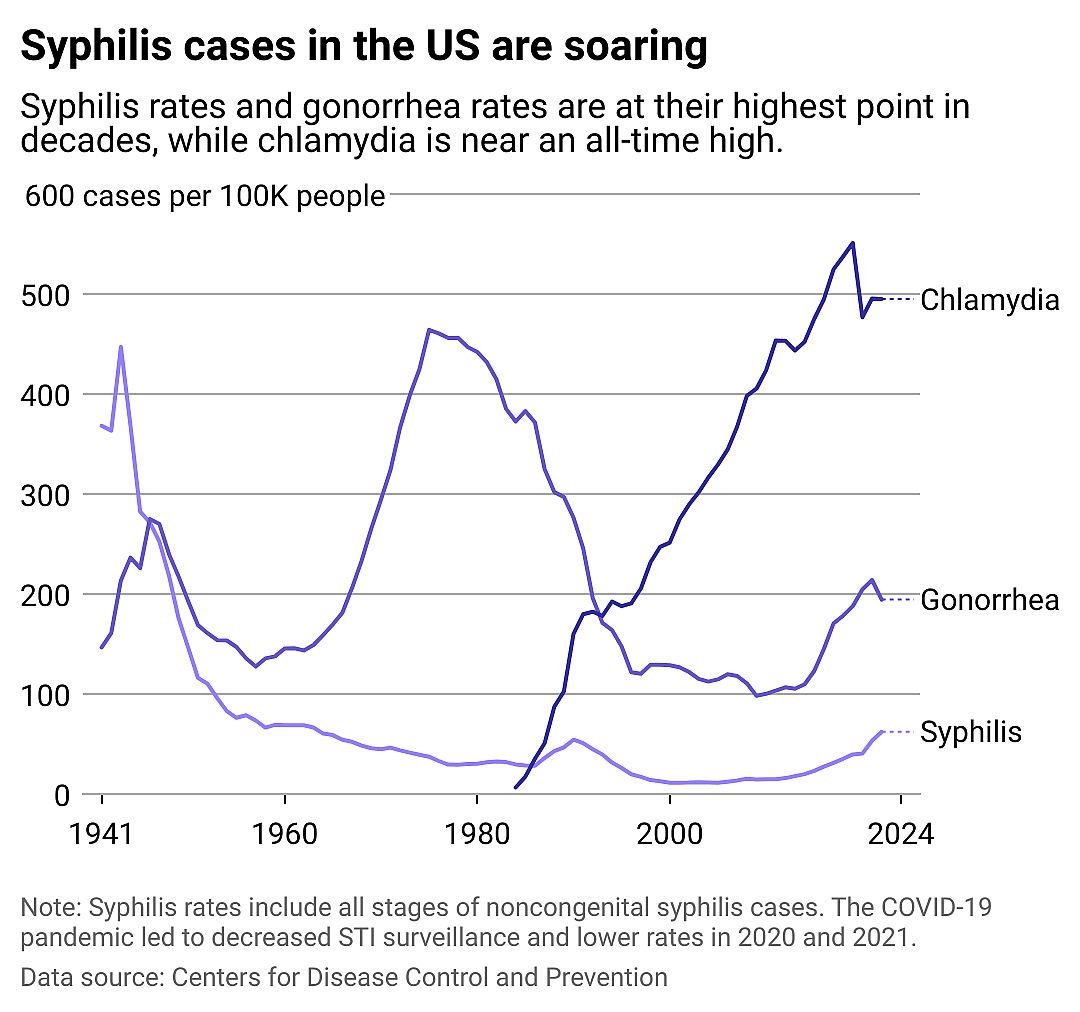
Syphilis rates initially began to drop following World War I as testing and treatment levels rose. During WWII, however, rates spiked as interventions fell to the wayside during wartime. With the introduction of penicillin as an effective, cheap, and easy treatment—coupled with the end of the war—syphilis rates started to fall once again in the mid to late 1940s.
Rates then slowed during the sexual revolution of the early 1960s. From the 1980s to the 1990s, rates dropped once again as STI prevention became top of mind during the AIDS epidemic. Though a brief spike in syphilis cases occurred between 1986 and 1990 coinciding with surging crack cocaine use, by the year 2000 the prevalence of syphilis in the U.S. had reached a historic low, with only 31,618 cases reported that year, according to CDC data.
But shortly thereafter, the pendulum swung again, and syphilis rates began increasing at a rate of a few thousand cases per year. Between 2016 and 2017, this upward trend took a startling shift as the number of syphilis cases increased by over 10,000, from 88,055 cases to 101,591.
Another huge surge in syphilis cases occurred at the start of the COVID-19 pandemic, with annual rates increasing a startling 32% between 2020 and 2021. In 2022, an astounding 207,255 cases of syphilis were reported in the U.S.
Particularly alarming is the increase in children being born with syphilis. Congenital syphilis cases are increasing the fastest; rates grew by more than 180% between 2018 and 2022, according to the CDC. Though syphilis cases across all ages grew nearly 80% during that time frame, congenital syphilis still made up less than 2% of all cases in 2022.