Emma Rubin // Stacker
1 / 4National data shows the disparities Black mothers face
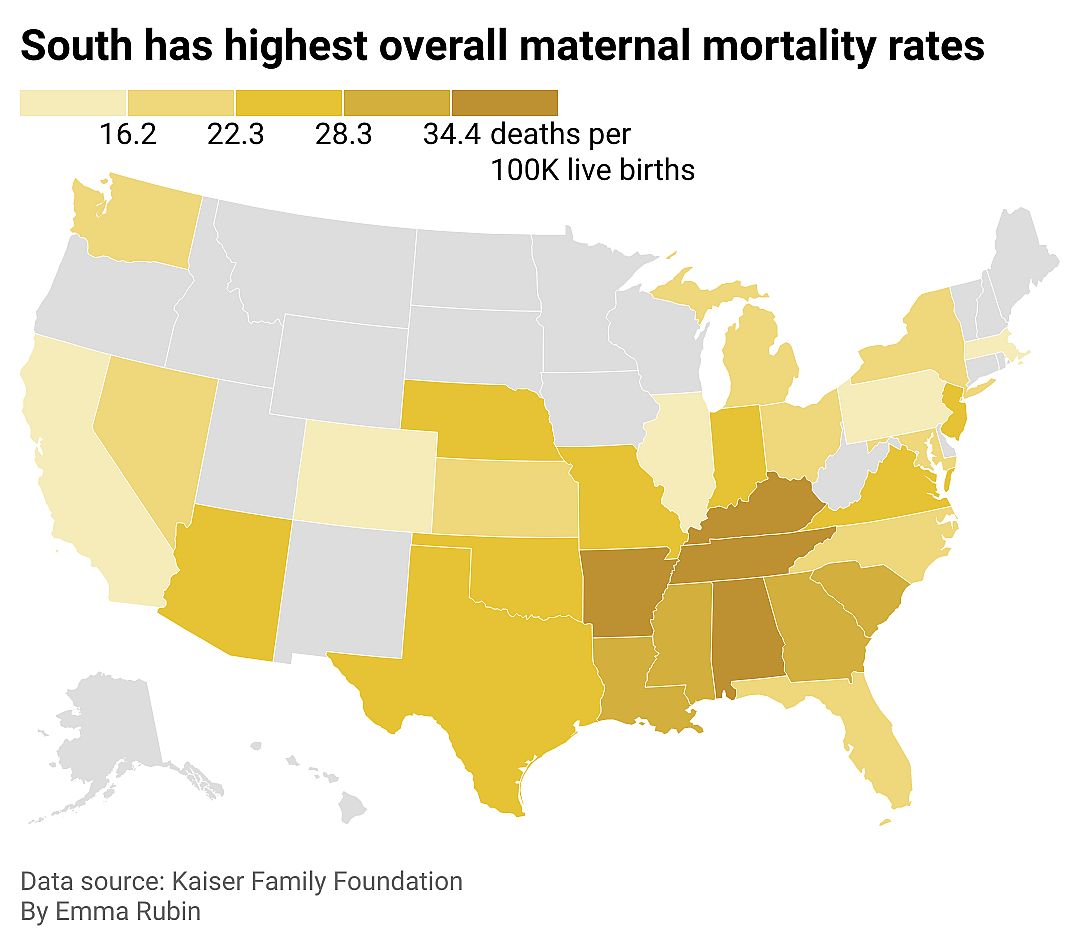
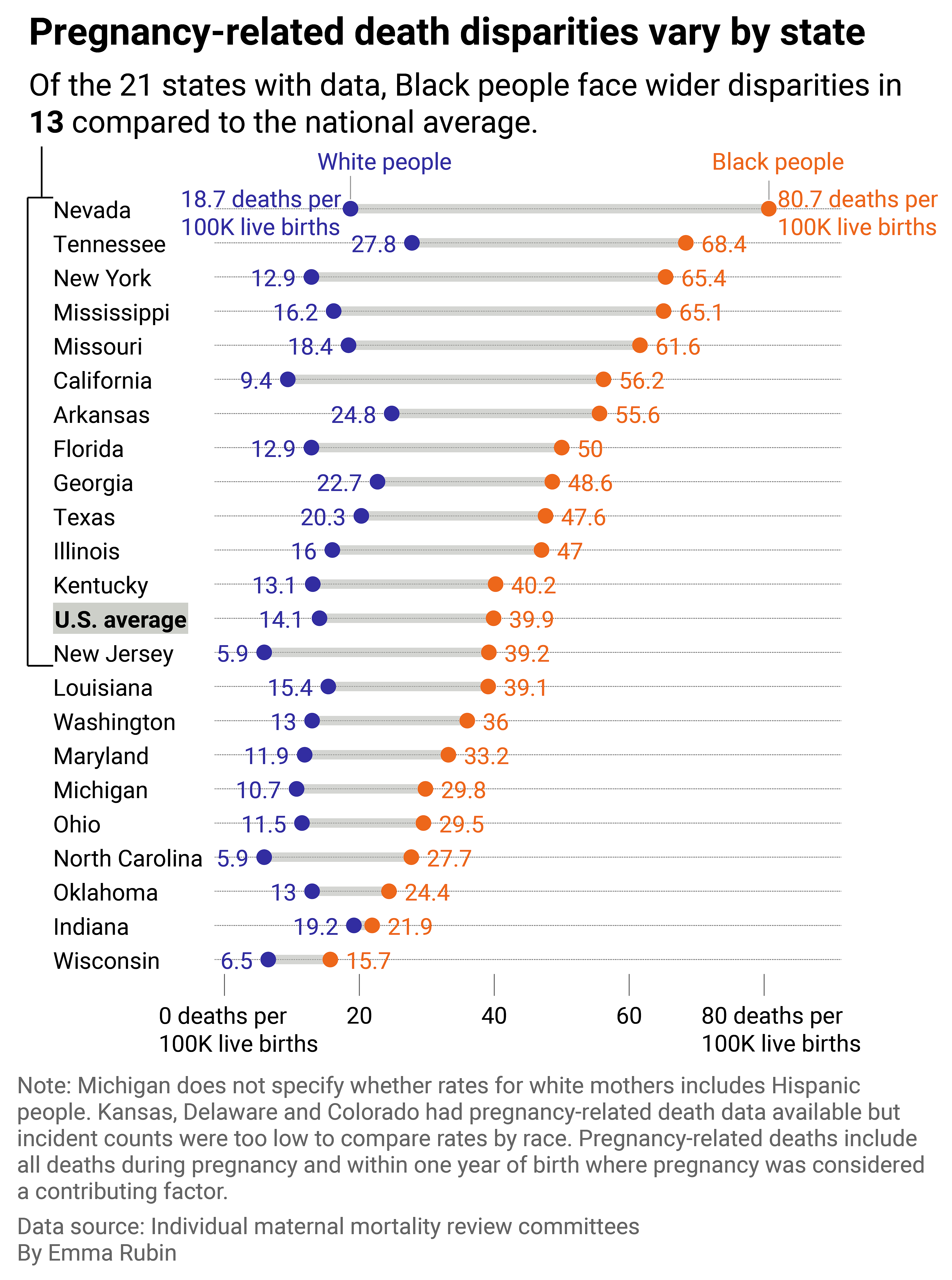
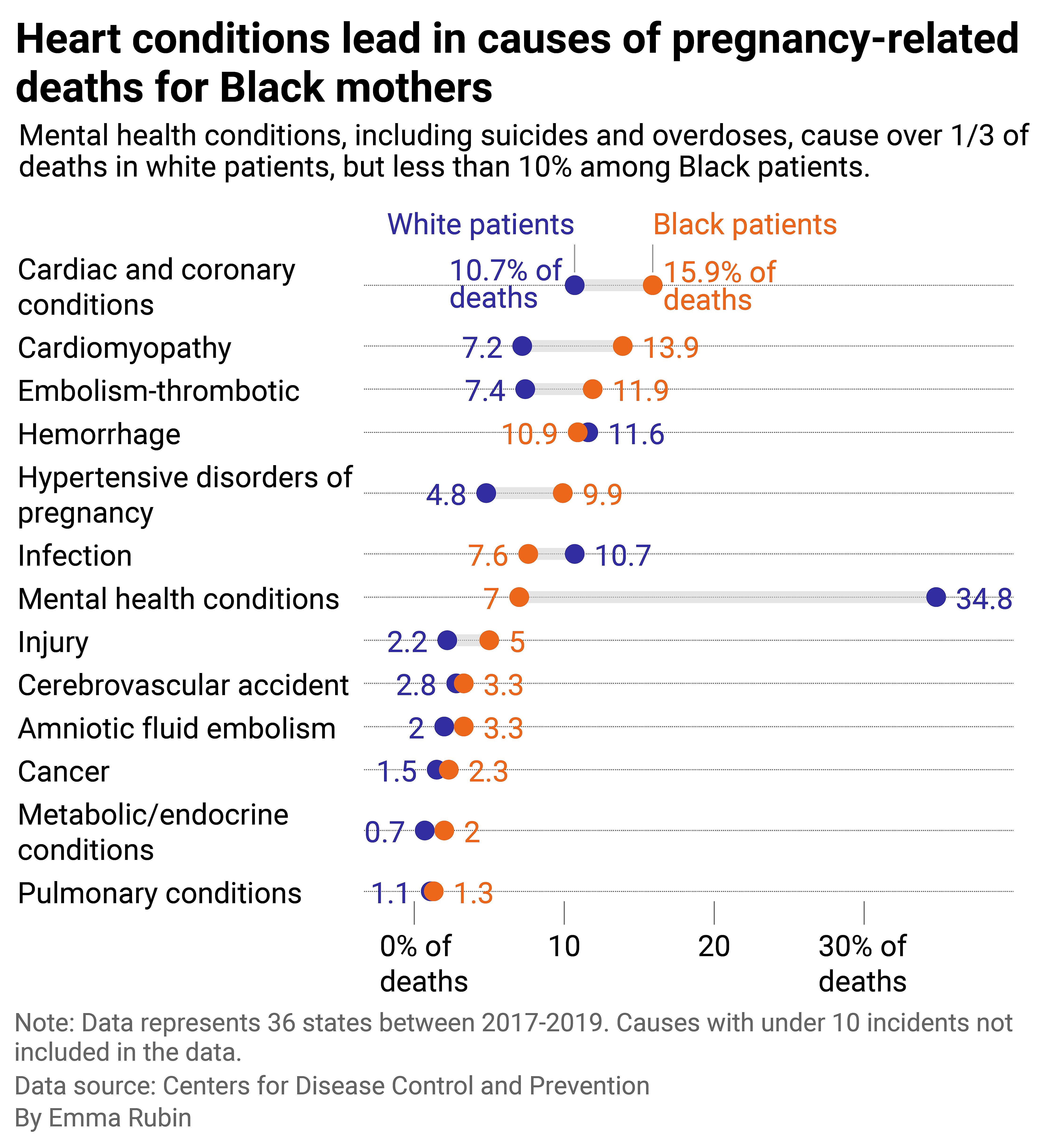
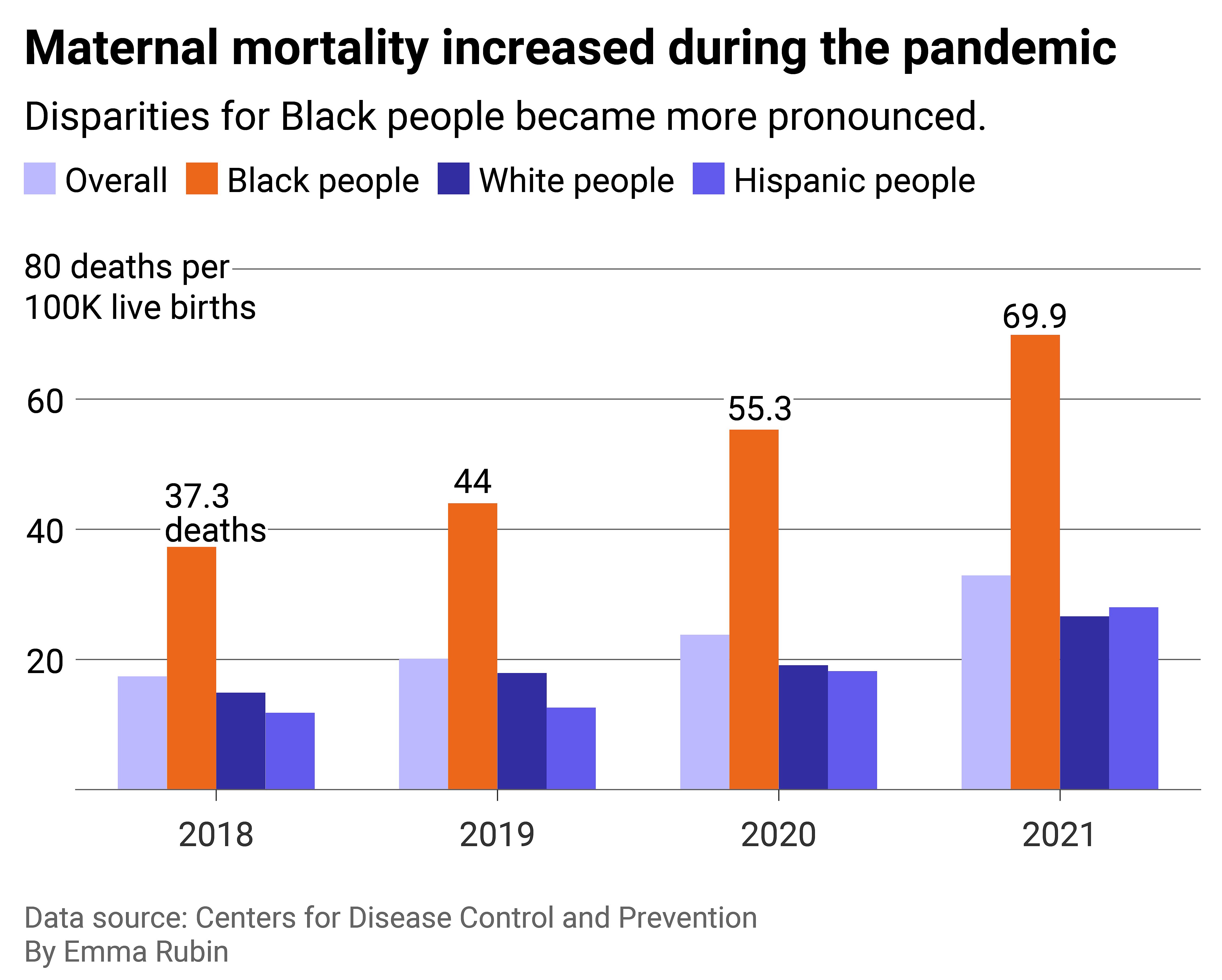
Black women are more than twice as likely to die during pregnancy and the period after childbirth than white women. The CDC defines maternal death as "the death of a woman while pregnant or within 42 days of termination of pregnancy." Pregnancy-related death extends up to one year after the end of pregnancy. In both maternal and pregnancy-related deaths, the cause is related to or worsened by pregnancy. When it comes to pregnancy-related death, Black women are more than three times more likely to die up to a year after the end of pregnancy than white women.
The CDC only started reporting this data in 2018 due to an improvement in data quality. All states began requiring a pregnancy check box on death reporting forms, allowing for better tracking of maternal and pregnancy-related mortality.
In 2020 and 2021, COVID-19, which also disproportionately killed Black people, contributed to 1 in 4 pregnancy-related deaths, according to the Government Accountability Office. This widened the gap even further, both directly and indirectly. The COVID-19 pandemic also changed the way women give birth in hospitals, namely access to doulas and a support person.
COVID-19-related hospital restrictions across the world meant that, for almost two years, doulas could not attend hospital births with their clients. In the U.S., however, doulas or a support person in the delivery room can be the difference between life and death for Black and Native American women. Studies show that to both combat the racism in the medical system and provide culturally competent care, doulas advocate for their clients during labor and delivery as well as in the postpartum period so—like Angel Valentine—their concerns don't go unaddressed.