Death Records
1 / 2Infectious diseases lead causes of death in America
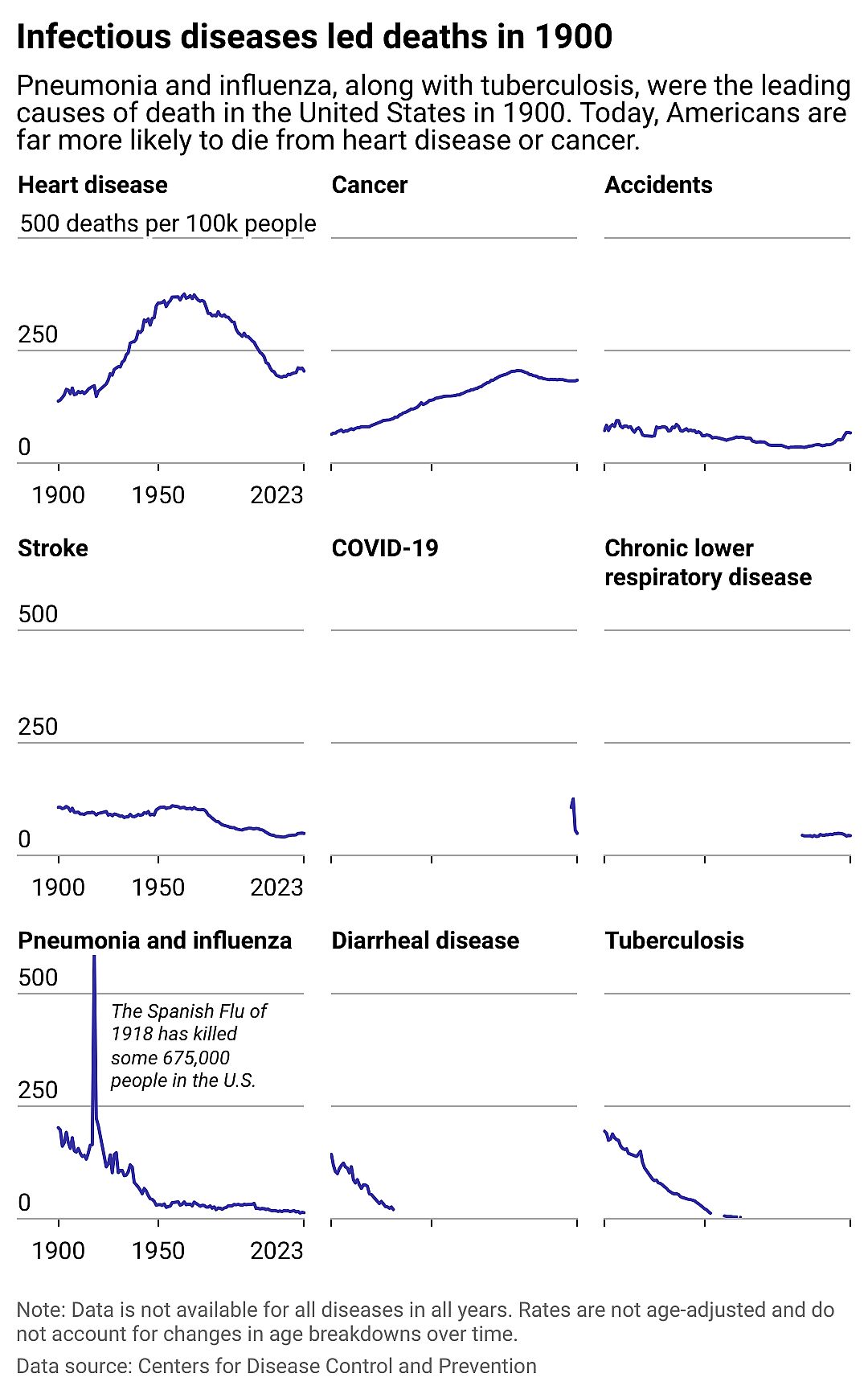
According to a report published in the journal Annual Review of Public Health in 2000, pneumonia was the leading cause of death in the early 1900s, accounting for nearly 1 in 4 deaths.
By the time World War I ended in 1918, during which people and animals were housed together for long periods, a new virus emerged: the Spanish Flu. Originating in a bird before spreading to humans, the virus killed 10 times as many Americans as the war. Many died of secondary pneumonia after the initial infection. Pneumonia deaths eventually plummeted throughout the century, partly prevented by increased flu vaccine uptake rates in high-risk groups, particularly older people.
Per the CDC, tuberculosis was a close second leading cause of death, killing 194 of every 10,000 people in 1900, mainly concentrated in dense urban areas where the infection could more easily spread. Eventually, public health interventions led to drastic declines in mortality from the disease, such as public education, reducing crowded housing, quarantining people with active disease, improving hygiene, and using antibiotics. Once the death rates lagged, so did the public health infrastructure built to control the disease, leading to a resurgence in the mid-1980s.
Diarrhea was the third leading cause of death in 1900, surging every summer among children before the impacts of the pathogen died out in 1930. Adopting water filtration, better nutrition, and improved refrigeration were all associated with its decline.
In the 1940s and 1950s, polio outbreaks killed or paralyzed upward of half a million people worldwide every year. Even at its peak, polio wasn't a leading cause of death, it was a much-feared one, particularly among parents of young children, some of whom kept them from crowded public places and interacting with other children.
By 1955, when Jonah Salk discovered the polio vaccine, the U.S. had ended the "golden age of medicine." During this period, the causes of mortality shifted dramatically as scientists worldwide began to collaborate on infectious disease control, surgical techniques, vaccines, and other drugs.