Northwell Health
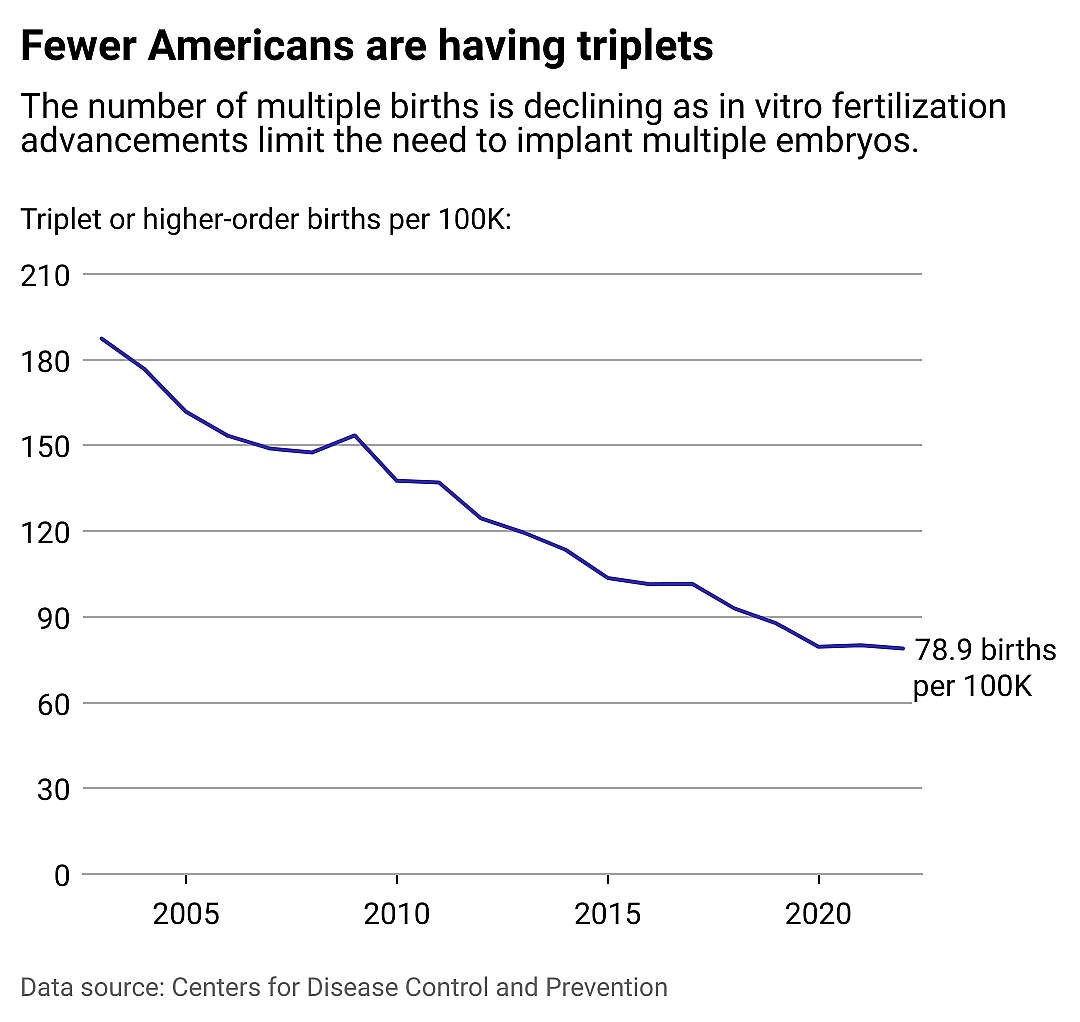
1 / 2Triplet and higher multiple births nosedive
In 2004, of the people younger than 35 who gave birth with the help of IVF, 32.7% delivered twins, and 4.9% delivered triplets, according to doctors at the Washington University School of Medicine. In 2014, 11.8% of those births were twin deliveries, and 0.4% were triplet deliveries. But there was an increase in the percentage of those undergoing IVF who had live births—from 36.6% to 48.7%—meaning more IVF babies were born, but a larger percentage were singles instead of multiples.
This decline in multiple births resulted from technological advancements in the embryo culture media (the solution that creates an environment for the cells to grow in) and controlled ovarian stimulation, wherein a pregnant person receives medication that encourages their body to produce more eggs. With more eggs to choose from and a better environment to grow embryos, IVF patients have had more success while implanting fewer embryos in one round.
In the greater population, this has contributed heavily to a decrease in triplet and higher-order births. This is good news for moms and their babies, as births of multiples can drive health complications such as premature labor, high blood pressure, and fetal growth restriction, according to the Cleveland Clinic.
The American Society for Reproductive Medicine has followed the science and recommends IVF patients limit the number of embryos they implant. Its 2021 guidance document states that most patients with a favorable prognosis should implant no more than one embryo at a time.