Northwell Health
1 / 2More Americans are living to 100
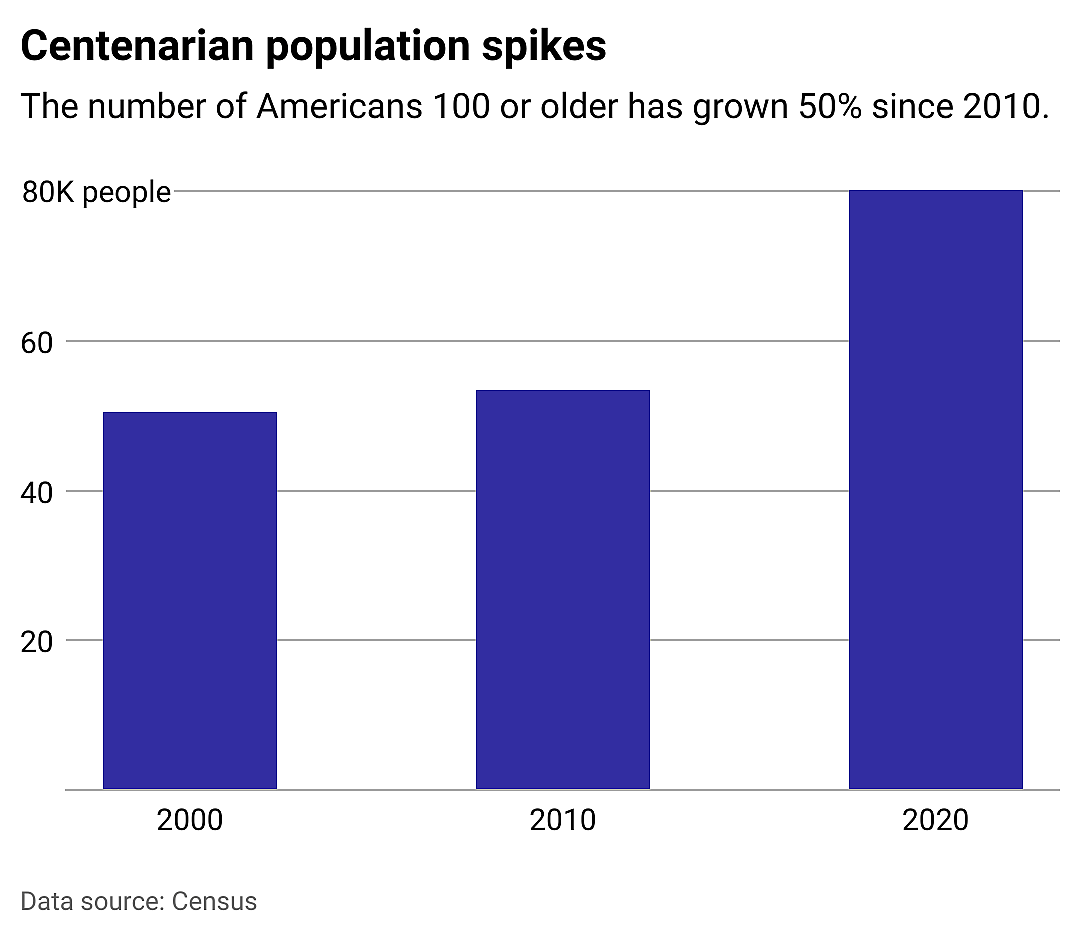
In 2020, there were 80,000 people over 100, an increase of around 50% since 2010. In an interview with USA Today in 2023, Thomas Perls, a professor of medicine at Boston University, noted that medical advances likely contributed to this increase: "Many more people who have the genetic makeup and environmental exposures that increase one's chances of getting to 100, but who would have otherwise died of what are now readily reversible problems, are able to fulfill their survival destiny."
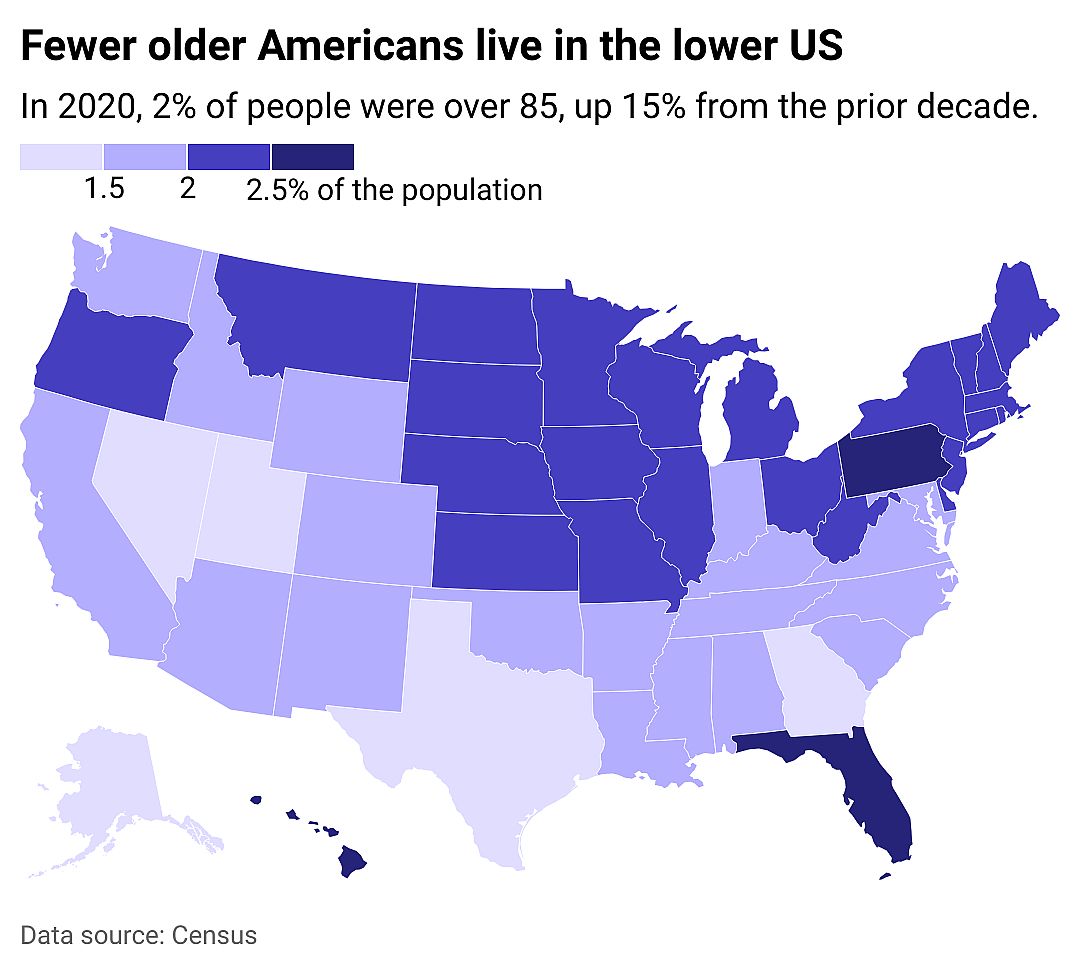
The number of centenarians varies by state. According to 2022 Social Security Administration data, while highly populous states like Califonia, New York, and Florida have the most centenarians, Hawai'i had the highest percentage of over 100s in 2022 (0.24% of its total population), followed by Washington D.C. (0.2%) and Connecticut (0.19%).
Increased longevity varies among racial and ethnic backgrounds. According to the Pew report, 77% of those over 100 are white, while 8% are Black, 7% are Asian, and 6% are Hispanic. Less than 1% are multiracial, Native Hawaiian, Pacific Islander, Alaska Native, or Native American.
By 2054, the percentage of centenarians who are white or Asian is projected to decrease to 72% and 5%, respectively, whereas shares of those who are Hispanic and non-Hispanic Black are predicted to increase to 11% and 10%, respectively. Pew noted that in its analysis, racial groups represent non-Hispanic people of a single race while Hispanics may be any race.
The same report also revealed that 78% of centenarians were women, while 22% were men.
In 30 years however, the male centenarians are expected to increase to 32%, while female centenarians are projected to decrease to 68%. It's important to note that Pew analyzed this data using a binary understanding of sex and gender, which excludes important information about nonbinary and transgender people.
There are several hypotheses as to why women tend to outlive men. One is the theory that some biological processes can help men at a young age but cause harm later in life, such as testosterone production, which promotes muscle strength and the creation of red blood cells. Those same processes can increase the risk of blood clot formation and associated conditions like heart disease and stroke as men age, according to a 2023 Boston University article by Perls.
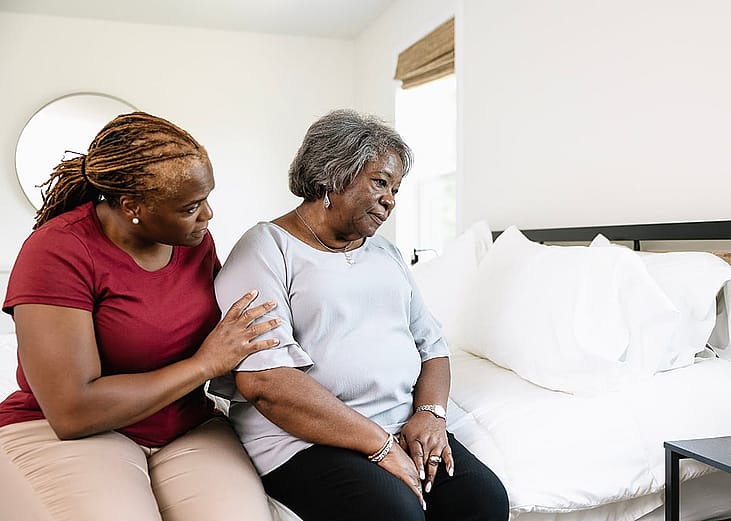
While many older Americans today have improved function and are more likely to work than previous generations, many older adults still require care and support as their bodies age. A 2023 report from the Schwartz Center for Economic Policy Analysis notes that 20% of adults aged 55 and older struggled with one or more daily activities. Among those, 42% who have difficulty in daily tasks like getting dressed and using the toilet do not receive help. The report also revealed that unpaid family care is the most common form of assistance and that older adults without close family are especially vulnerable to going without care.
These numbers reflect the long-term care crisis in the U.S. A vast caregiving gap exists between those who need help and those who can receive it, which is exacerbated by expensive long-term care. The longer older adults live, the longer they may require care.