Wysa
1 / 2Mental health services use declines despite increased importance to a burned-out workforce
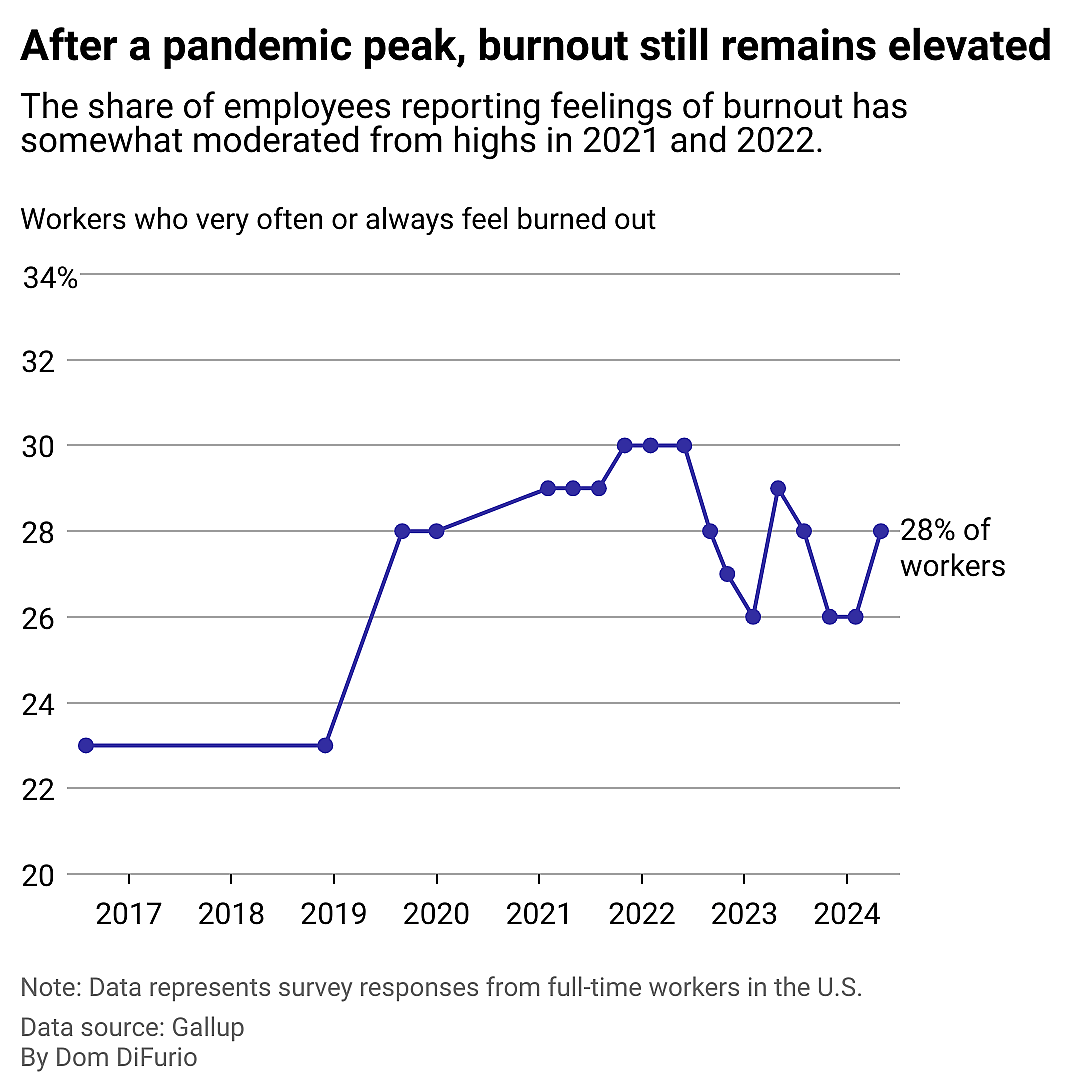
Employees reporting feeling burned out have increased over eight years of Gallup surveys. Rates have remained inflated since the pandemic—now affecting 28% of workers surveyed in Gallup's findings. In 2023, SHRM found that about half of workers were suffering, significantly more than Gallup's research.
Stigma isn't the only reason why American workers are not being proactive when facing burnout, though it contributes to 50% of workers not using their employee assistance program benefits for mental health, according to SHRM. Writing for Psychology Today, wellness expert Robyne Hanley-Dafoe and physiologist Greg Wells shared that employee perceptions around the effectiveness of these mental health programs through work and providers can also impact how much employees take advantage of these benefits. There may also be concerns about confidentiality, practical barriers to accessing services like long wait times, or simply a lack of awareness of the programs.
Fifty-two percent of employees surveyed by SHRM say they feel pressured to place the organization's needs over their own to protect their jobs. Discounting one's own needs for the good of one's company was echoed in a survey response to Harvard Business Review's research: "I almost scheduled an appointment about a dozen times. But no, in the end, I never went. I just wasn't sure if my problems were big enough to warrant help, and I didn't want to take up someone else's time unnecessarily."
According to EBRI, just 66% are comfortable using benefits and services provided by their employer, even though employees recognized that mental health wellness programs are more important than they were last year.
These benefits can also be a key driver when choosing a new workplace, according to APA research. However, EBRI found that only 35% of Americans used the resources and tools from their employers last year to improve their mental health, down from 51% the previous year.
According to HR firms and psychologists, other factors—such as gender—could be at play for employees who aren't using their mental health benefits. LinkedIn data shared with Fortune shows that 44% of females are experiencing burnout compared to 36% of males. Behavioral scientist Pam Cohen explained this to Forbes by noting women often feel like they must prove themselves consistently in male-dominated fields. Research published in the journal Review of Economics of the Household using more than 4,000 responses from 2002 and 2008 also suggests balancing company demands and unpaid work in the household for "traditional" women is also weighing on female employees. ("Progressive" women generally feel less burnout, according to the research).
Other demographics like cultural background, age, professional level, and the industry itself impact burnout, mental health issues, and the feeling of being psychologically safe enough to talk about these issues at work.