SaveHealth
1 / 2Effectiveness in Treating Depression and Anxiety
Major Depressive Disorder (MDD)
Numerous studies show that both Zoloft and Lexapro are equally effective in treating depression. However, some evidence suggests Lexapro may be slightly more effective and better tolerated overall, especially in head-to-head trials.
One 2009 meta-analysis comparing 12 SSRIs found escitalopram had the highest efficacy and acceptability, making it a preferred choice for first-line treatment in some guidelines.
Anxiety Disorders
- Zoloft has a broader range of anxiety-related indications including social anxiety, PTSD, and panic disorder
- Lexapro is highly effective for GAD and often better tolerated for individuals with sensitive stomachs or a history of side effects from antidepressants.
Zoloft vs Lexapro: Side Effects and Tolerability
Zoloft
Common side effects:
- Diarrhea
- Insomnia
- Nausea
- Sexual dysfunction
These tend to appear early and may fade over time. Some users report emotional blunting or agitation at higher doses.
Lexapro
More frequently associated with:
- Fatigue
- Nausea
- Dizziness
- Sexual side effects
However, Lexapro is often better tolerated than Zoloft, particularly in older adults and those new to SSRIs.
Drug Interactions
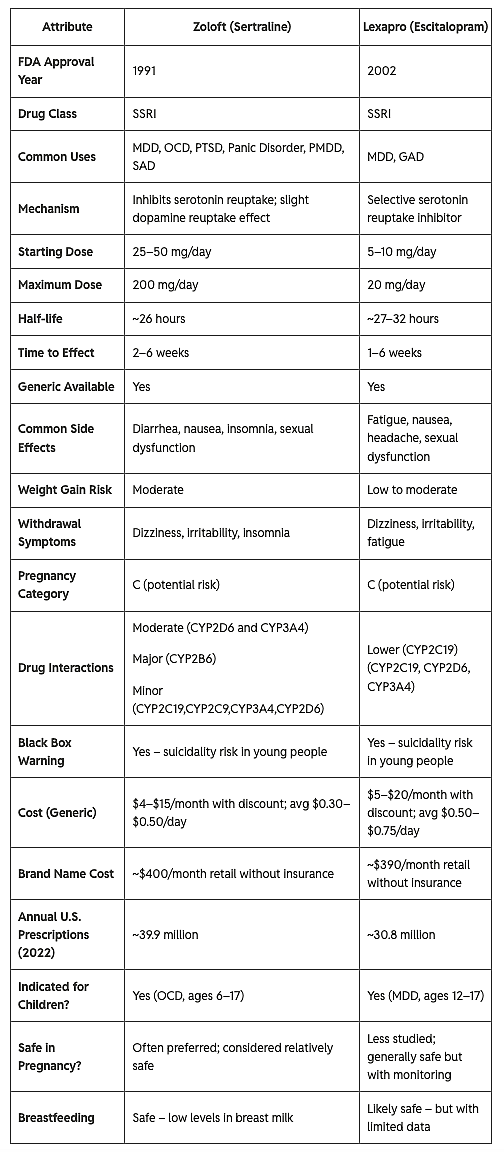
Both medications interact with the cytochrome P450 enzyme system, but Lexapro has fewer interactions overall.
- Zoloft: Interacts with CYP2B6 and to a lesser extent CYP2C19, CYP2C9, CYP3A4 and CYP3A4, potentially affecting medications like selected beta blockers, antipsychotics, and pain relievers.
- Lexapro: Primarily affects CYP2C19, CYP2D6 and CYP3A4 and may affect similar drugs, however has been found to have fewer known interactions.
Patients taking multiple medications may find Lexapro safer in terms of pharmacokinetics.
Cost and Availability
Generic Versions
Both medications are available as generics and are widely covered by insurance.
- Zoloft (sertraline): Generic tablets cost $4–$15/month at most pharmacies. Using a savings card can reduce the price even further.
- Lexapro (escitalopram): Slightly more expensive, ranging from $5–$20/month, depending on pharmacy and location.
Brand Name Costs
Without insurance, brand-name prices can be exorbitant:
- Zoloft: ~$400/month
- Lexapro: ~$390/month
Since both have effective generic versions, most doctors prescribe the generic form unless there's a specific reason to opt for the brand.
Withdrawal and Discontinuation
Stopping either medication suddenly can cause SSRI discontinuation syndrome, which includes symptoms like:
- Brain zaps
- Irritability
- Flu-like symptoms
- Dizziness
- Anxiety
To reduce risks, a gradual taper over several weeks is recommended, particularly for those on higher doses or long-term treatment.
Use in Special Populations
Pregnancy and Breastfeeding
- Zoloft has been studied more extensively in pregnant women and is generally considered safer for use during pregnancy and postpartum, including breastfeeding.
- Lexapro is usually considered safe but has less robust data. Use should be carefully weighed against the risks of untreated depression.
Children and Adolescents
- Zoloft is approved for OCD in children aged 6–17
- Lexapro is approved for MDD in adolescents (12–17)
Both carry black box warnings regarding increased suicidality in children and adolescents, so close monitoring is essential.
Prescription Trends and Market Share
According to recent prescription data, Zoloft filled approximately 39.9 million prescriptions in 2022, making it one of the top 10 most prescribed psychiatric medications in the U.S. Lexapro followed closely with around 30.8 million prescriptions, reflecting its growing popularity, particularly among patients with generalized anxiety disorder (GAD). The trend shows an increasing shift toward Lexapro among first-time SSRI users due to its favorable side effect profile.
Patient Adherence Rates
Adherence to SSRIs is crucial for long-term treatment success. Studies have shown that Lexapro tends to have higher adherence rates, with up to 78% of patients remaining on treatment at six months, compared to about 65% for Zoloft. The improved tolerability and fewer early side effects are likely contributing factors.
Remission and Response Rates
In clinical trials, both Zoloft and Lexapro achieve remission in 40%–60% of patients within 8 to 12 weeks. Meta-analyses suggest Lexapro may offer slightly higher remission rates in moderate to severe depression. For example, one study reported a 52% remission rate for Lexapro vs. 45% for Zoloft over a 12-week period.
Real-World Effectiveness
In practice, individual variability plays a significant role in effectiveness. Real-world observational studies have shown that patients on Lexapro report fewer dosage adjustments, fewer discontinuations due to side effects, and quicker symptom improvement compared to those on Zoloft. However, Zoloft shows higher efficacy in specific populations like those with PTSD or OCD.
Insurance Claims and Cost Burden
Insurance data reveal that while both medications are widely covered, Zoloft prescriptions more frequently utilize low-cost generic programs (e.g., $4/month plans at large chains). Lexapro, though slightly costlier, shows lower total healthcare utilization in terms of follow-up visits and emergency interventions due to adverse effects, possibly offsetting the higher retail cost.
Final Verdict: Zoloft vs. Lexapro
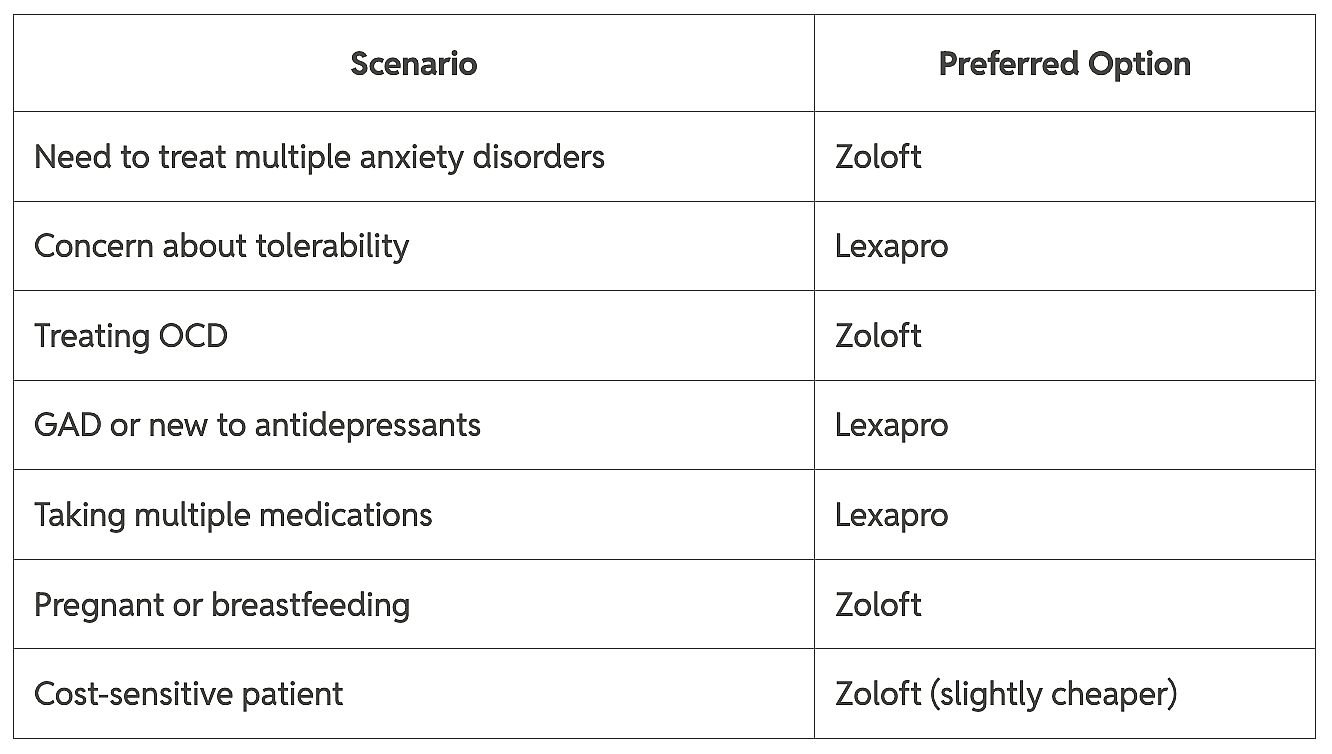
There's no one-size-fits-all answer when choosing between Zoloft and Lexapro. Each drug offers unique advantages.
Ultimately, the best medication depends on individual symptoms, history, other medications, and how your body responds. It may take trial and error to find the right fit—but both are highly effective when matched properly to the patient.