Hampr
1 / 3More advanced technology doesn't mean less time spent on housework
It's difficult to pin down the origins of ideas about traditional gender roles and "women's work"—they are seemingly organizational structures that have existed forever. Asked to point to a specific era defined by these gender roles and norms, many people would single out the 1950s and '60s, a time collectively remembered as the golden age of the housewife.
But the idea of that time is just that: an idea, according to Kate Mangino, a gender equality expert and author of the book, "Equal Partners: Improving Gender Equality at Home."
"There was a myth of the stay-at-home mom and the working dad and the nuclear family," Mangino told Stacker, clarifying that in many families, both rural and urban, both parents worked a great deal. "It was really only a certain socioeconomic class that could afford to have someone stay at home."
Movies, television, and advertisements attempted to sell both women and men the concept of the ideal domestic woman, fulfilled by unpaid cleaning, cooking, and caretaking. Still, the reality of most Americans outside of the white middle and upper class was starkly different. Wealthier white families also employed many women of color to perform the tasks associated with the white housewife.
It wasn't until after World War II that many American households began to own electric washing machines, which replaced their usual laundry workers. Without these hired hands, however, women took over the responsibility of doing family laundry.
Today, outsourcing tasks like laundry is still primarily a luxury enjoyed by those with the means. Outsourcing, Mangino said, "buys you more time that you have for work or for your family, whereas if you do not have those privileges, then you're going to have to figure out a way to do it yourself or lean on friends and family and neighbors to provide those for you."
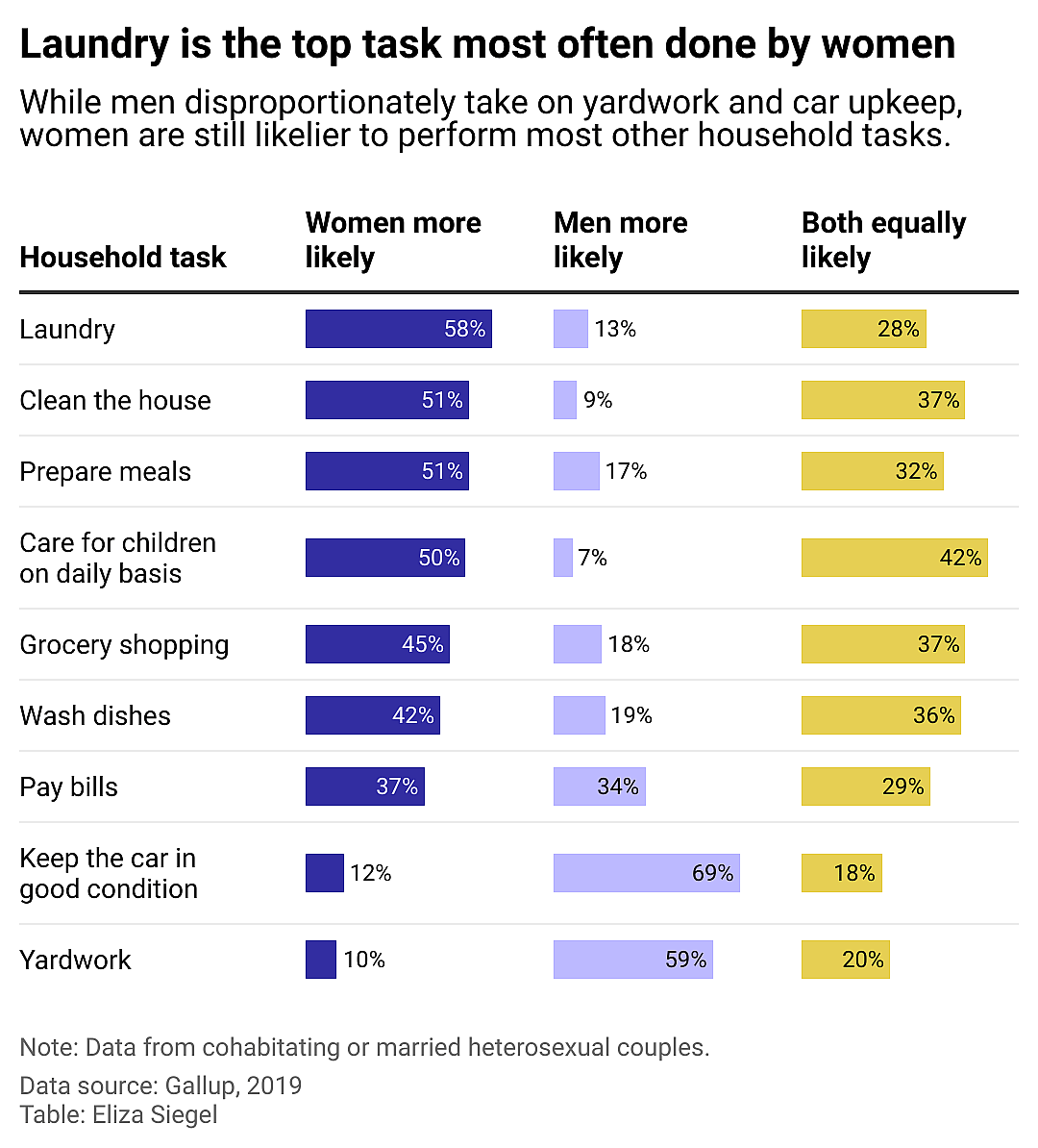
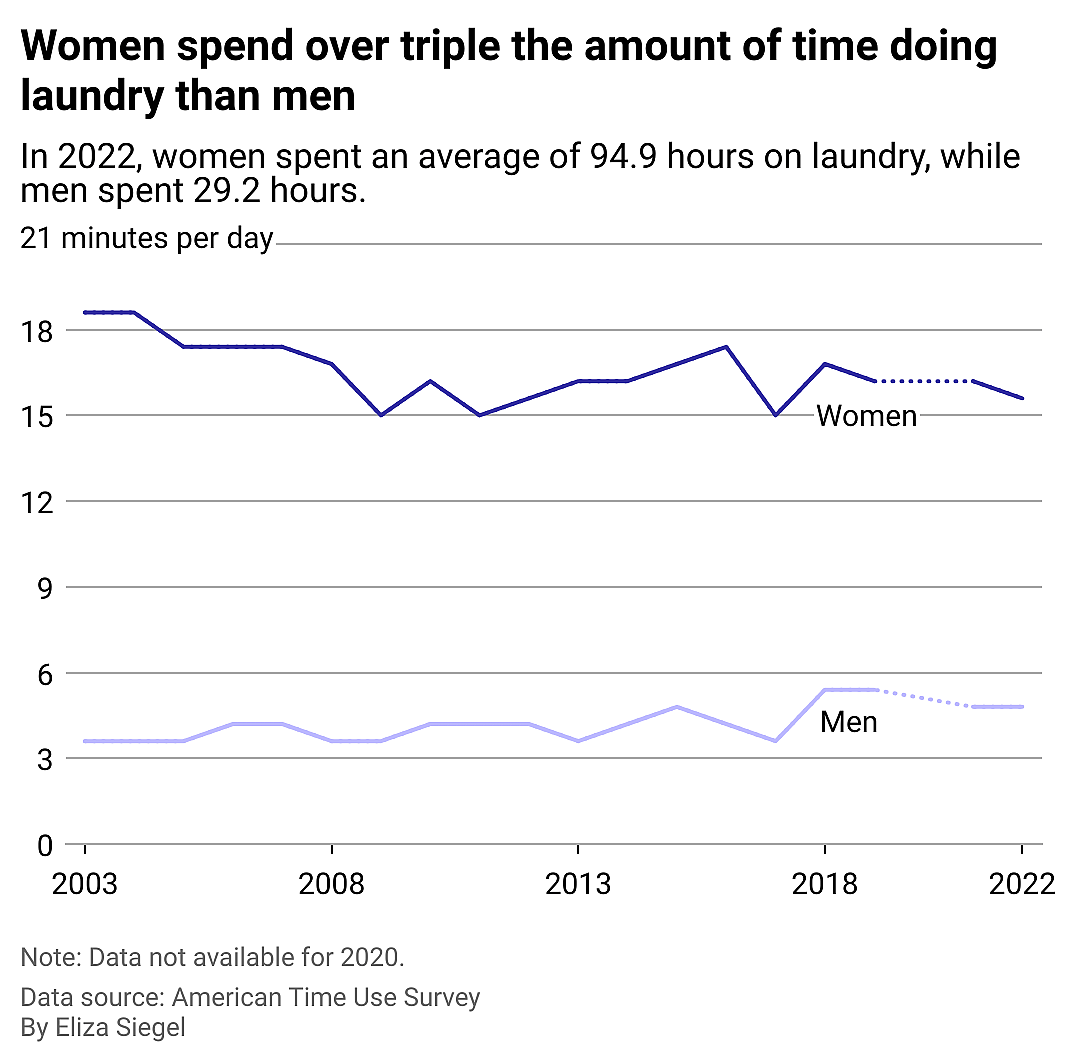
Laundry is still disproportionately performed by women. Although the last two decades have given rise to marginal changes—women spend an average of a few minutes less per day on laundry than they did 20 years ago, while men spend a couple of minutes more—the gap remains significant.